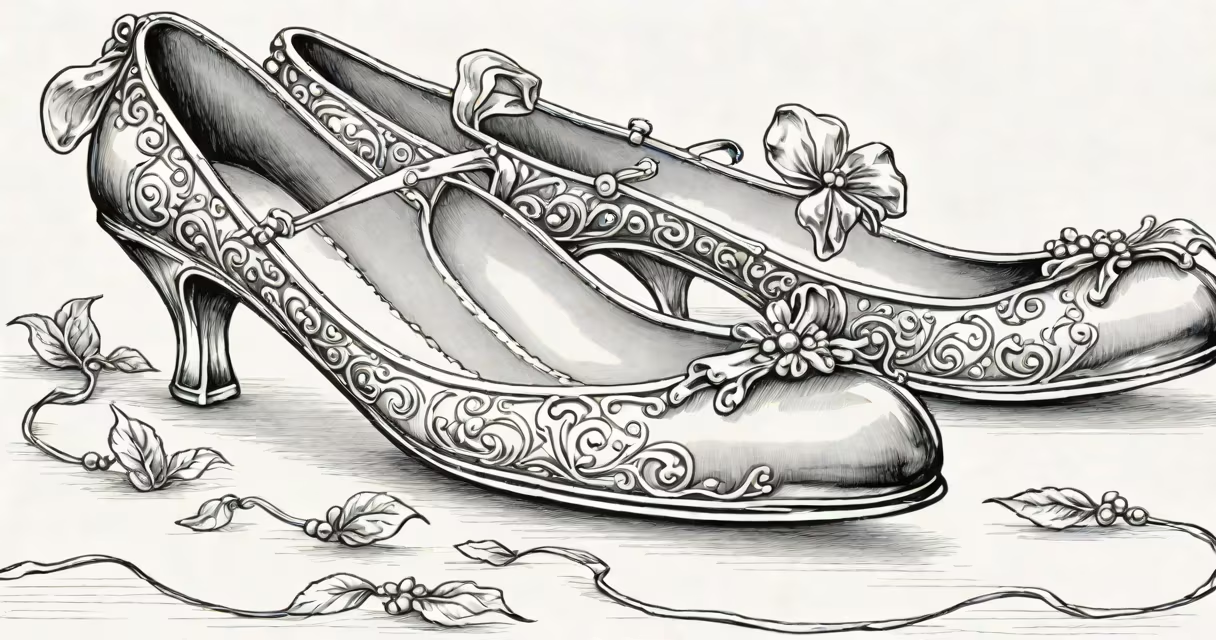
The slipper's magic lies in its perfect fit, proving Cinderella's identity despite her disguise. The prince's servants try it on every woman in the kingdom until it fits Cinderella, revealing her true identity. This moment of recognition is central to the tale's resolution.
Different versions of the story feature different materials for the slipper:
| Version | Material | Year |
|---|---|---|
| Charles Perrault (French) | Glass | 1697 |
| Brothers Grimm (German) | Fur | 1812 |
| Disney (Animated Film) | Glass | 1950 |
Perrault's glass slipper is the most famous, but the Brothers Grimm changed it to fur in their version, possibly due to practical concerns about glass shoes.
Perrault's choice of glass emphasizes fragility and delicacy, mirroring Cinderella's vulnerable yet resilient nature. Glass also symbolizes transparency and truth, reinforcing the story's theme of revealing one's true self. Historically, glass shoes were unlikely, but the material adds a fantastical element to the tale.
Many assume the slipper was always glass, but the Brothers Grimm's fur version predates Disney's return to glass. Another myth is that the slipper was a high-heeled shoe, which wasn't common in 17th-century France. Perrault's illustration shows a flat, elegant slipper.
In 2013, the Royal Opera House in London created a pair of glass slippers for their production of Cinderella. They were made of thin, flexible glass and could actually be worn and danced in, though they required careful handling. This real-world example shows how the fantasy element can be grounded in reality with creativity.
The cinderella glass slipper has become a universal symbol of hope and transformation. It appears in countless adaptations, and even inspired a real-life search for the "perfect fit" in modern dating apps. The slipper's enduring appeal lies in its blend of magic and realism.
Sources: Perrault, Charles. "Cendrillon." Histoires ou contes du temps passé (1697). Grimm, Jacob and Wilhelm. "Aschenputtel." Kinder- und Hausmärchen (1812).