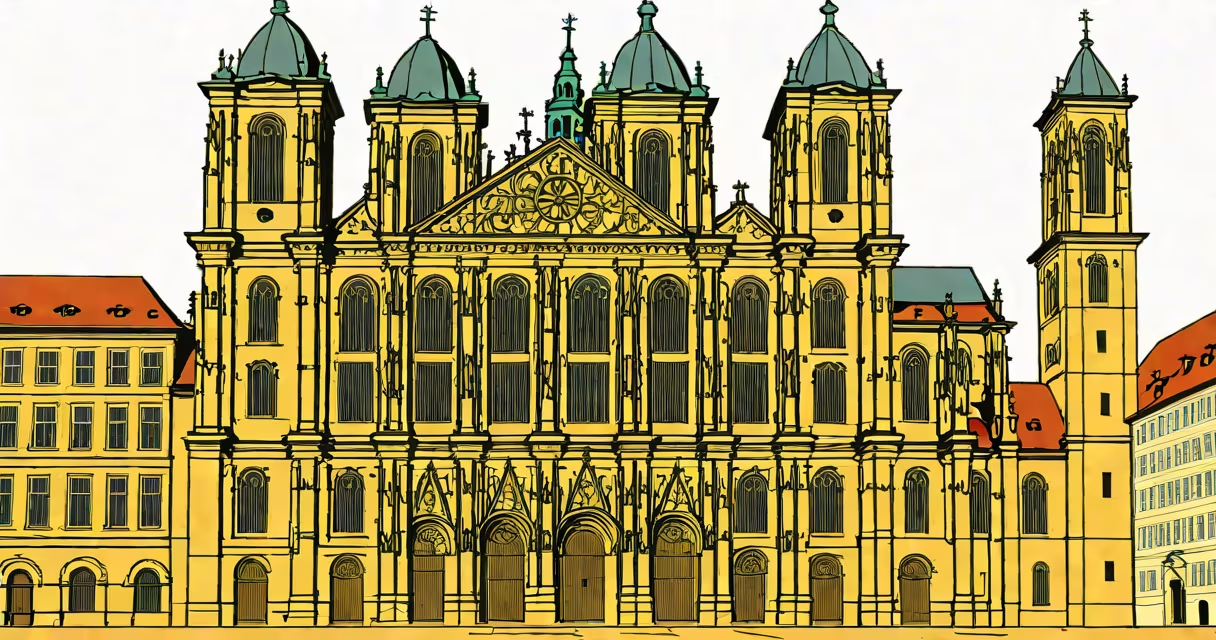
The CMS Kirche Bamberg is a Romanesque cathedral in Bamberg, Germany, renowned for its architectural significance and UNESCO World Heritage status. Built between the 11th and 13th centuries, it stands as a prime example of medieval ecclesiastical architecture.
The cathedral's most striking features are its twin towers, which rise 81 meters above the city. The interior houses complex carvings, frescoes, and the tomb of Pope Clement II, the only pope buried north of the Alps. The cathedral's design blends Romanesque and Gothic elements, reflecting its long construction period.
The cathedral exemplifies several architectural styles:
| Style | Period | Key Features |
|---|---|---|
| Romanesque | 11th-12th century | Massive walls, rounded arches, and small windows |
| Gothic | 13th century | Pointed arches, ribbed vaults, and larger windows |
The CMS Kirche Bamberg was constructed as the burial site for the bishops of Bamberg. Its construction began in 1002 under Emperor Henry II and Bishop Eckard. The cathedral's completion in 1237 marked the end of a significant phase in German religious architecture. It became a UNESCO World Heritage Site in 1993 as part of the "Old Town of Bamberg."
Many visitors assume the cathedral is entirely Gothic due to its later additions. However, the core structure remains predominantly Romanesque. Another misconception is that the cathedral's twin towers are identical. In reality, the northern tower is slightly shorter and narrower than the southern one.
The cathedral is open to visitors daily, with guided tours available in multiple languages. The climb to the top of the towers offers panoramic views of Bamberg and the surrounding countryside. The cathedral's museum houses religious artifacts and historical documents, providing deeper insight into its history.