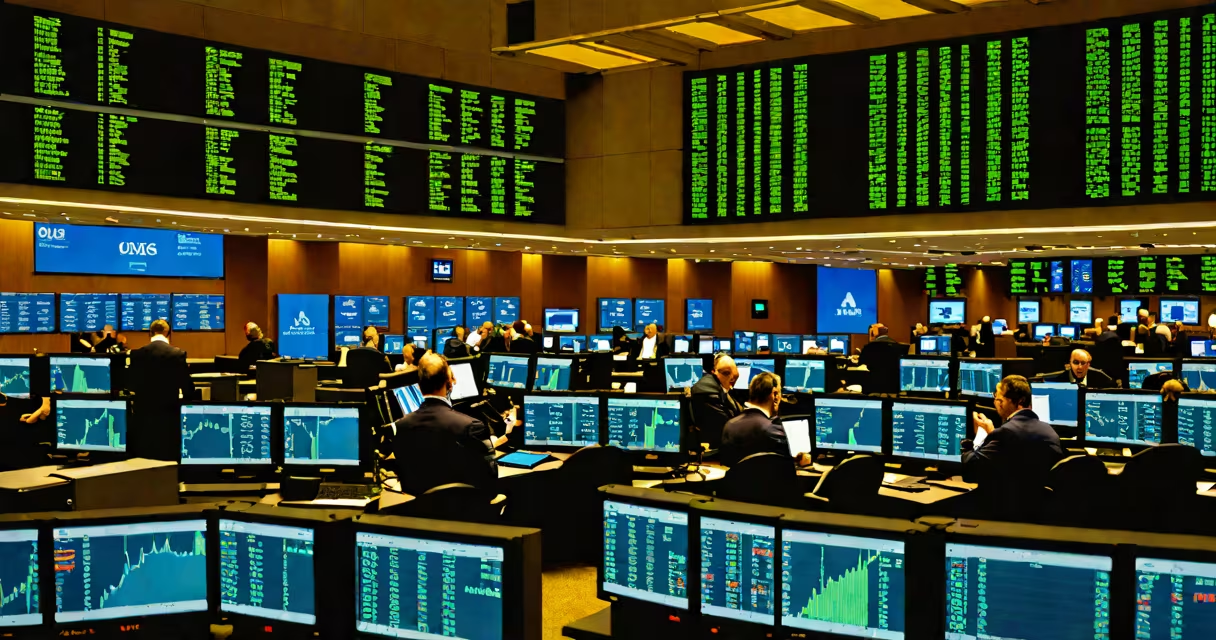
CME US Treasury futures are standardized contracts that allow traders to bet on or hedge against changes in US government bond prices. These futures trade on the Chicago Mercantile Exchange (CME) and represent agreements to buy or sell specific Treasury securities at predetermined prices and dates.
Each contract specifies a particular Treasury security, maturity date, and price. The most actively traded contracts include:
Traders profit from correctly predicting interest rate movements. When rates rise, bond prices fall, and vice versa. Contracts are cash-settled based on the difference between the futures price and the final settlement price.
Treasury futures differ from other financial instruments in several ways:
| Feature | Details |
|---|---|
| Standardized contracts | Each contract represents a specific Treasury security with defined terms |
| Use | Traders control large positions with relatively small margin requirements |
| Liquidity | High trading volumes make these markets very liquid |
| Settlement | Cash settlement based on the difference between futures price and final settlement price |
For example, a trader might buy 10-Year Treasury Note futures expecting rates to fall. If rates drop by 0.5%, the trader profits from the price increase in the underlying bond.
Investors use these contracts for both speculative and hedging purposes:
Many institutional investors use Treasury futures to manage interest rate risk in their bond portfolios. For instance, a pension fund holding long-duration bonds might sell Treasury futures to protect against rising rates.
Some traders confuse Treasury futures with other financial instruments:
According to the CME, Treasury futures account for over $2 trillion in notional value traded daily, making them among the most liquid interest rate products.
During the 2022 rate hike cycle, traders used 2-Year Treasury Note futures to position for Federal Reserve policy changes. As the Fed raised rates from near-zero to 5.25%, these contracts saw record volumes as traders adjusted their expectations.
I observed this firsthand while analyzing market data during that period. The correlation between futures prices and actual rate movements was remarkably precise, demonstrating their effectiveness as predictive tools.
CME US Treasury futures provide efficient tools for managing interest rate exposure. Whether for speculation or risk management, these contracts play a important role in global financial markets. Understanding their mechanics can help traders go through the complex world of interest rate derivatives.