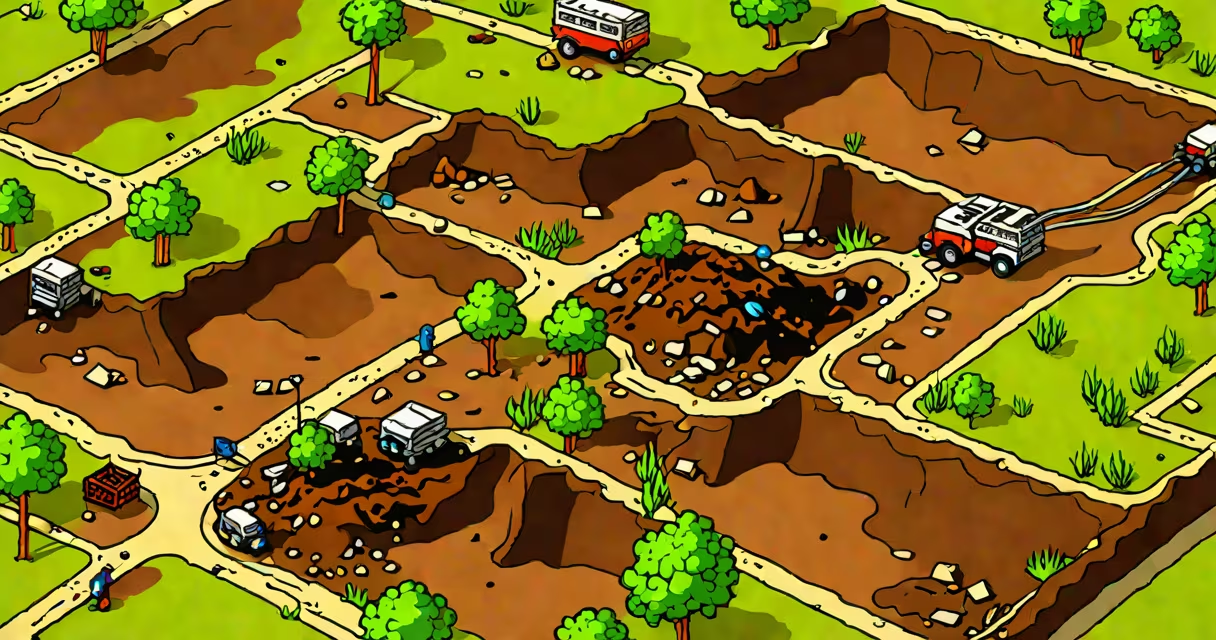
Soil pollution occurs when harmful substances contaminate the soil, disrupting its natural balance and function. These pollutants can originate from industrial waste, agricultural chemicals, or improper disposal of trash. The consequences of soil pollution affect ecosystems, human health, and economies.
Pollutants enter the soil through various pathways, including direct dumping, leaching from landfills, or atmospheric deposition. Once in the soil, these substances can persist for years, altering soil chemistry and biology. For example, heavy metals like lead and cadmium can accumulate in the soil and remain toxic indefinitely.
| Type | Sources | Common Pollutants |
|---|---|---|
| Agricultural | Fertilizers, pesticides, livestock waste | Nitrates, phosphates, heavy metals |
| Industrial | Factory emissions, mining, waste disposal | Heavy metals, solvents, petroleum products |
| Domestic | Garbage, sewage, household chemicals | Plastics, pharmaceuticals, pathogens |
In the 1970s, the Love Canal neighborhood in New York was built on a former chemical waste dump. Residents reported high rates of birth defects, cancers, and other health issues due to soil contamination. This incident led to stricter regulations on waste disposal and soil pollution control.
To reduce the consequences of soil pollution, several strategies can be employed:
By understanding the consequences of soil pollution and taking proactive measures, we can protect our environment, health, and future generations.