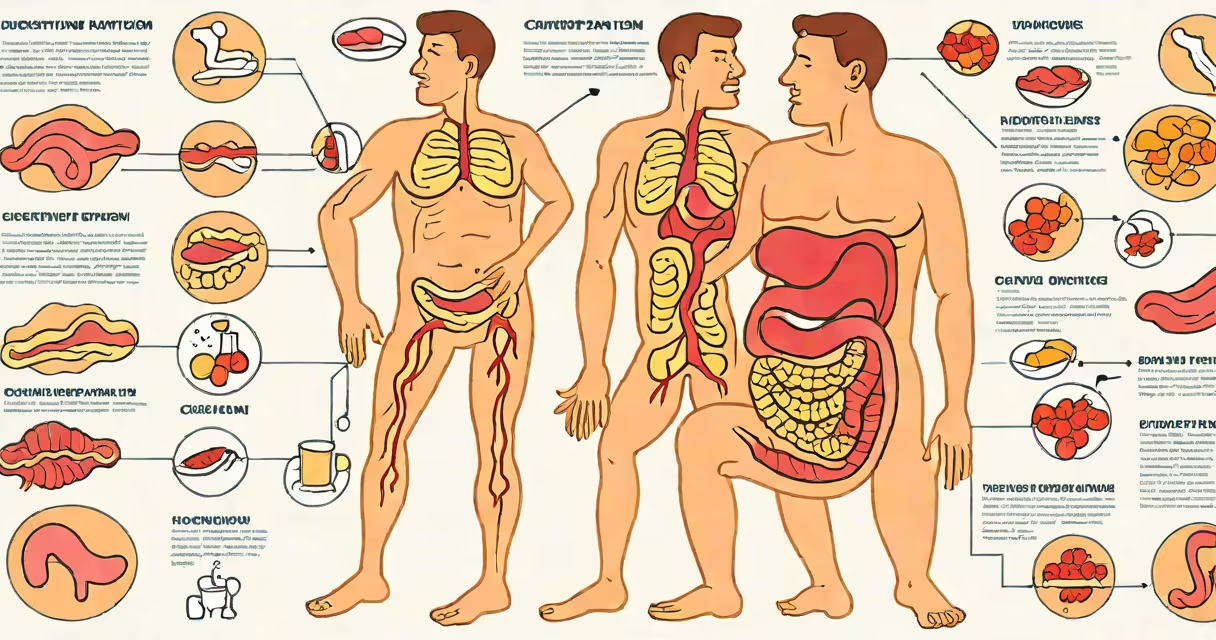
Constipation feeling full occurs when stool buildup in the colon creates pressure, making you feel uncomfortably full even after small meals. This happens because the colon stretches due to retained stool, pressing against other organs and triggering a sensation of fullness.
The colon absorbs water from undigested food, forming stool. When stool moves too slowly, excess water gets absorbed, hardening the stool and making it harder to pass. As stool accumulates, it stretches the colon walls, pressing against nearby organs like the stomach and causing that "full" feeling.
Common causes include low-fiber diets, dehydration, lack of physical activity, and certain medications like pain relievers or antidepressants. Stress and hormonal changes can also contribute.
Symptoms vary but often include bloating, abdominal discomfort, and infrequent bowel movements. Some people may also experience nausea or loss of appetite due to the constant feeling of fullness.
| Type | Key Features |
|---|---|
| Chronic Constipation | Lasts weeks or longer, often with hard stools and straining |
| Acute Constipation | Sudden onset, usually temporary and caused by diet or travel |
| Irritable Bowel Syndrome (IBS) | Alternates between constipation and diarrhea, often with cramping |
Increasing fiber intake through fruits, vegetables, and whole grains can help. Staying hydrated, exercising regularly, and managing stress also improve digestion. Over-the-counter laxatives or stool softeners may provide short-term relief, but long-term solutions focus on dietary and lifestyle changes.
I once experienced this feeling after traveling and eating differently. Drinking more water and eating prunes helped relieve the discomfort within a few days.
If constipation feeling full persists for more than a few weeks, or if accompanied by severe pain, blood in stool, or unexplained weight loss, consult a doctor. These symptoms could indicate underlying conditions like bowel obstruction or colon cancer.