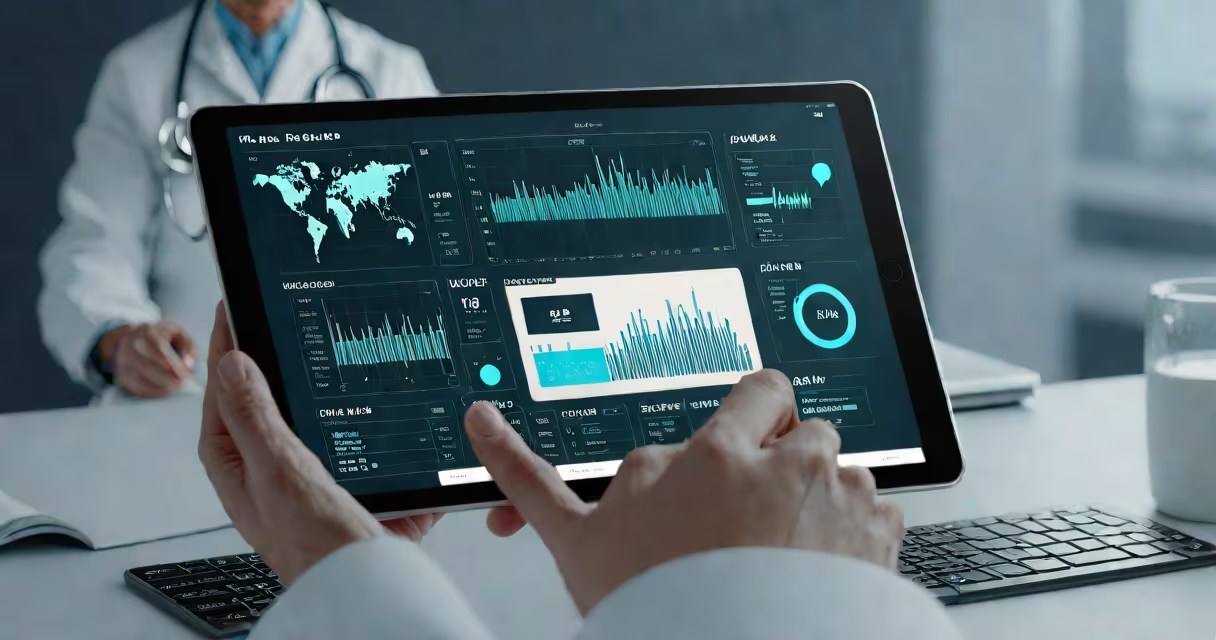
Data science and healthcare is the application of statistical analysis, machine learning, and big data techniques to improve medical research, patient care, and hospital operations. It uses electronic health records, imaging data, and genomic information to uncover patterns that lead to better diagnoses and treatments.
Data science in healthcare processes large datasets to identify trends and make predictions. For example, algorithms analyze patient records to predict disease risks, while image recognition tools detect anomalies in X-rays or MRIs. Hospitals use data science to improve staffing levels and reduce readmission rates by identifying high-risk patients.
| Application | Description | Example |
|---|---|---|
| Predictive Modeling | Uses historical data to forecast future events | Predicting patient deterioration or disease outbreaks |
| Natural Language Processing (NLP) | Analyzes unstructured text data | Extracting insights from doctor's notes or research papers |
| Image Analysis | Identifies patterns in medical images | Detecting tumors in MRI scans |
| Genomic Analysis | Studies genetic data to personalize treatments | Identifying cancer subtypes for targeted therapies |
Many assume data science replaces doctors, but it actually enhances their work. For instance, IBM Watson for Oncology assists oncologists by suggesting treatment options based on vast amounts of research data. Another misconception is that data science only benefits large hospitals. Smaller clinics also use it for population health management and chronic disease monitoring.
In 2018, the Mayo Clinic implemented a data-driven approach to reduce hospital-acquired infections. By analyzing patient data, they identified high-risk individuals and implemented targeted interventions. This reduced infection rates by 30% within a year. The success showcased how data science improves patient safety and outcomes.
Data privacy is a major concern. Healthcare organizations must comply with regulations like HIPAA to protect patient data. Another challenge is integrating data from different sources, such as electronic health records and wearable devices. Standardizing data formats ensures accuracy and consistency across platforms.
Data science in healthcare isn't just about technology-it's about people. Doctors and nurses need training to understand and use data-driven tools effectively. Hospitals must invest in education and support to bridge the gap between data science and clinical practice.
As data science continues to evolve, its impact on healthcare will grow. From personalized medicine to early disease detection, data-driven insights are revolutionizing the industry. The future of healthcare lies in using data to improve patient outcomes and improve medical research.