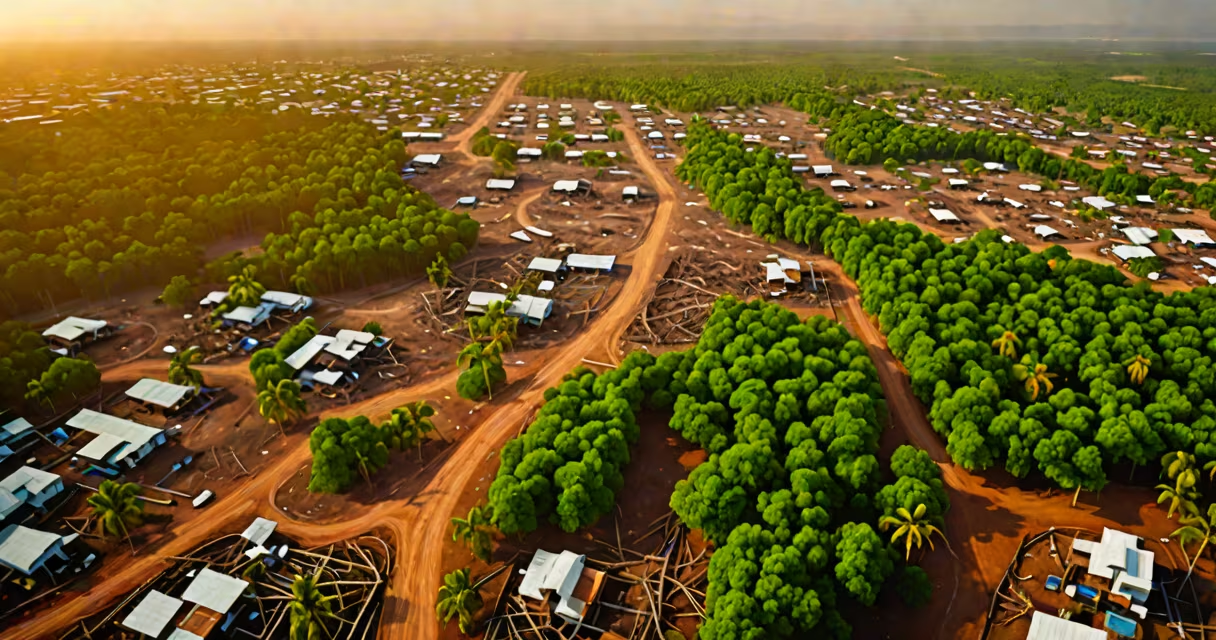
Environmental change refers to alterations in Earth's ecosystems, climate, or landforms caused by natural processes or human activities. These shifts can occur gradually or abruptly, affecting biodiversity, weather patterns, and human societies.
Environmental change occurs through interactions between biotic (living) and abiotic (non-living) components of ecosystems. Natural drivers include volcanic eruptions, solar radiation, and plate tectonics. Human-driven factors encompass deforestation, pollution, and greenhouse gas emissions.
For example, the Industrial Revolution accelerated carbon dioxide emissions, trapping heat and raising global temperatures-a process known as global warming. According to NASA, Earth's average temperature has risen by 1.2°C since the late 19th century.
| Type | Examples | Timescale |
|---|---|---|
| Climate Change | Global warming, shifting precipitation patterns | Decades to millennia |
| Land Use Change | Deforestation, urbanization, agriculture expansion | Years to centuries |
| Biodiversity Loss | Species extinction, habitat destruction | Decades to centuries |
| Pollution | Air, water, soil contamination | Immediate to long-term |
Many confuse environmental change with climate change alone. While climate change is a critical aspect, environmental change also includes biodiversity loss, pollution, and land degradation. For instance, the Amazon rainforest's deforestation rates have surged due to logging and farming, altering local ecosystems and global carbon cycles.
Another misconception is that environmental change is entirely human-induced. Natural events like volcanic eruptions and solar fluctuations also drive significant changes. The 1991 eruption of Mount Pinatubo in the Philippines cooled global temperatures by 0.5°C for two years due to ash blocking sunlight.
Addressing environmental change requires global cooperation and local action. Renewable energy adoption, reforestation, and sustainable agriculture reduce carbon footprints. The Paris Agreement, signed by 196 countries, aims to limit global warming to 1.5°C above pre-industrial levels.
Individual actions matter too. Switching to energy-efficient appliances, reducing waste, and supporting conservation efforts contribute to positive change. I've seen firsthand how community-led reforestation projects in Costa Rica restore ecosystems and support local economies.
Environmental change impacts food security, health, and economic stability. Rising temperatures threaten crop yields, while air pollution causes respiratory diseases. The World Health Organization estimates that ambient air pollution causes 4.2 million deaths annually.
Understanding and mitigating environmental change is important for sustaining life on Earth. By adopting sustainable practices and advocating for policy changes, we can protect ecosystems and ensure a healthier future for generations to come.
For more on sudden, drastic changes, see how blowing up affects environments.