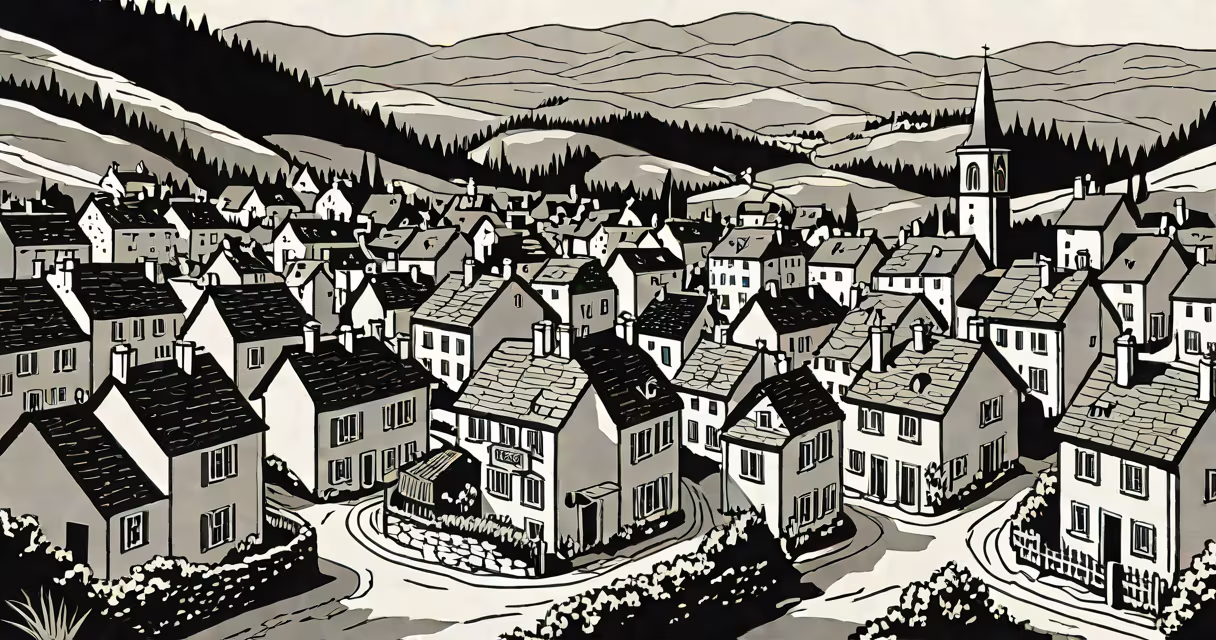
Deuils dans le quotidien jurassien refers to the distinctive mourning customs practiced in the Jura department of France, where death is marked by collective rituals deeply embedded in daily life. These traditions emphasize community solidarity and respect for the deceased.
The Jura region's mourning practices stem from a blend of Celtic, Roman, and Christian influences. Unlike urban areas, rural communities here maintain close-knit bonds, making death a shared experience rather than an isolated event. The region's harsh winters historically increased mortality rates, reinforcing the need for structured mourning rituals.
These customs include several unique elements:
One non-obvious aspect is the role of children, who participate in mourning rituals from an early age, learning about death through community involvement rather than isolation.
While France as a whole has secularized many death-related customs, the Jura maintains more visible, community-centered practices. For comparison:
| Aspect | Jura Region | Other French Regions |
|---|---|---|
| Duration of mourning | 6 months to 1 year | 3 months (standard) |
| Community involvement | High (organized meals, shared labor) | Lower (professional services dominate) |
| Symbolic attire | Black veils for women | Black clothing (less standardized) |
According to ethnologist Jean-Pierre Albert, these differences stem from the Jura's historical isolation and strong oral tradition preservation.
While core elements remain intact, some modern adaptations have emerged. For instance, social media groups now coordinate meal preparations among dispersed community members. However, the fundamental principle of collective support persists. I witnessed this firsthand during a visit to a small Jura village where neighbors spontaneously organized to support a grieving family, demonstrating the living nature of these traditions.
Many outsiders confuse these customs with those of neighboring Switzerland or assume they're purely religious. In reality, the Jura's traditions are distinct from Swiss practices and represent a unique cultural blend rather than strict religious observance. The French National Institute for Demographic Studies notes that rural French regions like the Jura maintain higher levels of traditional death rituals than urban centers.