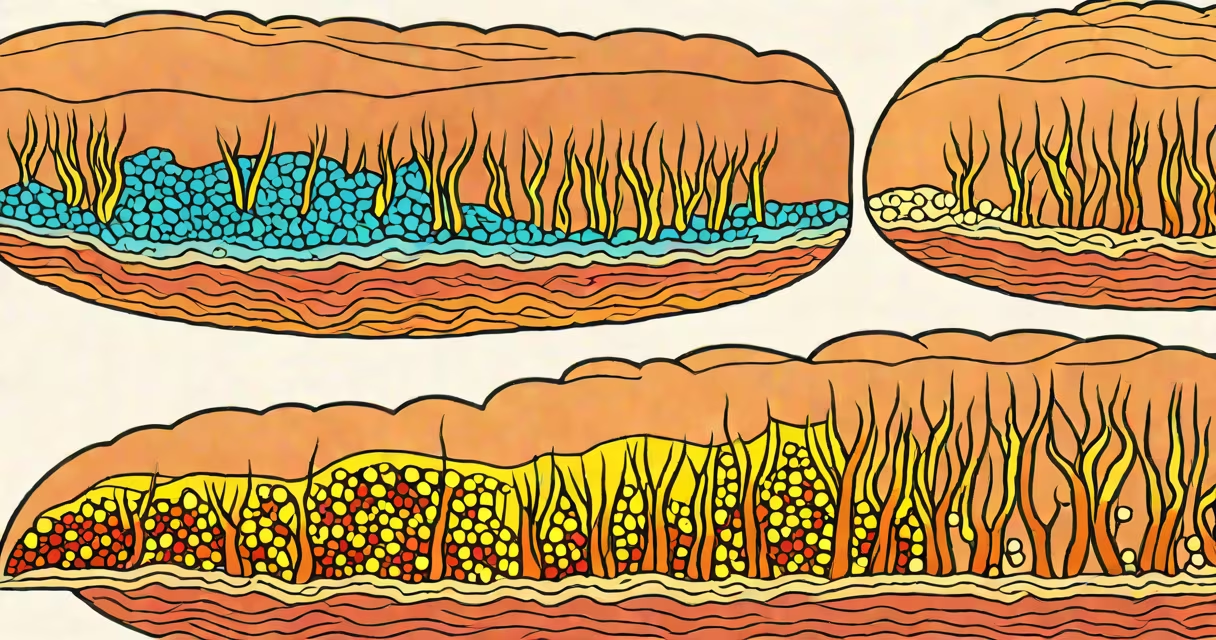
DHT (dihydrotestosterone) causes hair loss by shrinking hair follicles and shortening their growth cycle, leading to thinning and eventual loss. This hormone converts testosterone into a more potent form that binds to receptors in hair follicles, triggering miniaturization.
DHT binds to androgen receptors in hair follicles, particularly those sensitive to hormones. Over time, this binding shrinks the follicles, reducing their ability to support hair growth. The growth phase (anagen) shortens, while the resting phase (telogen) lengthens, resulting in thinner, weaker hairs.
Research from the American Academy of Dermatology shows that DHT-sensitive follicles in the scalp's crown and frontal areas are most affected. This process underlies androgenetic alopecia, the most common form of hair loss in both men and women.
| Type | Description | Common in |
|---|---|---|
| Male Pattern Baldness | Receding hairline and thinning at the crown | Men |
| Female Pattern Hair Loss | Diffuse thinning across the scalp | Women |
| Early-Onset Hair Loss | Premature thinning before age 30 | Both genders |
Many confuse DHT-related hair loss with other types, such as telogen effluvium (stress-induced shedding) or alopecia areata (autoimmune attacks). Unlike these temporary conditions, DHT-driven loss progresses gradually and often requires medical intervention.
For example, stress or poor nutrition may cause sudden shedding, but DHT-related thinning happens slowly over years. A study in the Journal of Investigative Dermatology found that DHT levels correlate strongly with long-term hair loss patterns.
Finasteride and dutasteride are FDA-approved medications that inhibit the enzyme converting testosterone to DHT. Minoxidil, though not a DHT blocker, can still stimulate growth in affected areas.
Natural remedies like saw palmetto and green tea extract may reduce DHT levels, but their effectiveness varies. I've seen clients with mild thinning improve with topical treatments, but severe cases often need prescription drugs.
One common myth is that only men experience DHT-related hair loss. In reality, women produce DHT too, and it contributes to hair thinning in about 20% of female pattern hair loss cases. Another misconception is that shaving worsens baldness-DHT affects follicles, not surface-level hair.
According to the International Society of Hair Restoration Surgery, genetic sensitivity to DHT matters more than absolute hormone levels. Some people with high DHT never lose hair, while others with average levels experience significant thinning.