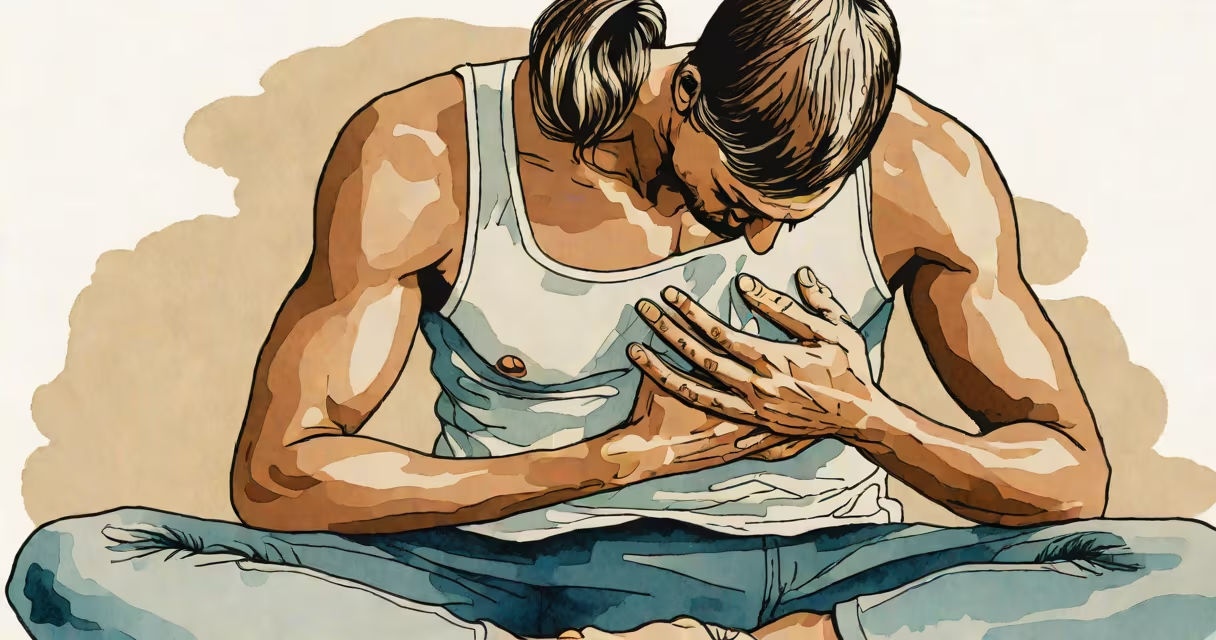
Diaphragmatic breathing for panic attacks is a technique that uses deep, controlled breaths to activate the body's relaxation response during moments of intense fear. It works by engaging the diaphragm to slow breathing, reducing heart rate and promoting calm.
The diaphragm is a muscle below the lungs that contracts to draw air in and relaxes to push air out. During panic attacks, breathing often becomes shallow and rapid, triggering the fight-or-flight response. Diaphragmatic breathing reverses this by increasing oxygen intake while slowing the breath cycle. This activates the parasympathetic nervous system, which counteracts stress hormones like cortisol and adrenaline.
There are two primary methods:
For panic attacks, the extended exhalation method is often more effective because it emphasizes the calming effect of longer exhales.
Diaphragmatic breathing is most useful during the onset of a panic attack, when symptoms like rapid heartbeat and shortness of breath occur. It's also beneficial for preventing panic attacks by reducing stress levels. Unlike box breathing for panic attacks, which uses equal inhale-exhale-hold cycles, diaphragmatic breathing focuses on deep, slow exhales to maximize relaxation.
Some people confuse diaphragmatic breathing with chest breathing, where the chest rises and falls instead of the belly. Chest breathing is less effective for panic attacks because it doesn't engage the diaphragm fully. Another mistake is rushing the technique-diaphragmatic breathing requires deliberate slowness to be effective.
During a panic attack, sit upright in a chair with feet flat on the floor. Place one hand on your chest and the other on your belly. Inhale deeply through your nose for 4 seconds, ensuring your belly rises while your chest stays relatively still. Hold the breath for 2 seconds, then exhale slowly through pursed lips for 6 seconds, feeling your belly fall. Repeat for 5-10 minutes or until symptoms subside.
I've used this technique during moments of high stress, such as before public speaking. By focusing on the slow exhale, I noticed my heart rate drop within minutes, making it easier to regain composure.