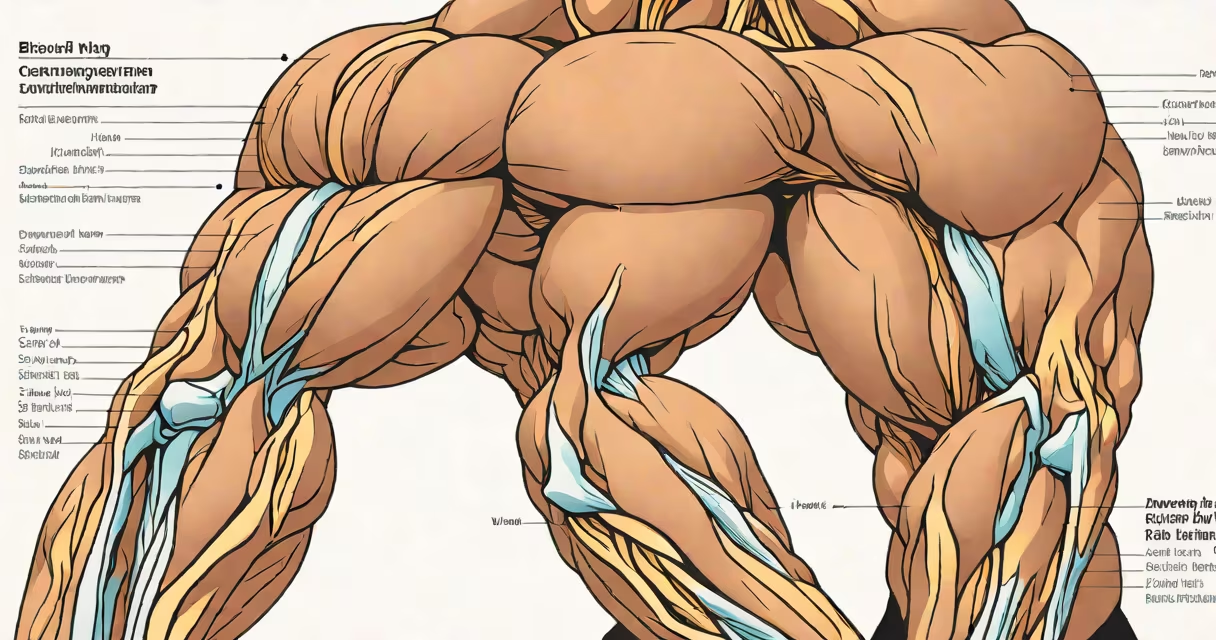
A bicep muscle tear occurs when the muscle fibers or tendons connecting your biceps muscle to bone suffer damage, ranging from minor strains to complete ruptures. This injury typically happens due to sudden heavy lifting, overexertion, or trauma.
The biceps muscle has two heads (short and long) that attach to bones in your shoulder and forearm. Tears usually occur at the tendon attachments rather than in the muscle belly itself. Sudden forceful motions-like lifting a heavy object or trying to catch a falling weight-can cause the tendon to tear away from the bone.
Bicep injuries fall into three categories:
| Type | Severity | Location |
|---|---|---|
| Strain | Mild | Muscle fibers |
| Partial Tear | Moderate | Tendon attachment |
| Complete Rupture | Severe | Tendon detachment |
A complete rupture often causes visible deformity and significant pain, while strains may feel like intense cramping.
Signs of a bicep tear include:
Unlike a trapezius muscle tear, which affects the upper back and neck, bicep injuries are localized to the front of the arm and shoulder.
Doctors diagnose bicep tears through physical exams and imaging tests like MRIs. Treatment varies by severity:
Most muscle tears can heal themselves with proper care, but severe cases require medical intervention.
Consult a doctor if you experience:
Early diagnosis improves recovery outcomes and prevents chronic issues.
To reduce injury risk:
Strengthening shoulder stabilizer muscles also helps protect the biceps.
If you suspect a bicep tear, consult a healthcare professional for an accurate assessment and appropriate treatment plan.