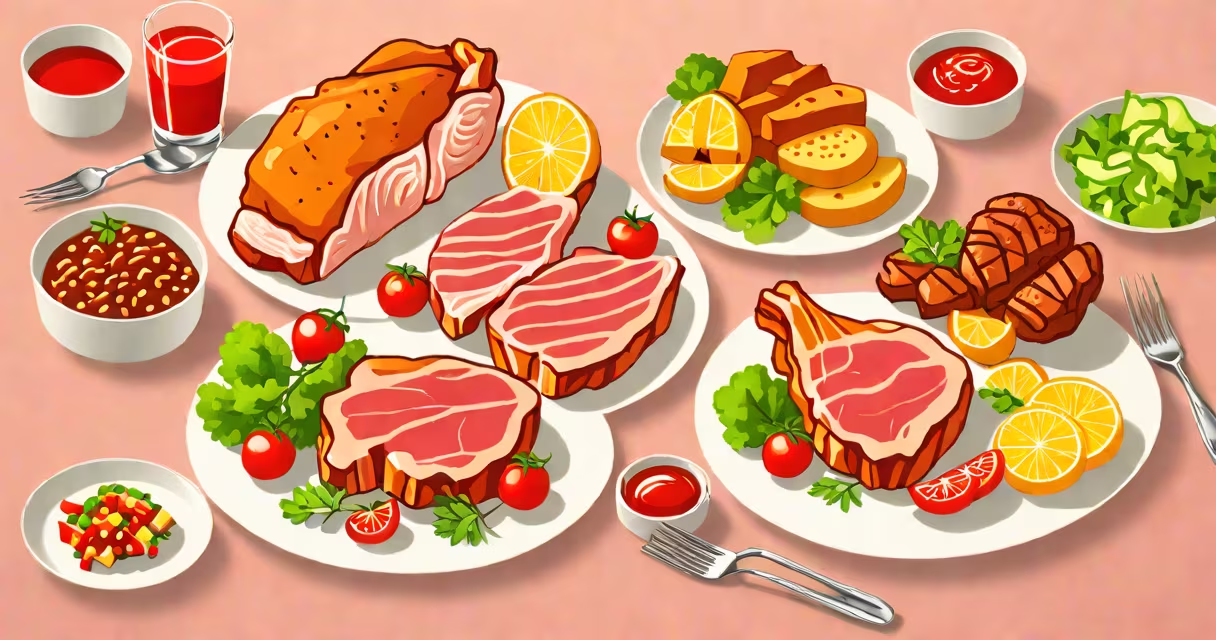
Eating meat doesn't inherently cause weight gain. Whether you gain weight depends on your calorie intake versus expenditure, not just the type of food you eat. Meat is high in protein and varies in fat content, which affects its calorie density.
Meat is calorie-dense, especially fatty cuts. A 6-ounce ribeye steak contains about 700 calories, while a 6-ounce skinless chicken breast has around 300 calories. Consuming more calories than your body burns leads to weight gain, regardless of the food source.
Protein in meat promotes satiety, which can help control appetite. However, if you eat large portions of high-fat meats regularly without adjusting other parts of your diet, you may consume excess calories.
| Type of Meat | Calories per 6 oz (cooked) | Protein per 6 oz (cooked) |
|---|---|---|
| Lean beef (sirloin) | 300 | 50g |
| Chicken breast (skinless) | 300 | 53g |
| Pork tenderloin | 300 | 44g |
| Lamb chops | 400 | 36g |
| Ribeye steak | 700 | 54g |
People often compare meat to fruits, vegetables, and grains. Unlike meat, most fruits and vegetables are low in calories and high in fiber, which aids digestion and keeps you full longer. For example, a cup of grapes has about 104 calories, while a cup of broccoli has only 31 calories. This makes it easier to overeat higher-calorie foods like meat without realizing it.
However, meat provides essential nutrients like iron, zinc, and vitamin B12, which are harder to get from plant-based foods. Balancing meat with other nutrient-rich foods is key to maintaining a healthy diet.
Some believe that meat is inherently fattening, but this oversimplifies the issue. Weight gain results from consuming more calories than your body uses, whether those calories come from meat, bread, or any other food. Portion control and dietary balance are more important than avoiding specific foods.
Another myth is that all meats are equally high in fat. Lean cuts of meat, such as skinless chicken breast or pork tenderloin, have fewer calories than fatty cuts like ribeye steak. Choosing leaner options can help manage calorie intake while still enjoying meat.
Consider a person who eats a 6-ounce ribeye steak (700 calories) for dinner. If they also have a side of mashed potatoes (200 calories) and a glass of wine (120 calories), their meal totals 1,020 calories. If their daily calorie needs are 2,000 calories and they consume similar meals throughout the day, they may exceed their calorie limit, leading to weight gain. However, if they balance their diet with lower-calorie meals and stay active, they can maintain their weight even while eating meat.
Eating meat doesn't automatically make you gain weight. Weight gain depends on your calorie intake and activity level. Choosing leaner cuts of meat, controlling portion sizes, and balancing your diet with other nutritious foods can help you enjoy meat without worrying about unwanted weight gain.