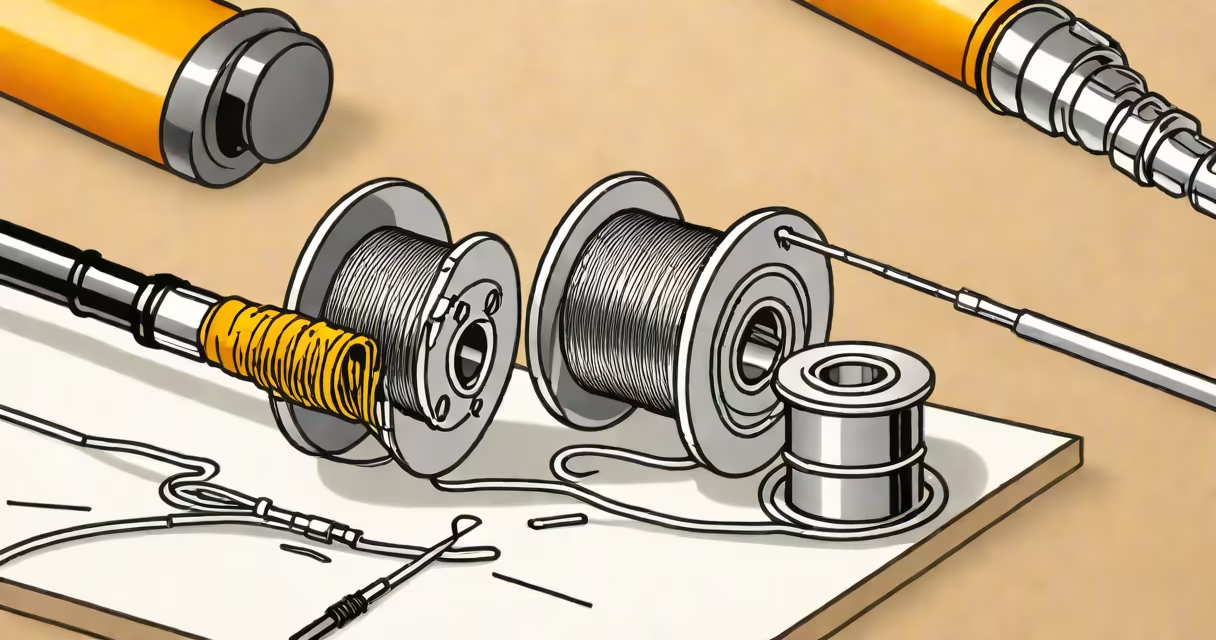
Rosin core solder doesn't need additional flux because it already contains rosin flux inside the wire. This built-in flux activates during soldering to clean metal surfaces and improve solder flow.
Rosin core solder is a solid wire made of tin, lead (in some cases), or other alloys, with a thin core of rosin flux running through it. When heated, the flux melts first, cleaning the metal surface and allowing the solder to flow smoothly onto the joint.
| Type | Composition | Common Uses |
|---|---|---|
| 60/40 Sn/Pb | 60% tin, 40% lead | General electronics, automotive wiring |
| SnAgCu (SAC) | Tin-silver-copper alloy | Lead-free electronics, high-reliability joints |
| SnCuNi | Tin-copper-nickel | Industrial applications, harsh environments |
Rosin core solder is ideal for most electronics work because the built-in flux simplifies the process. Flux core solder, however, requires separate flux application and is often used in high-temperature or industrial settings where extra cleaning power is needed.
For example, when repairing a circuit board, rosin core solder is usually sufficient. But for soldering thick copper pipes, a flux core solder with additional flux may be necessary for better adhesion.
Many people assume that rosin core solder doesn't require any additional steps, but it's still important to clean the surface before soldering. Even with built-in flux, dirt, oxidation, or grease can interfere with the soldering process.
I learned this the hard way when working on a car stereo. The connections didn't hold because the wires were dirty. After cleaning them properly, the rosin core solder worked perfectly.
While rosin core solder usually doesn't need extra flux, there are exceptions. If you're working with particularly dirty or oxidized metals, applying additional flux can help. Also, some high-performance solders have minimal internal flux, requiring extra flux for optimal results.
According to the Soldering Handbook, using the right amount of flux ensures strong, reliable joints. Too little flux can lead to weak connections, while too much can cause residue buildup.
Rosin core solder doesn't need extra flux, but understanding when to supplement it can improve your soldering results. For most electronics work, the built-in flux is enough, but for tougher jobs, additional flux may be necessary.