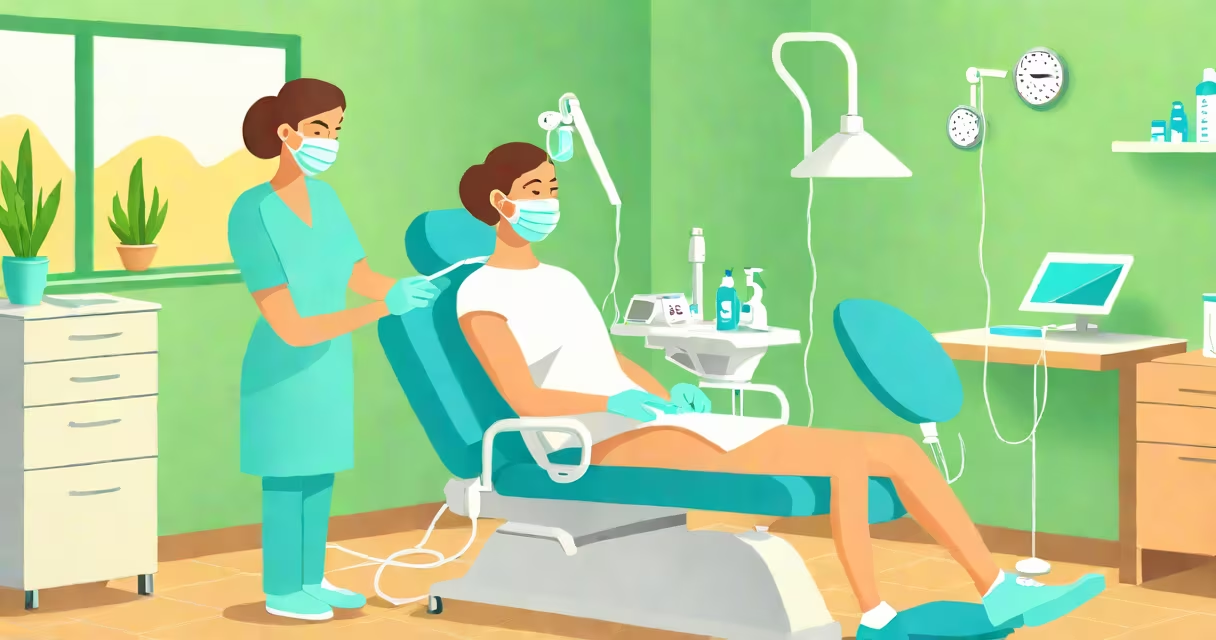
Periodontal cleaning, also called scaling and root planing, removes plaque and tartar from below the gumline to treat gum disease. While some discomfort may occur, most patients tolerate it well with local anesthesia.
The procedure happens in two parts: scaling removes plaque and tartar above and below the gumline, while root planing smooths tooth roots to help gums reattach. A dental hygienist or dentist performs it using manual tools or ultrasonic devices.
First, the dentist numbs the area with local anesthesia. You'll feel pressure but not pain during scaling. Root planing is similar to a regular dental cleaning but goes deeper. The entire process takes one to two hours, depending on gum disease severity.
| Type | Description | Typical Duration |
|---|---|---|
| Supragingival Cleaning | Removes plaque above the gumline | 30-60 minutes |
| Subgingival Cleaning | Removes plaque below the gumline (periodontal cleaning) | 1-2 hours |
| Full-Mouth Debridement | Initial cleaning for severe gum disease | 1 hour |
Periodontal cleaning treats gingivitis and periodontitis, preventing tooth loss and bone damage. It's often the first step in gum disease treatment, followed by more advanced procedures if needed.
According to the American Dental Association, scaling and root planing can reduce pocket depths and help prevent further damage. Without treatment, gum disease can lead to serious complications, including tooth loss.
Many people confuse periodontal cleaning with a regular dental cleaning. Regular cleanings remove surface plaque, while periodontal cleaning goes deeper to address gum disease.
Another myth is that the procedure is extremely painful. While some discomfort is normal, local anesthesia minimizes pain. Most patients report feeling pressure rather than sharp pain.
After the procedure, your gums may feel tender or swollen. Your dentist may recommend over-the-counter pain relievers like ibuprofen or acetaminophen. Avoid hard or crunchy foods for a few days.
I once had periodontal cleaning done, and while there was some pressure, the anesthesia worked well. I felt fine afterward, just avoiding hot beverages for a day or two.
If you notice bleeding gums, persistent bad breath, or loose teeth, schedule a dental appointment. Early treatment improves outcomes and prevents further damage.
While periodontal cleaning may cause some discomfort, it's a important treatment for gum disease. With proper care and local anesthesia, most patients tolerate it well. If you're concerned about pain, discuss options with your dentist.