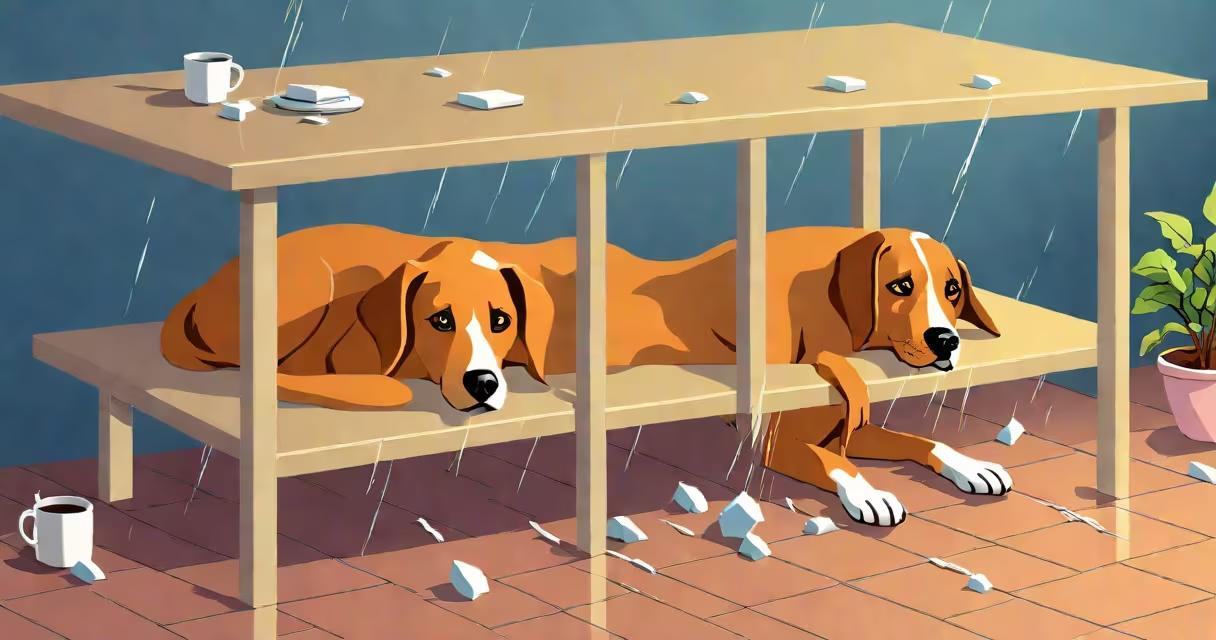
Dog anxiety thunderstorms is a common condition where dogs exhibit fear, stress, or panic during thunderstorms due to loud noises, changes in barometric pressure, and static electricity. This anxiety can range from mild nervousness to severe phobias requiring professional intervention.
Dogs experience storm anxiety due to a combination of sensory triggers. Loud thunderclaps and lightning flashes can startle them, while drops in barometric pressure may cause discomfort. Static electricity from storms can also make their fur stand on end, adding to their distress. These factors often work together, overwhelming a dog's senses and triggering a fight-or-flight response.
| Type | Description | Common Signs |
|---|---|---|
| Mild Anxiety | Nervousness or restlessness during storms | Pacing, whining, seeking attention |
| Moderate Anxiety | Visible stress and attempts to hide | Trembling, hiding under furniture, clinginess |
| Severe Phobia | Extreme panic, potential self-harm | Destructive behavior, escape attempts, vomiting |
Storm anxiety is most common in dogs with a history of traumatic storm experiences or those genetically predisposed to noise sensitivity. Breeds like Border Collies, German Shepherds, and Greyhounds are particularly prone. The condition often worsens with age as past experiences reinforce the fear.
Many pet owners assume storm anxiety is just a temporary phase or that their dog will outgrow it. However, untreated storm phobias can escalate, leading to long-term behavioral issues. Another myth is that punishment or scolding will help-this only increases a dog's stress levels. Positive reinforcement and calming techniques are far more effective.
Start by creating a safe space, such as a crate covered with a blanket or a quiet room away from windows. White noise machines or calming music can mask storm sounds. Pheromone diffusers, like Adaptil, release synthetic dog appeasing hormones that reduce stress. For severe cases, veterinarians may prescribe anti-anxiety medication or recommend behavioral therapy.
Desensitization training involves gradually exposing your dog to recorded storm sounds at low volumes while rewarding calm behavior. Over time, you increase the volume, helping your dog build tolerance. Consistency is key-short, frequent sessions work better than long, infrequent ones.
If your dog's anxiety leads to destructive behavior, self-injury, or an inability to function normally, consult a veterinarian or a certified animal behaviorist. Professionals can assess the severity of the phobia and recommend tailored solutions, including medication if necessary.
According to the American Society for the Prevention of Cruelty to Animals (ASPCA), untreated storm phobias can lead to chronic stress, which weakens the immune system and increases the risk of illness. Early intervention is important for your dog's long-term well-being.