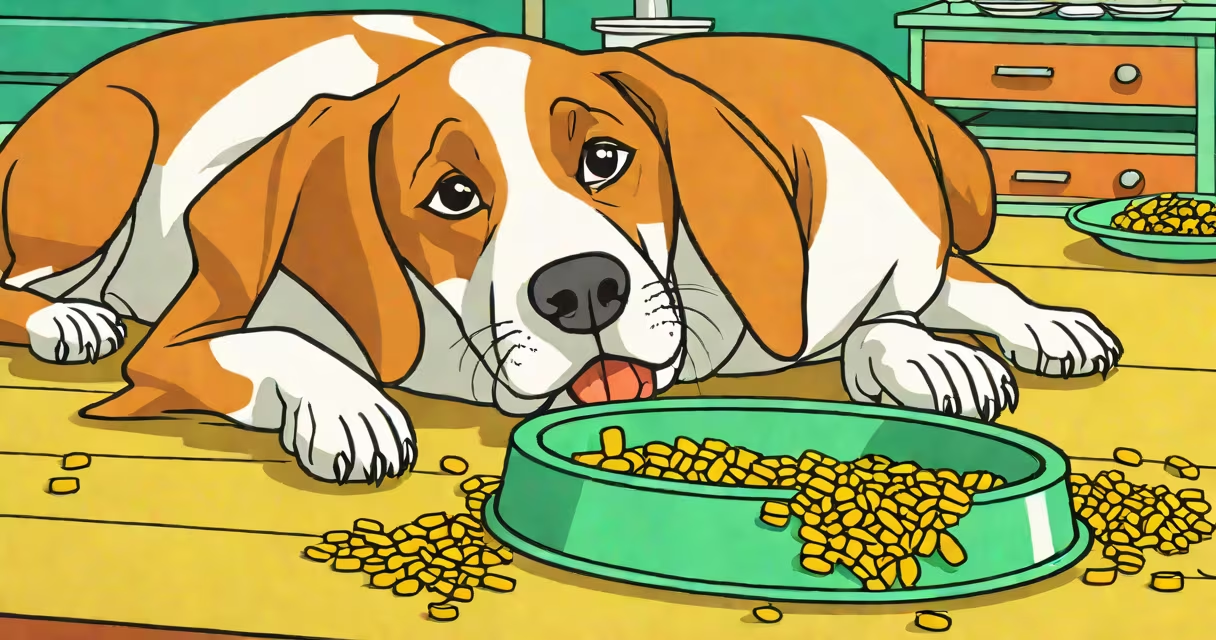
Dog vomiting from eating too fast occurs when a dog swallows air along with food, leading to stomach distension and irritation. This condition, often called "bloat" or "gastric dilatation," can range from mild discomfort to life-threatening situations.
When dogs eat too quickly, they don't chew their food properly. Instead, they gulp large chunks down whole, swallowing air in the process. This excess air stretches the stomach, creating pressure and irritation. The stomach may also twist, cutting off blood flow-a medical emergency known as gastric dilatation-volvulus (GDV).
The primary cause is competitive or stressful eating environments. Dogs in multi-pet households or those raised in shelters often develop speed-eating habits due to competition for food. Anxiety or excitement can also contribute. Certain breeds, like Great Danes, Boxers, and Standard Poodles, are more prone to GDV.
Slow feeders, puzzle bowls, and elevated feeding stations can help. Smaller, more frequent meals reduce the risk. For anxious dogs, feeding in a quiet, separate area may alleviate stress. Some owners use time-delayed feeders or treat-dispensing toys to slow eating.
If your dog vomits once and seems fine afterward, it's likely not an emergency. However, repeated vomiting, unproductive retching, or a distended abdomen requires immediate veterinary attention. Other red flags include drooling, restlessness, and pale gums. GDV can be fatal within hours if untreated.
I once had a client whose Labrador Retriever, Max, frequently vomited after meals. After introducing a slow feeder and smaller meals, Max's vomiting stopped entirely. However, when Max started vomiting repeatedly one evening, the owner brought him in immediately. Fortunately, it wasn't GDV, but the quick response prevented complications.