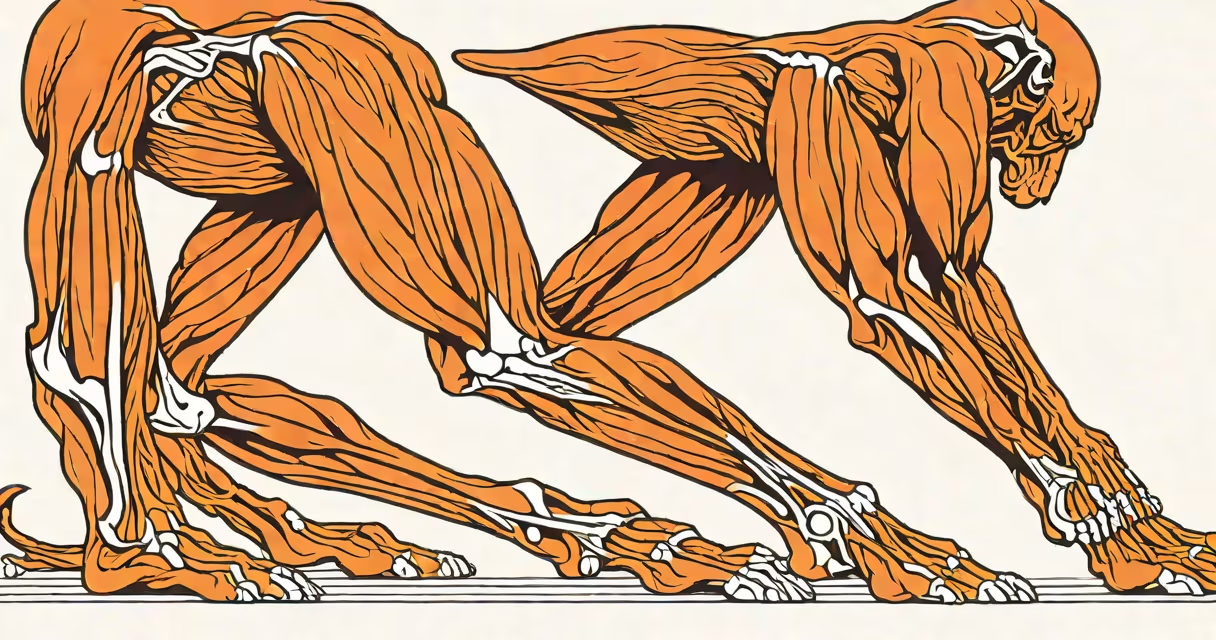
Dog leg muscle twitching refers to involuntary contractions or spasms in the leg muscles of dogs, often visible as flickering or quivering under the skin. These twitches typically last seconds and may occur in any leg muscle, including the quadriceps, hamstrings, or calf.
Muscle twitching happens when nerves controlling the muscle send improper signals, causing small, localized contractions. In dogs, this can result from normal muscle fatigue or more serious underlying conditions. Unlike humans, dogs may not always show discomfort during these episodes.
| Type | Description | Common Locations |
|---|---|---|
| Fasciculation | Small, localized twitches visible under the skin | Any muscle group |
| Cramp | Prolonged, painful contraction | Calf, thigh |
| Myoclonus | Sudden, jerky movement | Entire limb |
Most cases are benign, caused by dehydration, electrolyte imbalances, or overexertion. However, persistent twitching may indicate nerve damage, muscle disorders, or metabolic issues. According to the American Kennel Club, older dogs or those with certain breeds are more prone to muscle twitching.
Consult a veterinarian if twitching occurs frequently, lasts longer than a few minutes, or is accompanied by weakness, lameness, or changes in behavior. Persistent twitching without obvious cause may require diagnostic tests, including blood work or electromyography.
Many confuse dog leg muscle twitching with seizures, which involve loss of consciousness and whole-body convulsions. While twitching can occur during seizures, isolated muscle spasms are rarely seizure-related. Another myth is that twitching always indicates pain-in reality, dogs often tolerate these spasms without discomfort.
Ensure your dog stays hydrated, especially during hot weather or intense activity. A balanced diet rich in potassium, calcium, and magnesium can help prevent electrolyte imbalances. If twitching persists, your vet may recommend supplements or medications to address underlying causes.