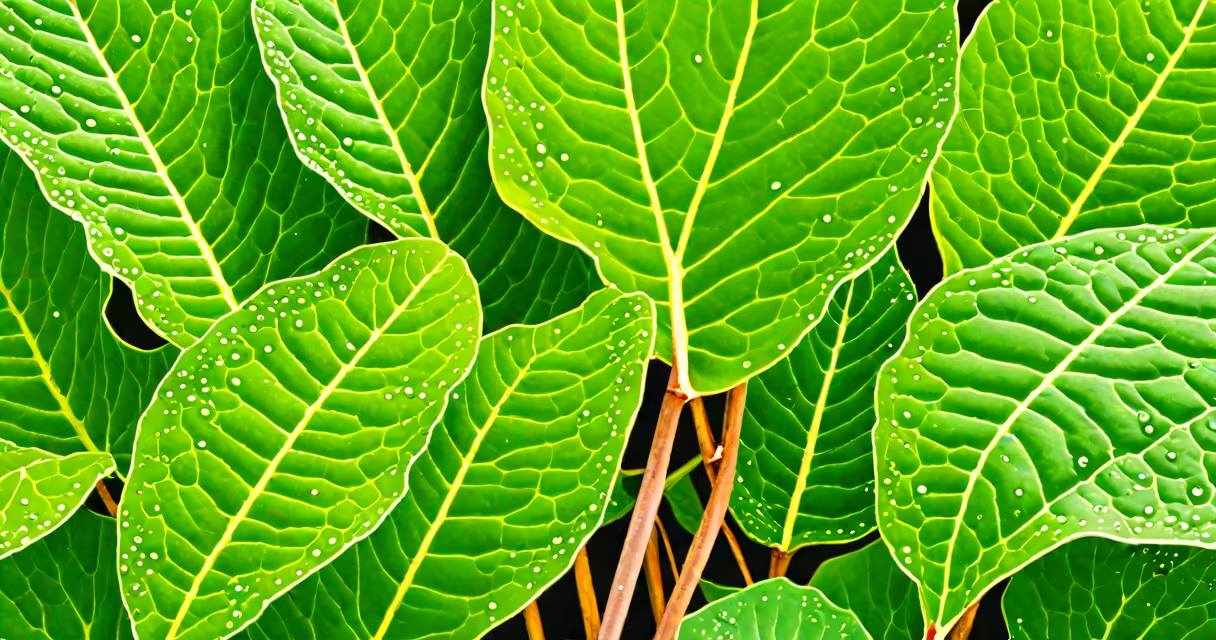
Elephant ear plants are large tropical plants with massive, heart-shaped leaves that resemble elephant ears. They belong to the Araceae family and include popular varieties like Alocasia and Colocasia. These plants thrive in warm, humid environments and require specific care to maintain their dramatic foliage.
Elephant ear plants grow from rhizomes, which are thick underground stems. These rhizomes store nutrients and energy, allowing the plant to produce large leaves year after year. The plants can grow quite tall, sometimes reaching heights of 6 feet or more, with leaves spanning 2-3 feet in width.
| Type | Scientific Name | Key Features |
|---|---|---|
| Alocasia | Alocasia spp. | Upright leaves, prominent midribs, often with metallic sheen |
| Colocasia | Colocasia esculenta | Drooping leaves, thicker stems, edible corms |
| Xanthosoma | Xanthosoma spp. | Smaller leaves, more compact growth, often variegated |
Elephant ear plants are popular as ornamental houseplants and field features in tropical and subtropical regions. Their large leaves create dramatic focal points in gardens and add lush greenery to indoor spaces. Some varieties, like Colocasia, are also grown for their edible corms, which are a staple food in many cultures.
These plants are commonly confused with other large-leafed plants like Philodendron or Caladium. However, elephant ear plants have distinct characteristics such as their massive size and unique leaf shape. Unlike Philodendron, which has split or lobed leaves, elephant ear plants have whole, heart-shaped leaves.
To care for elephant ear plants, provide them with bright, indirect light and well-draining soil. They require consistent moisture but should not be overwatered. Fertilize monthly during the growing season with a balanced fertilizer to promote healthy growth. Maintain high humidity levels, especially for indoor plants, by misting regularly or using a humidifier.
One common mistake is placing these plants in direct sunlight, which can scorch their leaves. They prefer filtered light or partial shade., they are sensitive to cold temperatures below 50°F (10°C), which can damage their leaves.
When I grew my first elephant ear plant, I noticed it struggled in low-light conditions. After moving it to a brighter spot near a window, the leaves became larger and more vibrant. This experience taught me the importance of proper lighting for these plants.
Elephant ear plants are susceptible to pests like spider mites, aphids, and mealybugs. Regular inspection and treatment with insecticidal soap can prevent infestations. Overwatering can lead to root rot, so ensure the soil is well-draining and allow the top inch of soil to dry out between waterings.
For more information on plant care, visit our guide on maintaining healthy plants.
Elephant ear plant care involves providing the right light, water, and humidity to keep these stunning plants thriving. With proper care, they can be a beautiful addition to any garden or home.