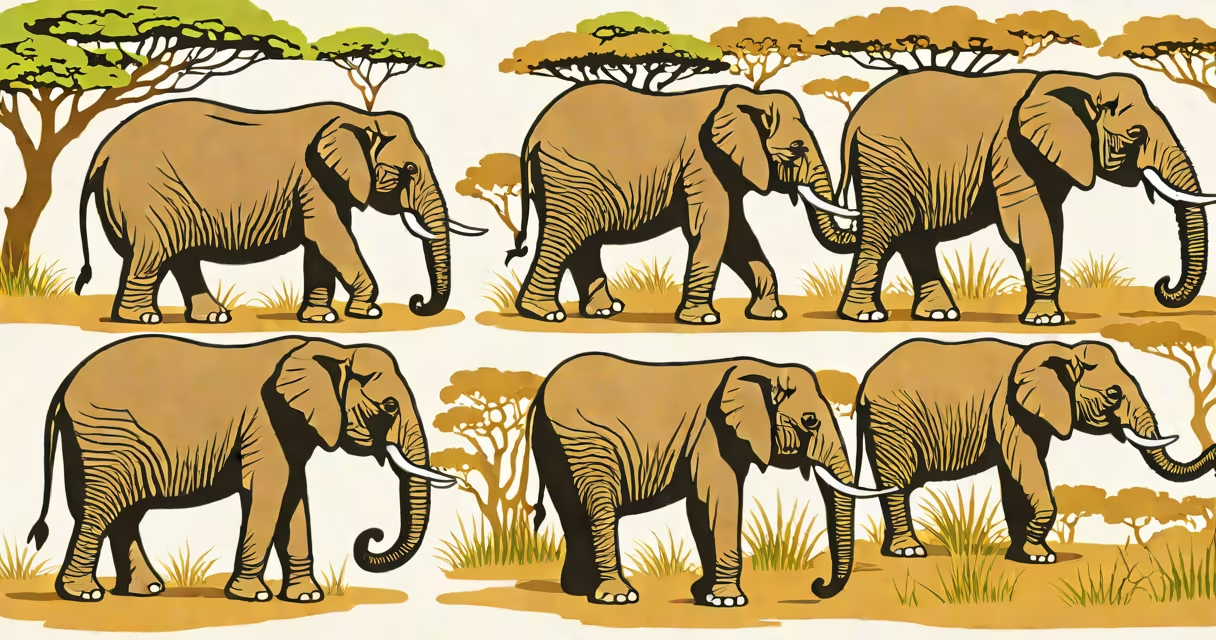
The elephant scientific name is Loxodonta africana for African elephants and Loxodonta cyclotis for African forest elephants, while Asian elephants are classified as Elephas maximus. These names reflect the two primary species, each with distinct physical traits and habitats.
Elephants belong to the family Elephantidae, which includes both extant and extinct species. The genus Loxodonta encompasses African elephants, while Elephas covers Asian elephants. This classification helps scientists study their evolutionary history and ecological roles.
| Common Name | Scientific Name | Key Traits |
|---|---|---|
| African Bush Elephant | Loxodonta africana | Large ears, long trunk, two finger-like protrusions at the trunk tip |
| African Forest Elephant | Loxodonta cyclotis | Smaller size, straighter tusks, rounded ears |
| Asian Elephant | Elephas maximus | Smaller ears, single finger-like protrusion at the trunk tip, dome-shaped head |
Elephants play important roles in their ecosystems by dispersing seeds and maintaining vegetation. Historically, they have been integral to human cultures for transportation, labor, and religious ceremonies. Today, they are primarily found in protected areas across Africa and Asia, with conservation efforts focusing on mitigating human-elephant conflicts and poaching.
A common misconception is that all elephants are the same. However, African and Asian elephants differ in appearance, behavior, and habitat preferences. For instance, African elephants are larger and have bigger ears to regulate body temperature in the hot savannas, while Asian elephants are smaller and adapted to forested environments.
In 2016, researchers published a study in the journal PLOS Genetics identifying genetic differences between African bush and forest elephants. This research confirmed that they are distinct species, each requiring tailored conservation strategies. The study highlighted the importance of accurate scientific naming in conservation efforts.
While working with wildlife conservationists in Kenya, I observed firsthand how African elephants use their large ears to cool down in the midday heat. Their behavior differed markedly from the Asian elephants I later saw in Sri Lanka, which relied more on mud baths for thermoregulation.
Another distinction is between elephant species and subspecies. While Loxodonta africana and Elephas maximus are full species, there are also recognized subspecies within each, such as the Sri Lankan elephant (Elephas maximus maximus). Understanding these differences is important for accurate communication in conservation efforts.
The elephant scientific name provides a clear structure for distinguishing between African and Asian elephants, each with unique characteristics and conservation needs. By recognizing these differences, we can better appreciate and protect these magnificent creatures for future generations.