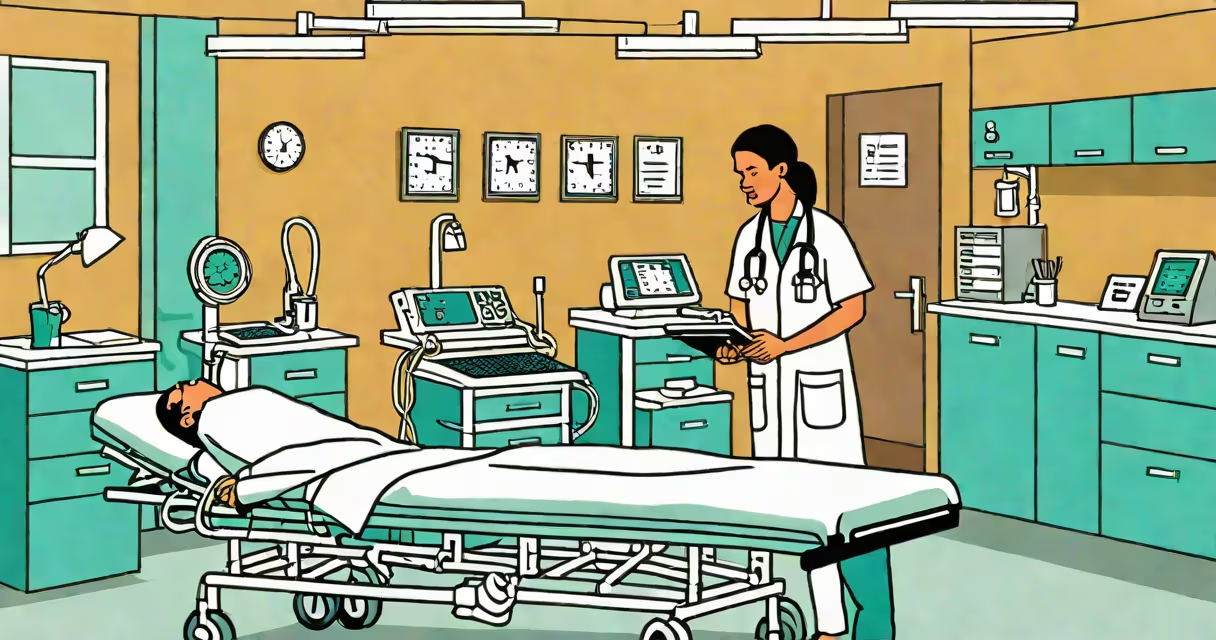
Emergency medicine physicians complete four years of medical school, a three-year emergency medicine residency, and pass board exams to earn certification. These steps ensure they can handle critical care situations.
All physicians begin with a bachelor's degree, then four years of medical school. The first two years focus on classroom and lab work, covering anatomy, biochemistry, and pharmacology. The final two years involve clinical rotations in various specialties, including emergency medicine.
After medical school, graduates enter a three-year emergency medicine residency. Residents train in trauma care, cardiac emergencies, and pediatric emergencies. They work under supervision in hospital emergency departments, gaining hands-on experience.
To practice independently, physicians must pass exams from the American Board of Emergency Medicine (ABEM). This includes a written exam and an oral exam, assessing their knowledge and decision-making skills. Certification must be renewed every 10 years.
Emergency medicine physicians must complete continuing medical education (CME) courses to maintain certification. These courses cover new treatments, protocols, and technologies. For example, advances in stroke treatment or trauma care require ongoing training.
Emergency medicine physicians also collaborate with other specialists, such as trauma surgeons and cardiologists, to provide complete care. Their education prepares them for rapid decision-making in life-threatening situations.
For comparison, journalists follow a different path, often requiring a bachelor's degree in journalism or communications. Their training focuses on reporting and media ethics rather than medical science.