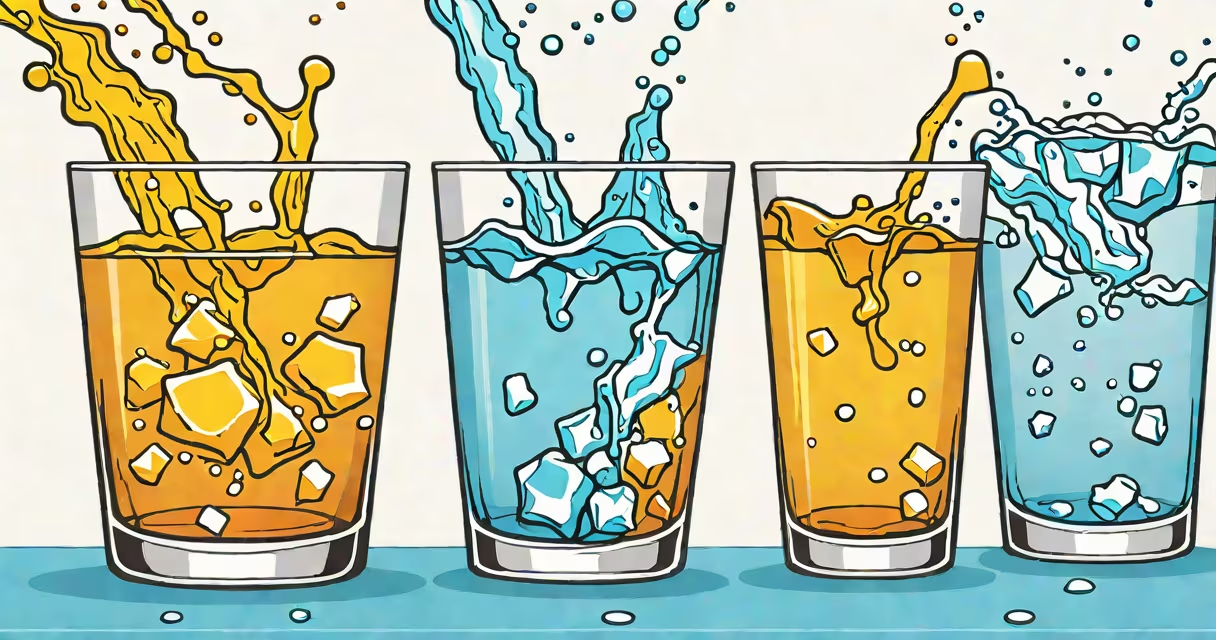
Endothermic reactions absorb heat, while exothermic reactions release heat. These opposing processes define how energy moves during chemical changes.
All chemical reactions involve energy changes. Endothermic reactions require external energy to proceed, typically as heat. Exothermic reactions release energy, often as heat or light. The key difference lies in the direction of energy flow relative to the system (reactants and products).
| Type | Energy Flow | Example |
|---|---|---|
| Endothermic | Absorbs heat from surroundings | Photosynthesis (plants converting sunlight into chemical energy) |
| Exothermic | Releases heat to surroundings | Combustion (burning wood releases heat and light) |
Endothermic reactions occur in nature and industry where energy input is needed. For example, cooking an egg requires heat to denature proteins. Exothermic reactions are common in energy production, like burning fuel or cellular respiration, where organisms release stored energy.
A common misconception is that endothermic reactions always feel cold and exothermic reactions always feel hot. While often true, this isn't universally accurate. Some endothermic reactions may not feel cold if the heat absorption is slow, and some exothermic reactions may not feel hot if the heat release is minimal.
Endothermic reactions include ice melting (absorbing heat from the environment) and baking soda dissolving in vinegar (absorbing heat). Exothermic reactions include rusting iron (releasing heat over time) and setting concrete (releasing heat as it hardens).
When I mixed baking soda and vinegar for a science project, the solution felt cooler due to the endothermic reaction absorbing heat from its surroundings. This hands-on example helped me understand how energy transfer works in real time.
People often confuse endothermic and exothermic reactions with physical changes like state transitions. Melting ice is endothermic, but freezing water is exothermic. Both are phase changes, but their energy flows differ. Another confusion arises with reversible reactions, where one direction may be endothermic and the reverse exothermic, such as the dissolution of ammonium nitrate in water.
According to the U.S. National Library of Medicine, understanding these reactions is important in fields like medicine, where drug interactions often involve energy exchanges. In chemistry, these principles govern everything processes.