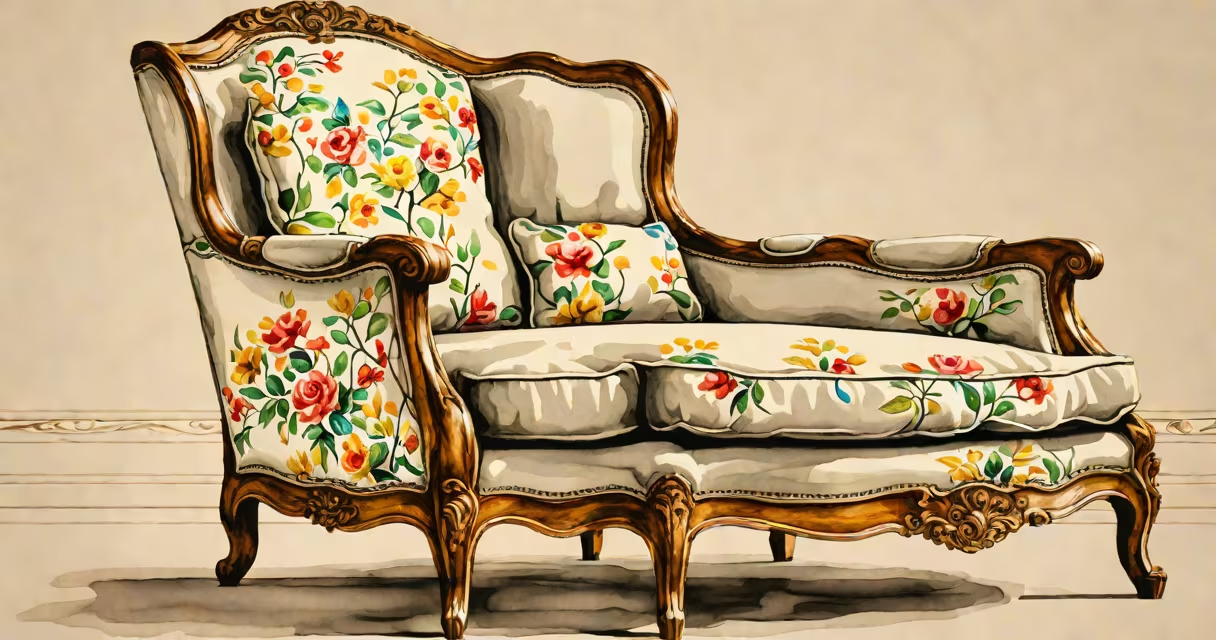
A fauteuil maison du monde is a classic French armchair with a curved wooden frame and upholstered seat, often featuring ornate carvings or gilded details. These chairs originated in 17th-century France and remain popular in traditional and vintage-inspired interiors.
The design prioritizes comfort and elegance. The curved back and arms support the sitter, while the upholstery adds softness. Many models include decorative elements like carved wood, gilded accents, or patterned fabrics.
Fauteuils vary by period and style:
| Type | Characteristics | Era |
|---|---|---|
| Louis XV | Asymmetrical design, cabriole legs, elaborate carvings | Mid-18th century |
| Louis XVI | Straighter lines, neoclassical influences, striped upholstery | Late 18th century |
| Empire | Bold, straight lines, animal motifs, bronze accents | Early 19th century |
Originally, these chairs adorned French palaces and aristocratic homes. Today, they appear in living rooms, dining areas, and even offices seeking a touch of vintage charm. Their timeless design complements various decor styles,.
Many collectors and interior designers seek authentic fauteuils for their historical value and craftsmanship. Reproductions offer a more affordable alternative while maintaining the aesthetic appeal.
Some assume all French armchairs are fauteuils. In reality, a bergère features an enclosed back, while a duchesse brisée is a settee-style chair. True fauteuils have open backs and distinct curves.
Many fauteuils from the 18th century were made with bois de rose (rosewood), prized for its durability and rich color. This wood was often reserved for royal commissions due to its rarity and cost.
People often confuse fauteuils with ancient Roman curule chairs, which had a similar curved design but lacked upholstery. Fauteuils also differ from modern recliners, which prioritize functionality over aesthetics.