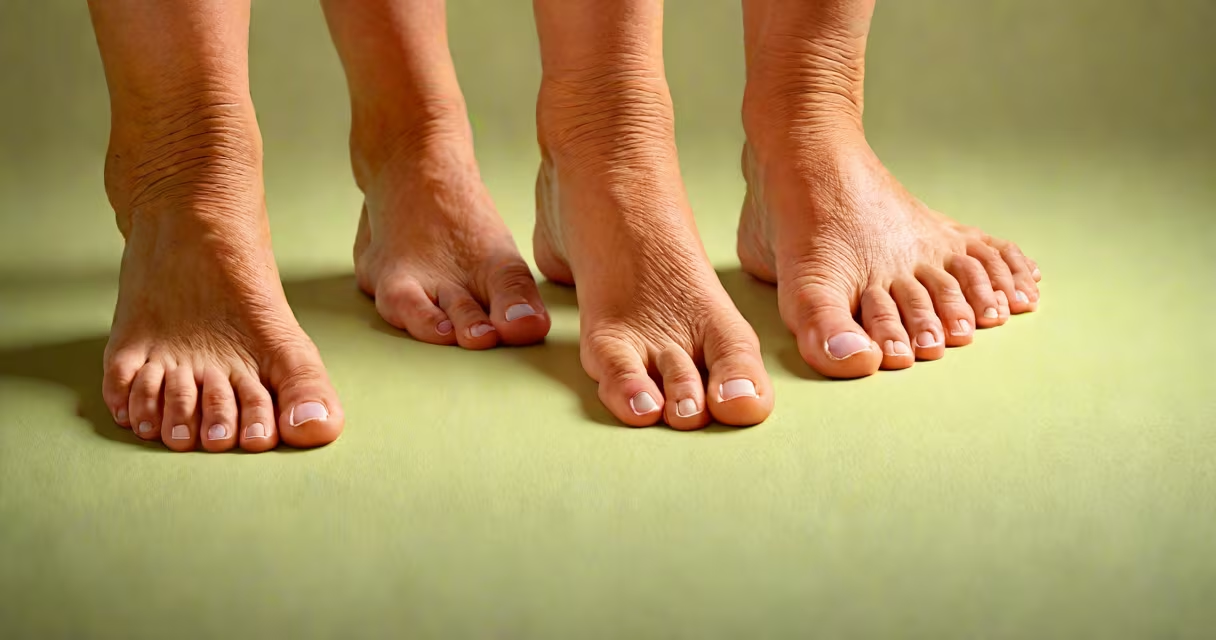
Feet swollen after walking occurs when fluid builds up in your feet and ankles, often due to prolonged standing, poor circulation, or underlying medical conditions. This swelling, called edema, typically appears as puffiness, increased shoe tightness, or skin that retains an indentation when pressed.
Walking causes fluid to shift downward due to gravity, accumulating in the feet and ankles. Normally, your body returns this fluid to circulation through lymphatic vessels and veins. However, factors like prolonged standing, heat, or medical conditions can disrupt this process, leading to visible swelling.
The most common reasons for feet swelling after walking include:
Consult a healthcare provider if swelling persists beyond two days, occurs suddenly in one foot, or accompanies other symptoms like pain, warmth, or redness. These could indicate serious conditions such as deep vein thrombosis or infection. According to the American Academy of Orthopaedic Surgeons, sudden swelling in one leg requires immediate medical attention.
For mild cases, elevating your feet for 30 minutes several times daily helps reduce swelling. Compression socks improve circulation during walks, while massaging your legs toward your heart moves accumulated fluid. Staying hydrated prevents water retention, and reducing salt intake decreases fluid buildup.
I noticed significant improvement in my own walking-induced swelling after switching to supportive shoes with arch support and wearing compression socks during long walks. The difference was noticeable within a week.
Many people assume foot swelling only affects older adults or those with chronic conditions. However, even healthy individuals may experience temporary swelling after intense exercise or prolonged standing. Unlike chronic swelling caused by medical conditions, this temporary swelling usually resolves with rest and elevation.
Another misconception is that foot swelling always indicates a serious problem. While sudden or severe swelling warrants medical attention, occasional swelling from walking typically results from normal physiological responses to activity and posture.