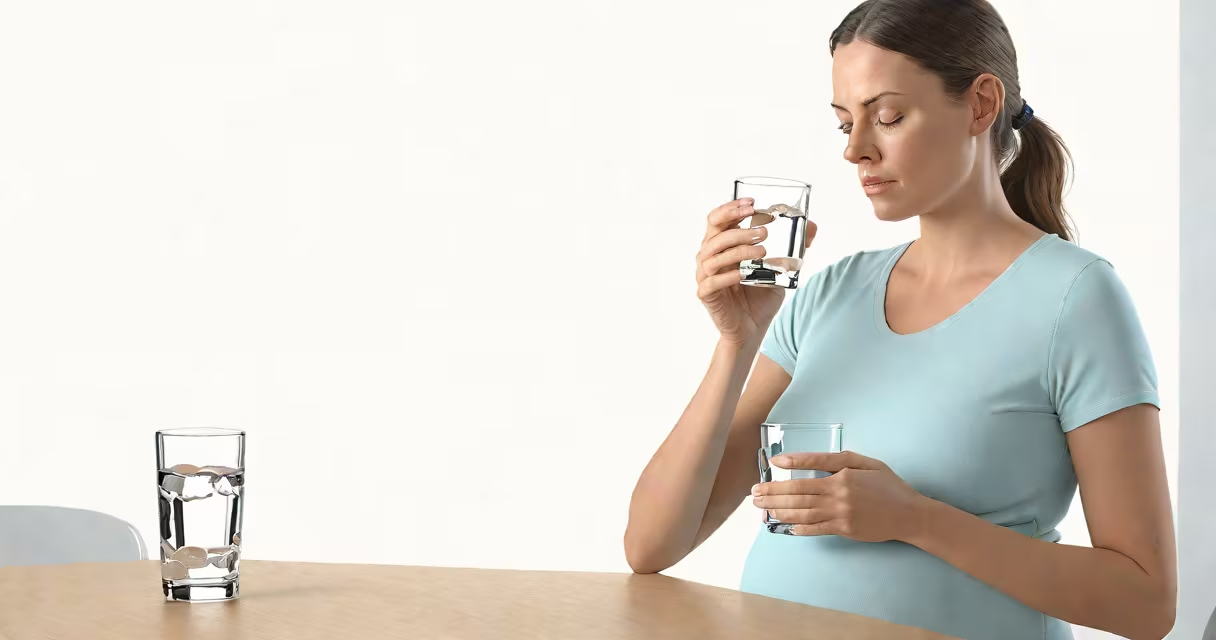
Feeling nauseous after drinking water during early pregnancy is normal due to hormonal shifts and physical changes. This discomfort often peaks between weeks 6 and 12.
During early pregnancy, rising levels of human chorionic gonadotropin (hCG) and estrogen slow digestion and increase stomach acid sensitivity. The growing uterus also presses on the stomach, making it harder to digest liquids and solids.
According to the American Pregnancy Association, about 70% of pregnant people experience nausea, especially after eating or drinking.
When you drink water, it dilutes stomach acid, which can trigger nausea. The enlarged uterus further reduces stomach capacity, making even small amounts of liquid uncomfortable.
For example, a pregnant person might feel fine after sipping water slowly but nauseous after drinking a full glass quickly.
| Type | Description | Timing |
|---|---|---|
| Morning sickness | Nausea triggered by food, smells, or movement | Most common in the first trimester |
| Hyperemesis gravidarum | Severe nausea and vomiting requiring medical treatment | Can occur anytime during pregnancy |
Many people confuse feeling nauseous after drinking water with dehydration. However, dehydration worsens nausea, while proper hydration can sometimes relieve it.
For instance, sipping small amounts of water throughout the day may reduce nausea, whereas chugging a large amount at once can make it worse.
Try these strategies to manage nausea:
If nausea persists or worsens, consult a healthcare provider to rule out conditions like hyperemesis gravidarum or food intolerances.