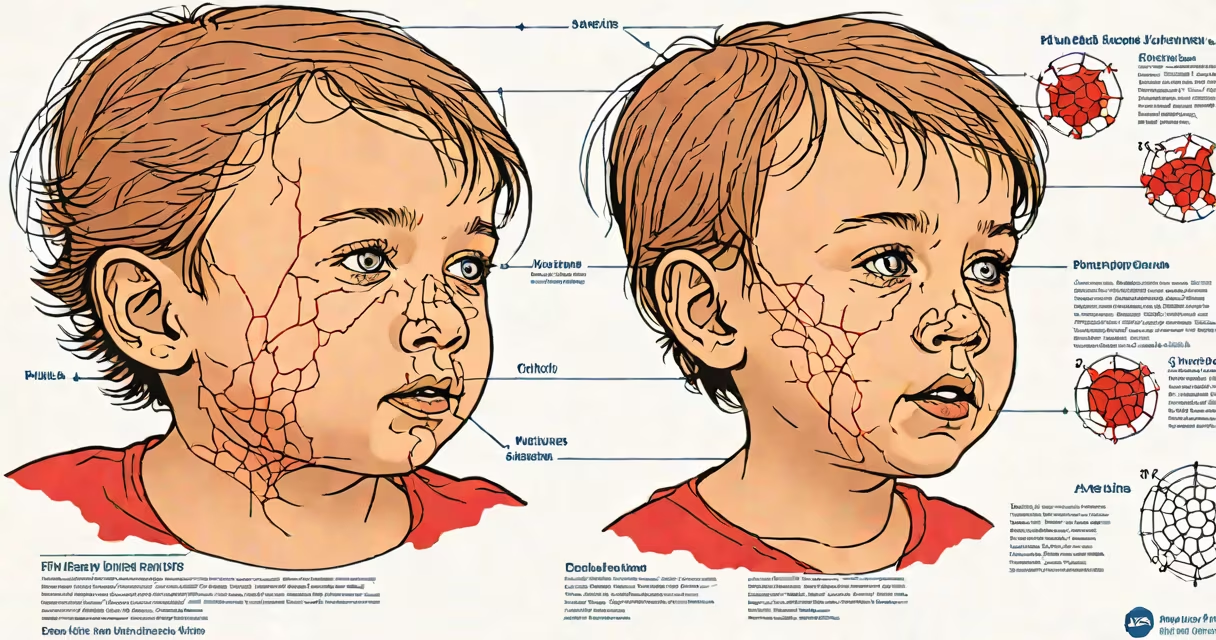
Fifth disease symptoms include a bright red facial rash resembling a slapped cheek and a lacy red rash on the arms and torso, typically following a mild flu-like illness. This common childhood infection, caused by parvovirus B19, is also called erythema infectiosum.
The illness unfolds in stages. The first phase resembles a cold, with fever, headache, and runny nose. The distinctive rash appears 1-2 weeks later, often starting on the cheeks before spreading. Some patients develop joint pain or swelling, particularly adults.
| Stage | Symptoms | Duration |
|---|---|---|
| Prodromal phase | Fever, malaise, headache | 3-10 days |
| Rash phase | Slapped cheek rash, lacy body rash | 1-3 weeks |
| Arthropathic phase | Joint pain/swelling (adults) | Weeks to months |
Fifth disease primarily affects children aged 5-15, though anyone can contract it. Transmission occurs through respiratory droplets before the rash appears. About 50% of adults have immunity from previous exposure. Pregnant women face risks if infected, as parvovirus B19 may affect fetal development.
I once mistook my nephew's rash for an allergic reaction until his pediatrician identified it as fifth disease. The diagnosis explained his preceding cold symptoms and the rash's unusual pattern.
Consult a physician if symptoms worsen after initial improvement, or if joint pain becomes severe. Pregnant women experiencing fifth disease symptoms should seek immediate medical attention. Most cases resolve without treatment, but complications can occur in vulnerable populations.