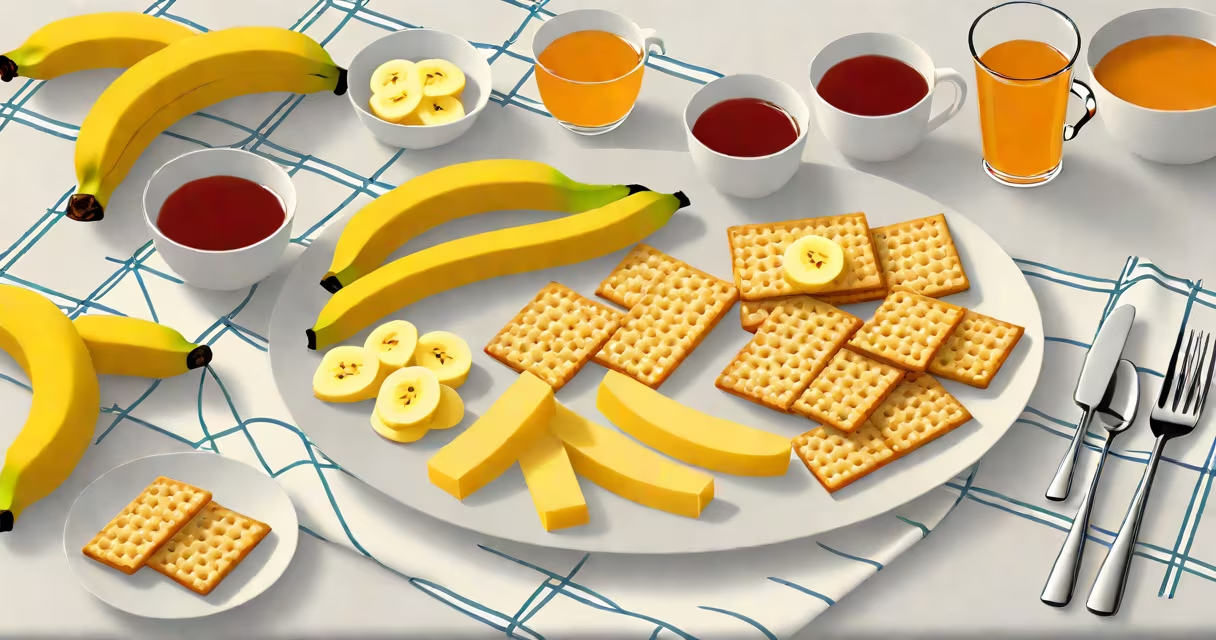
Foods that help with throwing up are bland, low-fat, and low-fiber options that settle the stomach and prevent dehydration. These foods are typically introduced gradually as nausea subsides.
When you're vomiting, your stomach is irritated and sensitive. Eating the wrong foods can make nausea worse or trigger more vomiting. The best foods for vomiting are gentle on the stomach and help replenish lost fluids and electrolytes. They work by:
The best foods to eat when throwing up fall into a few key categories. Here's a breakdown:
| Food Type | Examples | Why It Helps |
|---|---|---|
| Hydration | Water, clear broths, electrolyte drinks | Prevents dehydration from vomiting |
| Bland Carbohydrates | Plain crackers, toast, rice, bananas | Easy to digest, provide quick energy |
| Ginger-Based Foods | Ginger tea, ginger ale (non-alcoholic), ginger candies | Natural anti-nausea properties |
Timing and portion size matter when eating after vomiting. Start with small sips of water or clear liquids every 5-10 minutes. If those stay down, gradually introduce solid foods like crackers or toast. Wait at least 30-60 minutes after vomiting before eating anything.
For adults, the BRAT diet (bananas, rice, applesauce, toast) is often recommended. For children, pediatricians suggest small amounts of Pedialyte or oral rehydration solutions. Avoid dairy, fatty foods, and spices, which can irritate the stomach.
Many people assume that eating immediately after vomiting will help, but this can worsen nausea. Another mistake is drinking large amounts of liquid at once, which may trigger more vomiting., some believe that sugary sodas help, but they can dehydrate further due to their high sugar content.
I once cared for someone recovering from food poisoning who insisted on eating a full meal right away. We stuck to small sips of water and ginger tea for the first few hours, then gradually introduced plain crackers. This approach helped them recover faster without triggering more vomiting.
If vomiting lasts more than 24 hours, or if you notice signs of severe dehydration (dark urine, dizziness, or confusion), seek medical attention. Persistent vomiting could indicate a serious condition like gastroenteritis or foodborne illness.