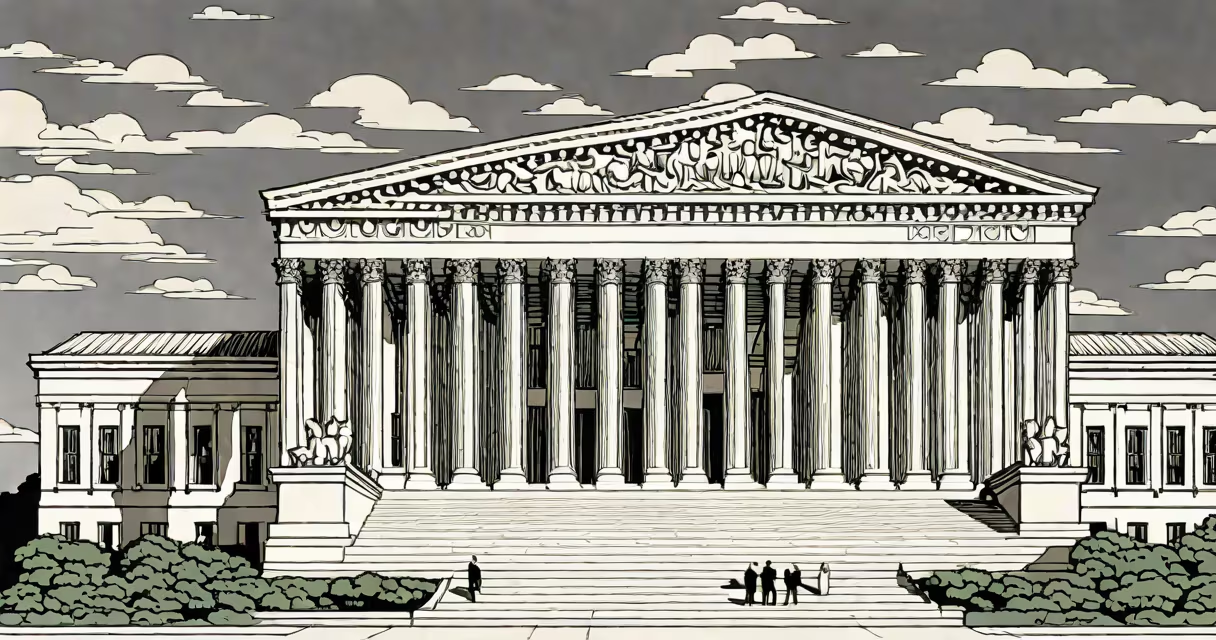
The Fourth Amendment to the U.S. Constitution protects people from unreasonable searches and seizures by the government. Landmark cases have clarified what constitutes a reasonable search, who is protected, and what evidence can be used in court.
The Fourth Amendment states:
"The right of the people to be secure in their persons, houses, papers, and effects, against unreasonable searches and seizures, shall not be violated, and no Warrants shall issue, but upon probable cause, supported by Oath or affirmation, and particularly describing the place to be searched, and the persons or things to be seized."
This means law enforcement generally needs a warrant based on probable cause to search a person or their property. However, exceptions exist, such as searches incident to arrest or searches conducted with consent.
Landmark cases fall into several categories, each addressing different aspects of the Fourth Amendment:
| Case Name | Year | Key Issue |
|---|---|---|
| Boyd v. United States | 1886 | Privacy of personal papers and effects |
| Weeks v. United States | 1914 | Exclusionary rule (illegally obtained evidence) |
| Mapp v. Ohio | 1961 | Application of exclusionary rule to state courts |
| Terry v. Ohio | 1968 | Stop-and-frisk searches |
| Katz v. United States | 1967 | Expectation of privacy in public spaces |
These cases are cited in lower courts to determine whether evidence was lawfully obtained. For example, in Katz v. United States, the Supreme Court ruled that wiretapping a public phone booth violated the Fourth Amendment because Katz had a reasonable expectation of privacy. This case established the "reasonable expectation of privacy" test, which is still used today.
Many people assume that the Fourth Amendment only applies to homes. However, it also protects cars, personal belongings, and even digital data. For instance, in Riley v. California (2014), the Supreme Court ruled that police generally need a warrant to search the cell phone of a person under arrest.
Another misconception is that all searches require a warrant. Exceptions include searches conducted with consent, searches incident to arrest, and searches in plain view. For example, if an officer sees illegal drugs in plain view during a traffic stop, they can seize them without a warrant.
In 2018, the Supreme Court heard Carpenter v. United States, which involved the use of cell-site location information (CSLI) to track a suspect's movements. The Court ruled 5-4 that the government generally needs a warrant to access CSLI, as it can reveal deeply personal information about a person's life. This case expanded Fourth Amendment protections to include digital data.
I once attended a lecture by a former prosecutor who emphasized how Fourth Amendment rights are balanced against law enforcement needs. He noted that while the Amendment protects privacy, it doesn't give criminals free rein to hide evidence.
Landmark cases have played a important role in shaping the interpretation of the Fourth Amendment. From defining reasonable searches to protecting digital privacy, these cases continue to influence how the Amendment is applied today. Understanding these cases helps clarify what protections the Fourth Amendment provides and how they are enforced.