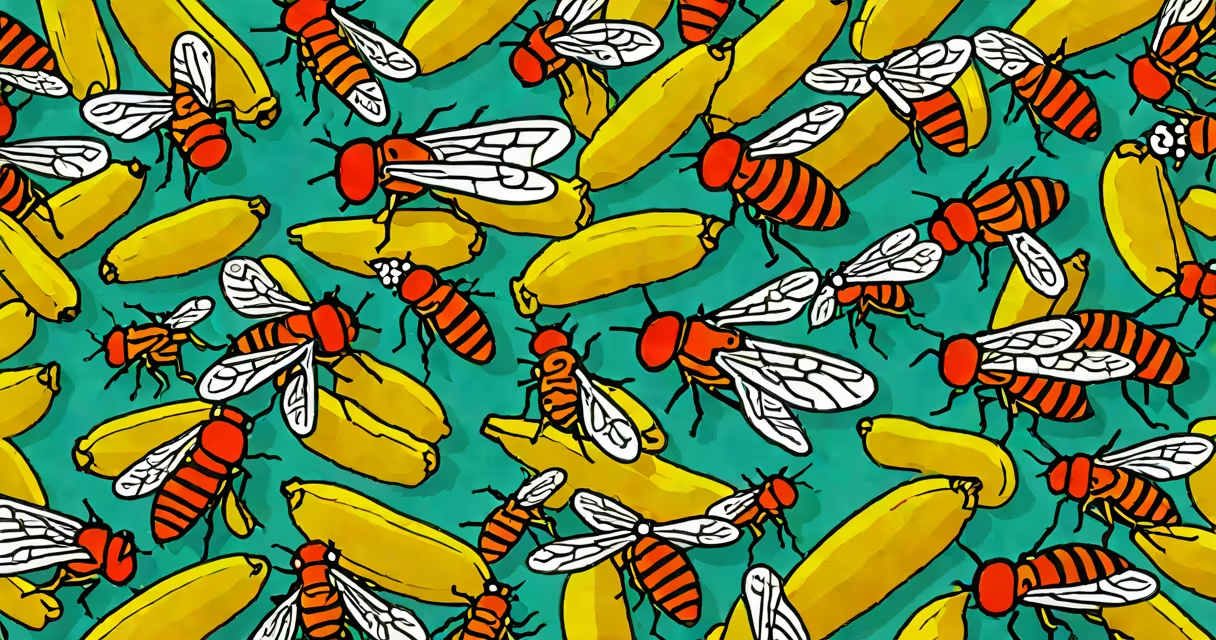
A fruit fly infestation in house happens when these small, winged insects invade homes to feed and reproduce near overripe fruits, vegetables, or other decaying organic matter. These pests thrive in moist environments and can quickly multiply, becoming a persistent nuisance.
Fruit flies lay their eggs near fermenting or rotting materials. Within 24 hours, the larvae hatch and begin feeding. The life cycle takes about a week under ideal conditions. A single female can lay up to 500 eggs in her lifetime, leading to rapid population growth.
While the most common type is Drosophila melanogaster, other species may also invade homes. These flies are attracted to different food sources, including:
Fruit flies enter homes through open doors, windows, or even on produce brought from stores. Once inside, they seek out moist, fermenting environments. Common hotspots include:
Many people assume fruit flies only come from fruits, but they can also breed in unexpected places like:
For example, a homeowner might diligently clean their kitchen but still face infestations if they leave a bowl of overripe bananas on the counter overnight. The flies are attracted to the yeast released as the bananas ferment, not necessarily because the kitchen is dirty.
I once dealt with a fruit fly problem by setting up a vinegar trap-a simple mixture of apple cider vinegar and dish soap in a small bowl. Within hours, dozens of fruit flies were trapped. This method is effective because the vinegar attracts them, while the dish soap breaks the surface tension, causing them to drown.