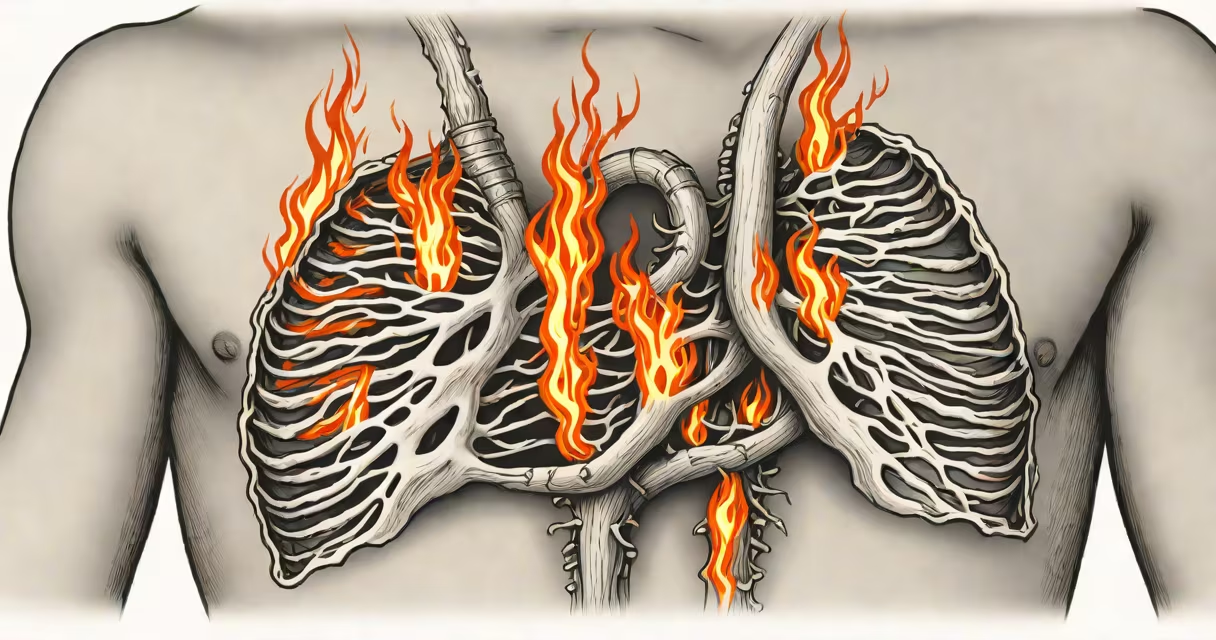
GERD burning in chest occurs when stomach acid flows backward into the esophagus, causing a searing pain behind the breastbone. This condition, known as gastroesophageal reflux disease (GERD), affects about 20% of Americans weekly.
The lower esophageal sphincter (LES), a muscular ring between the esophagus and stomach, normally prevents acid reflux. In GERD, the LES weakens or relaxes abnormally, allowing stomach contents to irritate the esophagus. The resulting inflammation triggers nerve receptors, creating a burning sensation.
| Type | Description | Duration |
|---|---|---|
| Heartburn | A sharp, burning pain behind the sternum | Minutes to hours |
| Regurgitation | Acid or food returning to the mouth | Seconds to minutes |
| Chronic Esophagitis | Long-term inflammation damaging the esophagus | Weeks or longer |
Certain foods and habits worsen GERD symptoms. Spicy or fatty foods, chocolate, caffeine, alcohol, and carbonated drinks relax the LES. Smoking and obesity also increase risk. Even lying down or bending over after eating can trigger reflux.
While occasional heartburn is common, persistent chest burning may indicate severe GERD or other conditions. Seek medical help if symptoms occur frequently, interfere with daily life, or include difficulty swallowing, vomiting blood, or black stools. Chest pain accompanied by shortness of breath, sweating, or arm pain requires immediate evaluation for potential heart issues.
I once experienced GERD-related chest burning after a large, late-night meal. The discomfort worsened when lying down, but sitting upright and taking an antacid provided relief within 30 minutes. However, recurring symptoms prompted me to adjust my diet and sleep position permanently.
Lifestyle changes often alleviate GERD symptoms. Eat smaller meals, avoid trigger foods, and wait at least three hours before lying down. Elevating the head of your bed by six inches can help gravity prevent reflux. Over-the-counter antacids or proton pump inhibitors may provide temporary relief, but consult a doctor for persistent symptoms.