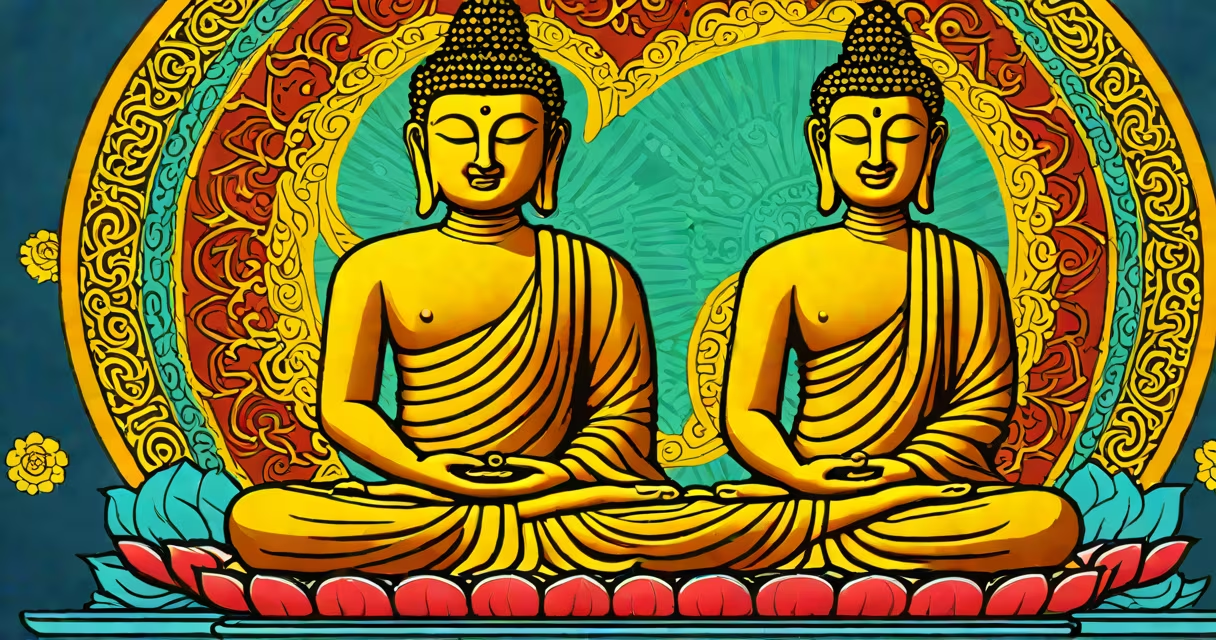
God Buddha in real life refers to Siddhartha Gautama, a prince turned ascetic who achieved enlightenment around 2,500 years ago and founded Buddhism. This historical figure, often revered as the Buddha, lived in what is now Nepal and northern India during the 6th to 4th century BCE.
Siddhartha Gautama was born into a royal family in Lumbini, now in modern-day Nepal. According to historical accounts, he lived a sheltered life until he encountered suffering, old age, and death outside the palace walls. This prompted him to leave his luxurious life and seek spiritual truths.
After years of ascetic practices and meditation, Siddhartha sat under the Bodhi tree and vowed not to rise until he attained enlightenment. After 49 days, he achieved a state of profound spiritual insight, becoming known as the Buddha, which means "the awakened one" or "the enlightened one."
The Buddha's teachings revolve around the Four Noble Truths and the Eightfold Path. The Four Noble Truths outline the nature of suffering (dukkha), its causes, the possibility of ending suffering, and the path to liberation. The Eightfold Path provides a practical guide to ethical conduct, mental discipline, and wisdom.
These teachings emphasize mindfulness, meditation, and compassion. The Buddha encouraged his followers to test his teachings rather than accept them on faith alone. This empirical approach is a key part of Buddhist practice.
One common misconception is that the Buddha is considered a god in the same way as in other religions. While the Buddha is highly revered, Buddhism does not worship him as a deity. Instead, Buddhists follow his teachings to achieve enlightenment and liberation from the cycle of rebirth.
Another misunderstanding is that Buddhism is monolithic. In reality, Buddhism has evolved into various traditions, including Theravada, Mahayana, and Vajrayana, each with its own interpretations and practices.
Historical records and archaeological findings confirm the existence of Siddhartha Gautama. The Pali Canon, a collection of ancient Buddhist texts, provides detailed accounts of his life and teachings. These texts have been preserved and studied for centuries, offering valuable insights into his life and philosophy.
Today, Buddhism is practiced by millions worldwide, and the Buddha's teachings continue to inspire people seeking inner peace and spiritual growth. His emphasis on compassion, mindfulness, and self-awareness remains relevant in modern times.
I once visited a Buddhist temple where monks practiced meditation and recited ancient texts. The serene atmosphere and the monks' dedication to their spiritual practices were deeply moving, reinforcing the timeless relevance of the Buddha's teachings.