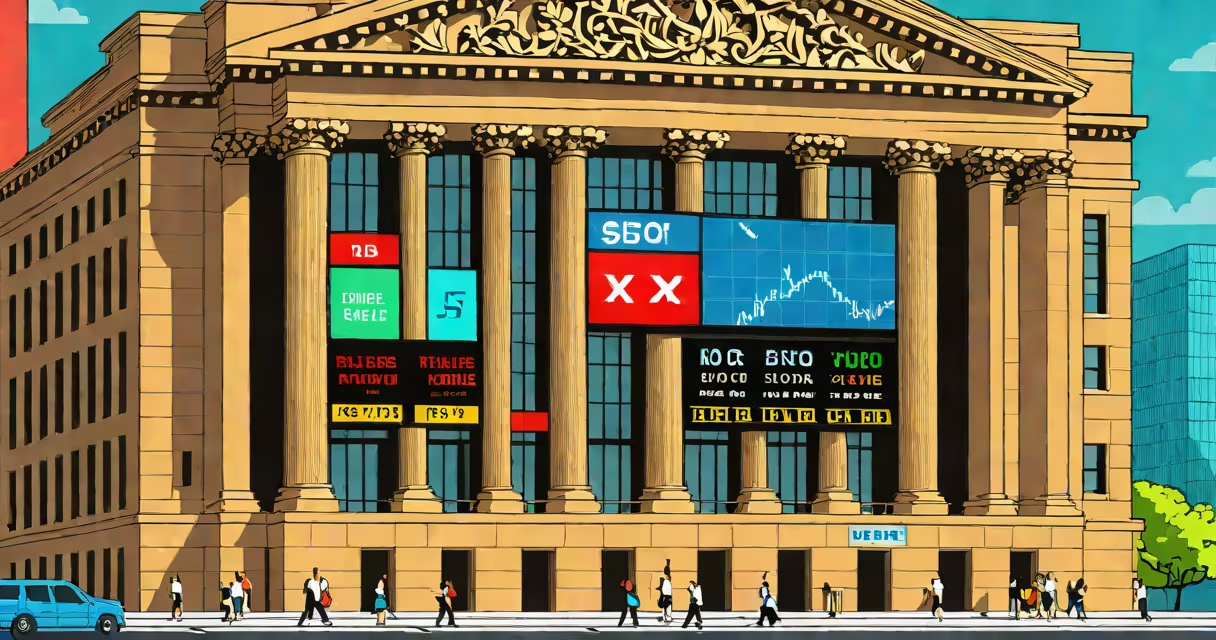
When a private company goes public, it sells shares to investors through an initial public offering (IPO), becoming a publicly traded entity. This process transforms ownership structure, enabling capital raising and market valuation.
A company prepares for an IPO by selecting underwriters, typically investment banks, which manage the offering. The underwriters determine the IPO price through a roadshow where they gauge investor interest. Once priced, shares are sold to institutional investors and the public.
The U.S. Securities and Exchange Commission (SEC) requires extensive disclosures, including financial statements and risk factors. After approval, the company lists its shares on a stock exchange like the New York Stock Exchange (NYSE) or Nasdaq.
| Type | Description | Example |
|---|---|---|
| Initial Public Offering (IPO) | First sale of shares to the public | Airbnb's $3.5 billion IPO in December 2020 |
| Secondary Offering | Additional shares sold after the IPO | Tesla's $2.3 billion offering in September 2022 |
| Direct Listing | Company lists shares without underwriters | Spotify's direct listing in April 2018 |
Companies go public primarily to raise capital for expansion, research, or debt repayment. Public companies gain access to deeper investor pools and liquidity for shareholders. The process also enhances credibility and brand recognition.
However, going public involves significant costs, regulatory burdens, and loss of privacy. Companies must disclose financials quarterly and annually, subjecting them to market scrutiny and potential shareholder activism.
Many assume going public guarantees success, but roughly 60% of IPOs underperform in their first year, according to a University of Florida study. Others confuse going public with going on an exchange, which refers to daily trading activity rather than the initial listing.
Another misconception is that all IPOs are oversubscribed. Some offerings, like WeWork's failed IPO attempt in 2019, face investor skepticism due to financial instability or market conditions.
I witnessed the major impact of going public firsthand while working with a startup preparing for its IPO. The process required meticulous financial audits, legal compliance, and investor presentations, culminating in a successful listing that tripled the company's valuation within months.