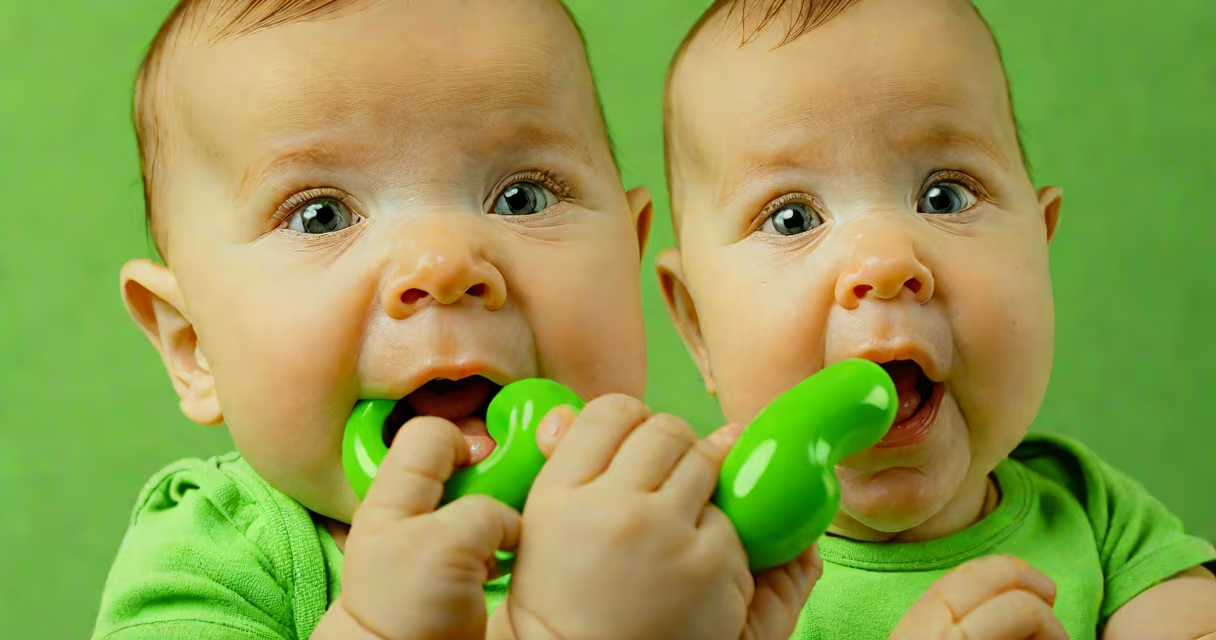
Green poop during teething is normal in infants due to temporary digestive changes. The color often results from swallowed mucus, dietary shifts, or mild intestinal irritation.
When babies teeth, they produce excess saliva and may swallow more air, altering digestion. Increased mucus from nasal passages can also enter the stomach, changing stool color. These factors don't harm the baby but may temporarily soften stools or turn them green.
Teething isn't the only reason for green poop. Other causes include:
Green poop is usually harmless, but contact a pediatrician if:
Monitor your baby for other teething signs, such as drooling, irritability, or chewing on objects. Offer chilled (not frozen) teething rings or clean washcloths to soothe gums. If green poop continues, track diet and bowel movements to identify patterns.
I noticed my own child's poop turned green during teething-it resolved within two days. The change was mild and accompanied by typical teething fussiness.
Some parents worry green poop signals a serious issue, but most cases are harmless. However, if green poop appears alongside cramping, vomiting, or blood, seek medical advice immediately. Green poop with cramps in adults often indicates food intolerances or infections, but babies rarely experience similar digestive distress.
In rare cases, green poop may indicate:
To minimize stomach upset:
Teething is a natural process, and green poop is usually a temporary, harmless side effect. Most babies outgrow frequent teething-related digestive changes by age two or three.