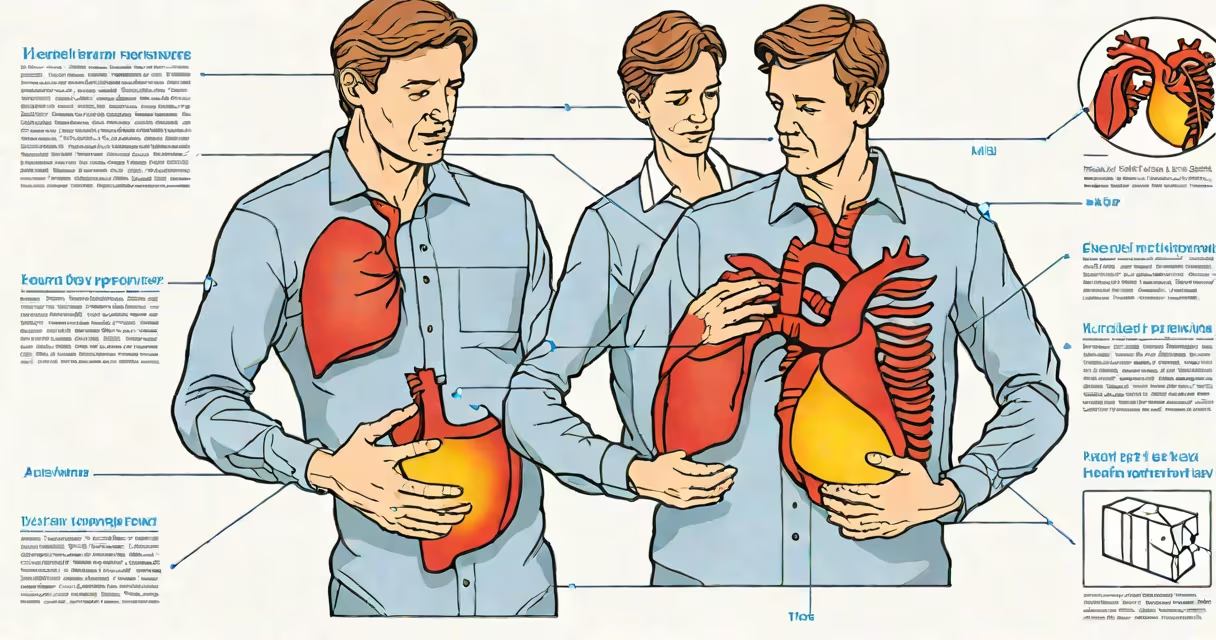
Heartburn symptoms chest tightness occurs when stomach acid flows back into the esophagus, causing a burning sensation and pressure behind the breastbone. This discomfort often mimics heart-related issues, leading many to confuse it with heart attacks or lung problems.
The lower esophageal sphincter (LES), a muscle between the stomach and esophagus, usually prevents stomach acid from rising. When the LES weakens or relaxes abnormally, acid refluxes into the esophagus, irritating its lining. The resulting inflammation triggers nerve signals interpreted by the brain as pain or tightness in the chest area.
| Type | Description | Duration |
|---|---|---|
| Occasional Heartburn | Mild discomfort after eating spicy or fatty foods | Minutes to hours |
| Frequent Heartburn | Recurring tightness, often linked to lifestyle factors | Hours to days |
| GERD-Related Tightness | Chronic condition with persistent chest pressure | Weeks or longer |
Chest tightness from heartburn often overlaps with symptoms of indigestion or even heart disease. Unlike heart attacks, which may cause pain radiating to the left arm or jaw, heartburn typically centers around the sternum. However, if you experience shortness of breath, sweating, or nausea alongside chest tightness, seek immediate medical attention.
In rare cases, chest tightness may stem from lung-related issues, such as asthma or pneumonia. These conditions often produce additional symptoms like coughing, wheezing, or fever, which don't typically accompany heartburn.
Many people assume that lying down worsens heartburn because gravity no longer aids digestion. While true, another key factor is the position of the stomach relative to the esophagus. When reclining, the stomach's contents press harder against the LES, increasing the likelihood of acid reflux. Elevating the head of your bed by 6 to 8 inches can help reduce nighttime symptoms.
I once experienced severe chest tightness after a large, late-night meal. Assuming it was heartburn, I took an antacid and waited. The discomfort subsided within an hour, confirming it was acid reflux rather than a cardiac issue. However, if the symptoms had persisted or worsened, I would have sought medical help immediately.
Heartburn symptoms chest tightness result from stomach acid irritating the esophagus. While often harmless, this discomfort can mimic serious conditions like heart attacks or lung problems. Recognizing the differences-such as the absence of radiating pain or breathing difficulties-helps distinguish heartburn from more urgent medical concerns.