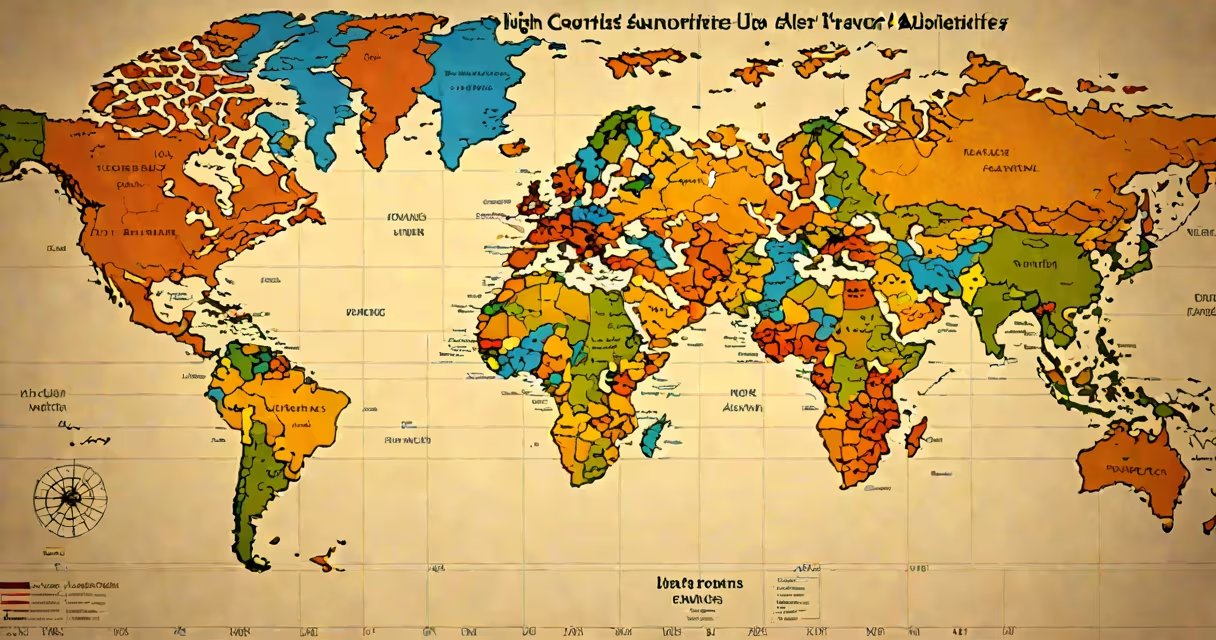
High risk countries are nations with significant safety, health, or security challenges for travelers, as defined by governments and agencies like the U.S. State Department or the UK Foreign Office. These designations help travelers make informed decisions about visiting or working in these areas.
Governments assess countries based on factors like crime rates, terrorism threats, political instability, and healthcare infrastructure. The U.S. State Department uses a four-tier system (Levels 1 to 4), where Level 4 indicates "Do Not Travel" due to extreme risk. The UK Foreign Office uses similar categories, ranging from "normal precautions" to "advise against all travel."
High risk countries typically exhibit one or more of the following risks:
Understanding which countries are high risk helps travelers prepare adequately. For instance, the U.S. State Department advises avoiding nonessential travel to Afghanistan due to terrorism, kidnapping, and armed conflict. Similarly, the UK Foreign Office warns against all travel to parts of Syria due to ongoing military action and terrorist activity.
In 2023, the U.S. State Department designated Yemen as a Level 4 country due to terrorism, civil unrest, armed conflict, and kidnapping. The UK Foreign Office also advised against all travel to Yemen, citing the same risks. These designations are based on real-time assessments and are subject to change as conditions improve or worsen.