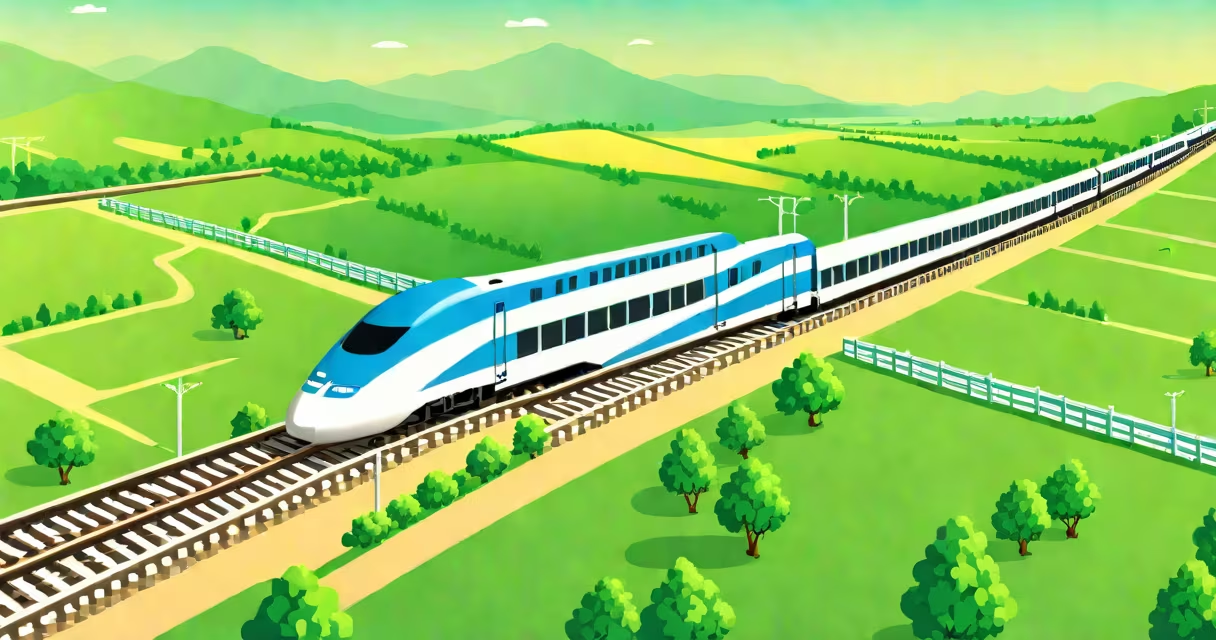
High-speed trains in China operate on the world's longest high-speed rail network, reaching speeds up to 350 km/h (217 mph) and connecting major cities like Beijing, Shanghai, and Guangzhou.
China's high-speed trains use dedicated tracks to avoid conflicts with slower freight and passenger trains. The system relies on advanced signaling technology to maintain safety at high speeds. Trains like the CR400AF "Fuxing" use regenerative braking to recover energy during deceleration.
Most trains use conventional rail, but China also operates maglev trains in Shanghai and Qingdao. These use magnetic levitation to float above the track, eliminating friction and allowing speeds up to 600 km/h (373 mph).
| Type | Top Speed | Operational Speed | Key Routes |
|---|---|---|---|
| CR400AF "Fuxing" | 350 km/h | 300 km/h | Beijing-Shanghai, Beijing-Guangzhou |
| CR400BF | 350 km/h | 300 km/h | Shanghai-Hangzhou, Chengdu-Chongqing |
| Maglev (Shanghai) | 431 km/h | 302 km/h | Shanghai Pudong Airport line |
China's investment in high-speed rail serves multiple purposes beyond transportation. It creates jobs, stimulates economic growth in connected regions, and reduces carbon emissions compared to air travel. The network connects industrial hubs to ports, facilitating trade. For travelers, it offers a comfortable alternative to flying, with stations often located near city centers, unlike airports.
According to the International Energy Agency, China's high-speed rail network has reduced CO2 emissions by 200 million tons annually compared to equivalent air travel.
Many assume China's high-speed trains are all maglev. In reality, only two short routes use maglev technology. Most trains run on conventional rails with advanced propulsion systems. Another misconception is that high-speed rail is only for long distances. In fact, many shorter routes exist, such as Shanghai to Hangzhou (145 km), where trains complete the process in 40 minutes.
During a trip, I noticed how the high-speed train's smooth ride made it easier to work on a laptop than on most domestic flights. The 30-minute process covered 120 km at 300 km/h, arriving at a station just 10 minutes from downtown Tianjin. This convenience, combined with frequent departures, makes high-speed rail the preferred choice for many travelers.
Most high-speed rail stations in China are well-connected to accommodations. In Beijing, the Beijing South Railway Station area offers numerous hotels in China within walking distance. Shanghai Hongqiao Railway Station features an integrated transport hub with hotels like the Pullman Shanghai Skyway directly connected to the station.