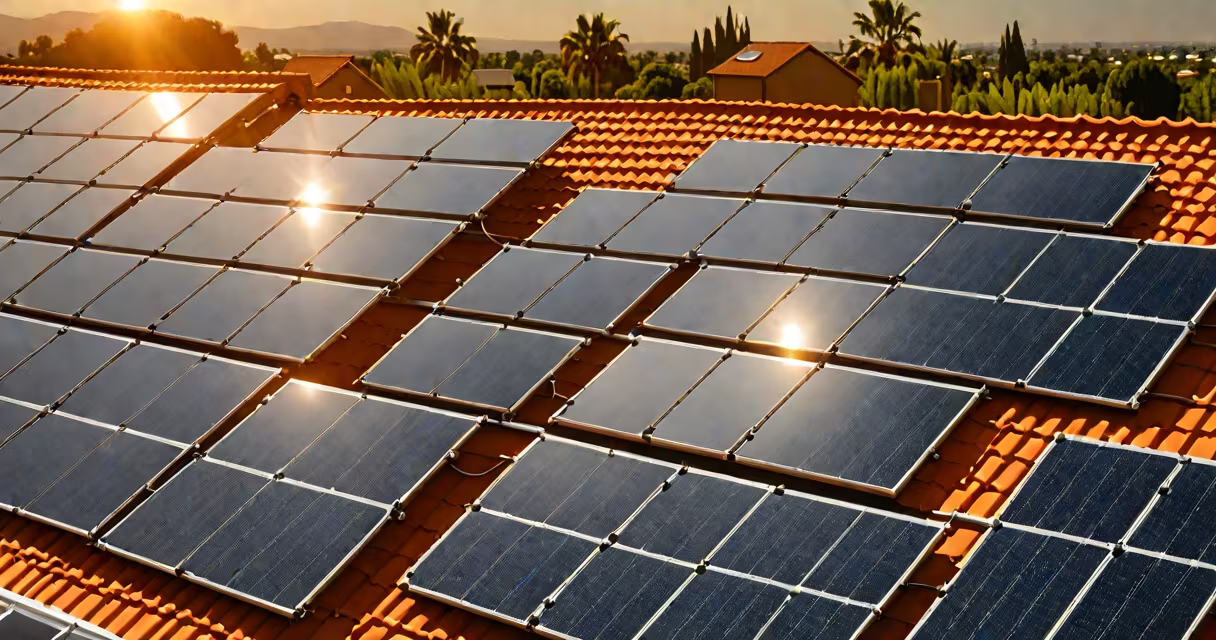
Home solar panels are worth it if your electricity costs exceed $50/month, you have a south-facing roof, and you plan to stay in your home for at least five years. Solar panels typically pay for themselves in 6-10 years through lower utility bills and government incentives.
Solar panels work by converting sunlight into electricity through photovoltaic cells. This electricity offsets your home's energy consumption, reducing your monthly utility bill. The average U.S. household spends $110/month on electricity. A typical 6kW solar system generates about 8,400 kWh/year, covering most of that usage.
Net metering programs allow you to send excess energy back to the grid in exchange for credits. For example, if your solar system produces 10 kWh but you only use 7 kWh, you'll receive credits for the remaining 3 kWh. These credits offset future bills when your system produces less energy, such as during winter months.
The value of solar panels depends on three key factors: cost, efficiency, and lifespan. Here's how they compare across popular brands:
| Brand | Cost per Watt ($) | Efficiency (%) | Lifespan (Years) |
|---|---|---|---|
| SunPower | 2.80-3.50 | 22.8 | 25+ |
| LG | 2.50-3.20 | 21.7 | 25+ |
| Panasonic | 2.30-2.90 | 21.0 | 25+ |
| Canadian Solar | 1.80-2.40 | 20.4 | 25+ |
Many people assume solar panels require direct sunlight to work effectively. However, they still generate electricity on cloudy days, just at a reduced capacity. For instance, a solar panel in Seattle (cloudy climate) produces about 70% of its rated output, while one in Phoenix (sunny climate) produces nearly 100%.
Another myth is that solar panels degrade quickly. Most high-quality panels lose only about 0.5% of their efficiency per year. After 25 years, they retain around 87.5% of their original capacity.
Let's calculate the payback period for a 6kW solar system in California, where electricity costs $0.22/kWh. The system costs $18,000 after tax incentives and generates 8,400 kWh/year.
After the payback period, the system continues producing free electricity for another 15-20 years. Over 25 years, the total savings exceed $25,000.
The federal solar tax credit allows homeowners to deduct 30% of the cost of installing a solar energy system from their federal taxes. State and local incentives further reduce costs. For example, California offers additional rebates for low-income households, and New York provides property tax exemptions for solar installations.
To claim these incentives, you'll need to complete IRS Form 5695 and provide documentation of your solar installation costs. Most states require certification from a licensed installer.
Before deciding, consult with a solar installer to assess your home's solar potential. They'll evaluate your roof's angle, shading, and local weather patterns to provide an accurate estimate., check with your local utility company about net metering policies and available incentives.
For those ready to invest, solar panels offer long-term financial and environmental benefits. By reducing reliance on fossil fuels, you'll contribute to a cleaner planet while lowering your energy bills.