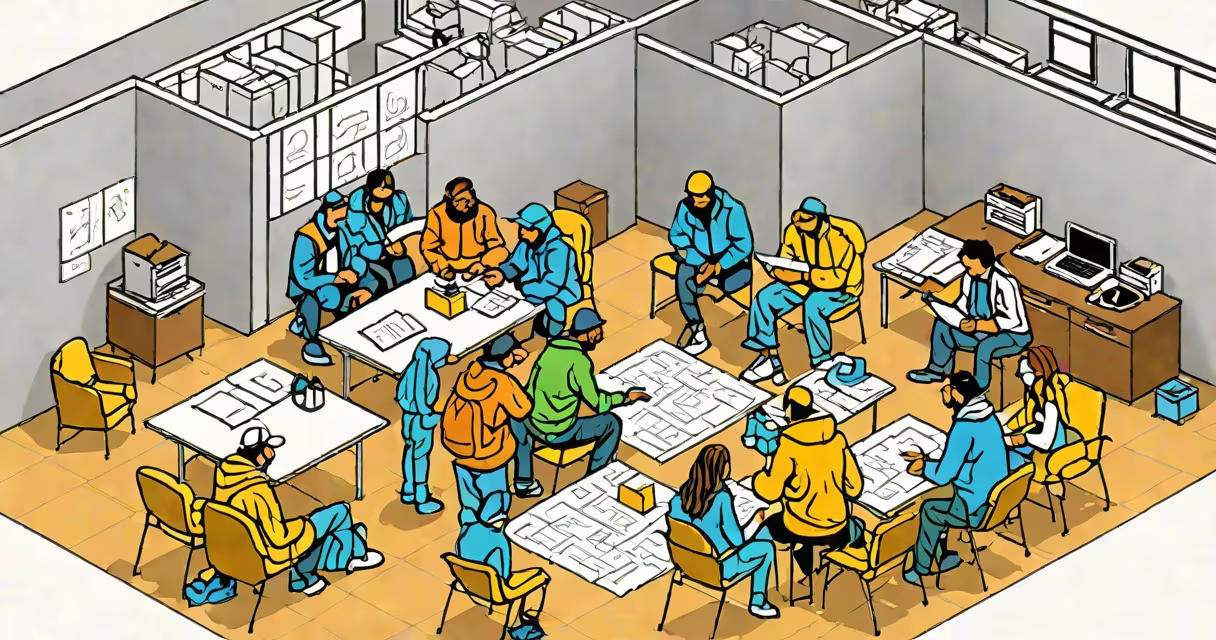
A homeless prevention program provides immediate assistance to households at risk of losing their housing, using financial aid, legal support, and case management to keep people housed. These programs target root causes of homelessness, such as eviction, utility shutoffs, or domestic violence.
Most programs combine short-term financial assistance with long-term support services. For example, a family facing eviction might receive rent assistance plus connections to job training. The U.S. Department of Housing and Urban Development (HUD) reports that prevention programs reduce homelessness by 70-90% for participants.
Case managers play a key role. They assess each household's needs, create personalized plans, and connect clients to resources like food banks or childcare. Many programs also offer mediation between tenants and landlords to resolve disputes before they lead to evictions.
| Type | Key Features | Example |
|---|---|---|
| Emergency Financial Assistance | Direct payments for rent, utilities, or security deposits | Denver's Community Services Block Grant |
| Legal Assistance | Free or low-cost lawyers for eviction defense | New York's Right to Counsel |
| Case Management | One-on-one support to address underlying causes | Los Angeles' Homeless Prevention Program |
Traditional shelters focus on managing homelessness after it occurs. Prevention programs are 3-5 times more cost-effective, according to a 2018 HUD study. For example, a $1,000 rent subsidy costs far less than shelter beds, medical care, and law enforcement for a homeless individual.
Prevention also reduces trauma. A family evicted from their home faces severe emotional and psychological stress. Keeping them housed maintains stability for children's education and parents' employment.
Many assume prevention programs enable irresponsible behavior. In reality, strict eligibility requirements exist. Applicants must prove imminent housing loss and lack of alternative resources. Programs prioritize vulnerable groups like veterans, domestic violence survivors, and disabled individuals.
Another myth is that prevention only helps renters. Programs also assist homeowners facing foreclosure and people living in unsafe conditions. For instance, a program might pay for repairs to make a house habitable.
In Minnesota, Hennepin County's program served 1,200 households in 2022. Participants received an average of $1,800 in assistance, preventing 92% of evictions. The program also connected families to job training and childcare, addressing long-term stability.
I visited a local outreach center where case managers described how they work with landlords to create payment plans. One manager noted that many evictions happen due to small debts-often just a few hundred dollars. Prevention programs can step in early to avoid this.
Search for your county's housing authority or visit HUD's Community Development Block Grant page. Nonprofits like Catholic Charities and The Salvation Army also run prevention initiatives.
If you're at risk of homelessness, contact 211 for local resources. Many programs have same-day application processes for urgent cases.