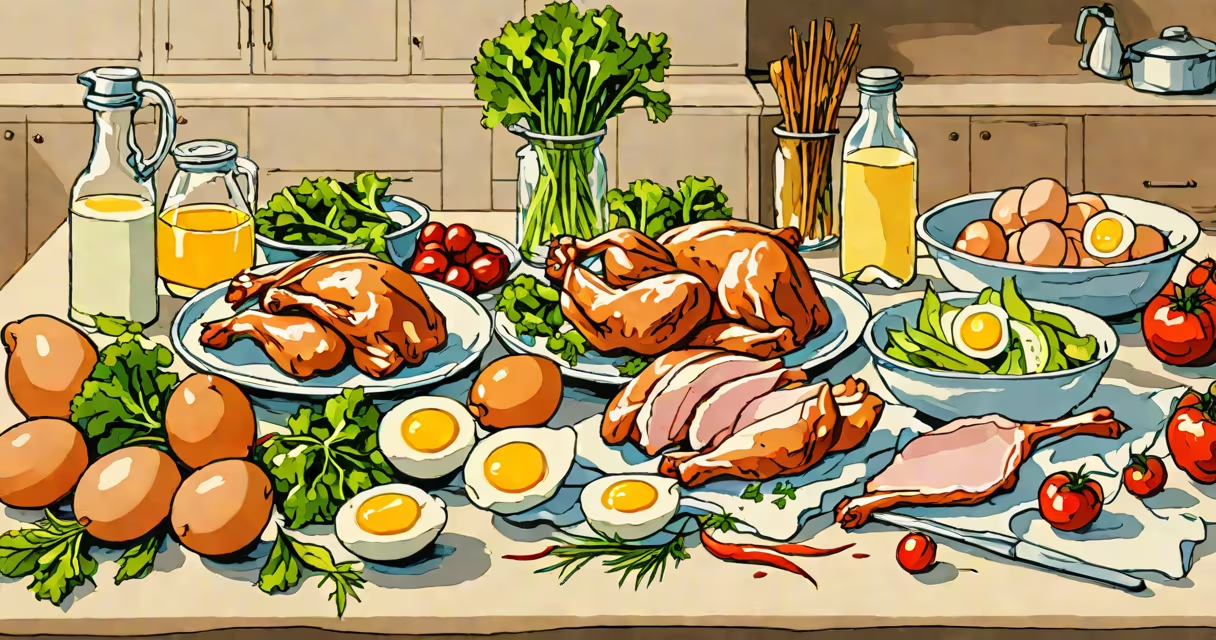
Salmonella is a bacterial infection that spreads through contaminated food, causing fever, diarrhea, and stomach cramps. To avoid salmonella, practice proper food handling, cooking, and storage.
Salmonella bacteria live in the intestines of animals and humans. They spread through feces and can contaminate food during processing, preparation, or storage. According to the Centers for Disease Control and Prevention (CDC), salmonella causes about 1.35 million infections and 420 deaths annually in the U.S.
Salmonella spreads through:
Follow these science-backed tips to reduce your risk of salmonella:
Use a food thermometer to ensure safe internal temperatures:
| Food Type | Safe Internal Temperature (°F) |
|---|---|
| Chicken, turkey, duck | 165°F |
| Ground beef, pork, lamb, veal | 160°F |
| Fish | 145°F |
| Eggs | 160°F |
Note: Eggs can be safely consumed when cooked until both the yolk and white are firm or when used in recipes that require thorough cooking.
Wash hands with soap and warm water for at least 20 seconds before and after handling food. Clean cutting boards, dishes, and countertops with hot, soapy water.
Separate raw meat, poultry, and eggs from ready-to-eat foods. Use separate cutting boards for raw meats and ready-to-eat foods. Store raw meats on the bottom shelf of the refrigerator to prevent juices from dripping onto other foods.
Avoid unpasteurized (raw) milk and juices. Select pasteurized products for safer consumption. Wash fruits and vegetables thoroughly under running water before eating, even if you plan to peel them.
Refrigerate perishable foods within 2 hours, or 1 hour if the temperature is above 90°F. Chill leftovers promptly and use an appliance thermometer to ensure your refrigerator is at 40°F or below.
Many people believe that washing chicken or other meats removes bacteria. However, the U.S. Department of Agriculture (USDA) advises against washing raw poultry, as it can spread salmonella through splashing water. Instead, cook poultry to the recommended internal temperature.
Another myth is that salmonella only comes from meat. While meat is a common source, salmonella can also contaminate fruits, vegetables, and even processed foods like nut butters and spices.
Most people recover from salmonella infection without treatment, but severe cases may require hospitalization. Seek medical attention if you experience any of the following symptoms:
Dehydration can be particularly dangerous for infants, elderly individuals, and those with weakened immune systems.