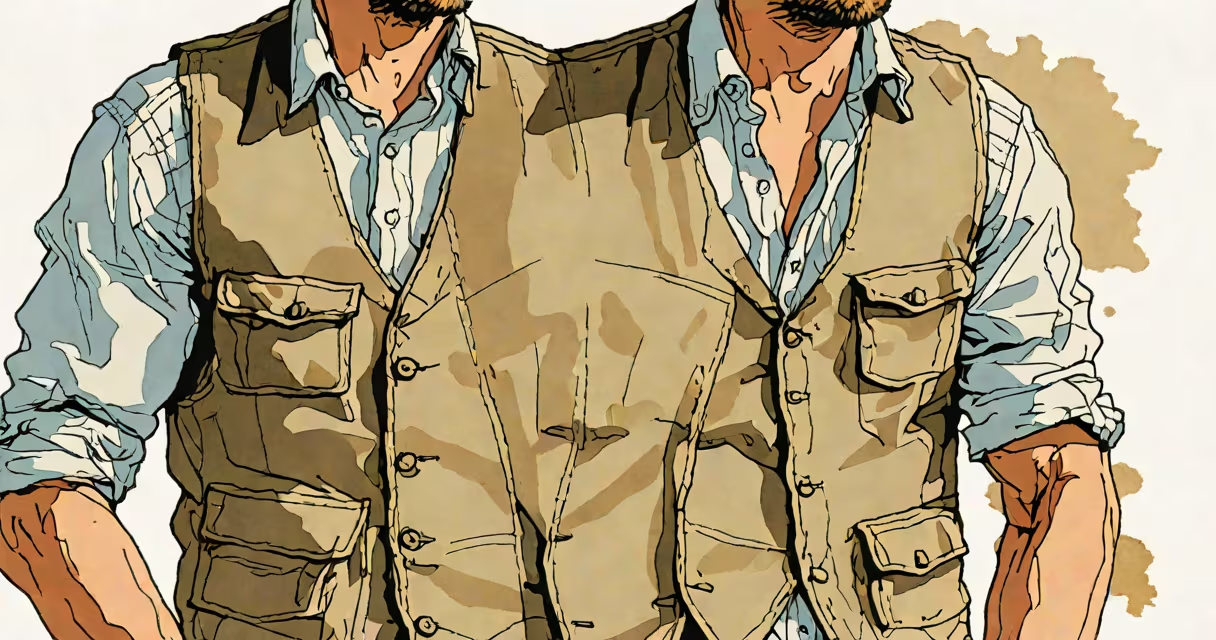
A gilet is pronounced "zhee-lay" (IPA: /ʒiˈleɪ/). It refers to a sleeveless garment worn over a shirt or jacket, often as part of formal or semi-formal attire.
The word "gilet" originates from French, where it is pronounced similarly to "zhee-lay." The "gi" is pronounced like the "si" in "vision," and the "let" rhymes with "lay." Many English speakers mispronounce it as "gil-it" or "jil-et," likely due to the influence of other French loanwords like "jazz" or "jilt."
A gilet is a sleeveless waist-length jacket, typically worn over a dress shirt and tie. It is often made of wool, tweed, or other formal fabrics. Unlike a vest, which can be casual, a gilet is usually associated with formal or smart-casual attire. It is a staple in traditional British and European menswear, often paired with a suit or sports coat.
Many people confuse the pronunciation of "gilet" with similar-sounding words. Here are some common mistakes:
Gilets are traditionally worn as part of formal or semi-formal attire. They are often seen in hunting, shooting, and equestrian contexts, where they provide warmth without restricting arm movement. In modern fashion, gilets are sometimes worn as part of a layered look, adding texture and sophistication to an outfit. They are particularly popular in autumn and winter due to their warmth and versatility.
For example, a man might wear a tweed gilet over a shirt and tie for a day of shooting, pairing it with matching trousers and boots. In a more fashionable context, a wool gilet could be layered over a sweater and under a long coat for a smart-casual look.
While the terms "gilet" and "vest" are often used interchangeably, there are subtle differences. A vest is a general term for a sleeveless garment, which can be casual or formal. A gilet, however, specifically refers to a more formal, tailored version of a vest, often made from high-quality fabrics like wool or tweed. Vests can be part of a suit, while gilets are typically worn as standalone pieces.
| Feature | Gilet | Vest |
|---|---|---|
| Formality | Formal or smart-casual | Casual to formal |
| Fabric | Wool, tweed, or other high-quality materials | Various fabrics, including cotton, polyester, or silk |
| Usage | Traditional British and European menswear | General wear, often part of a suit |