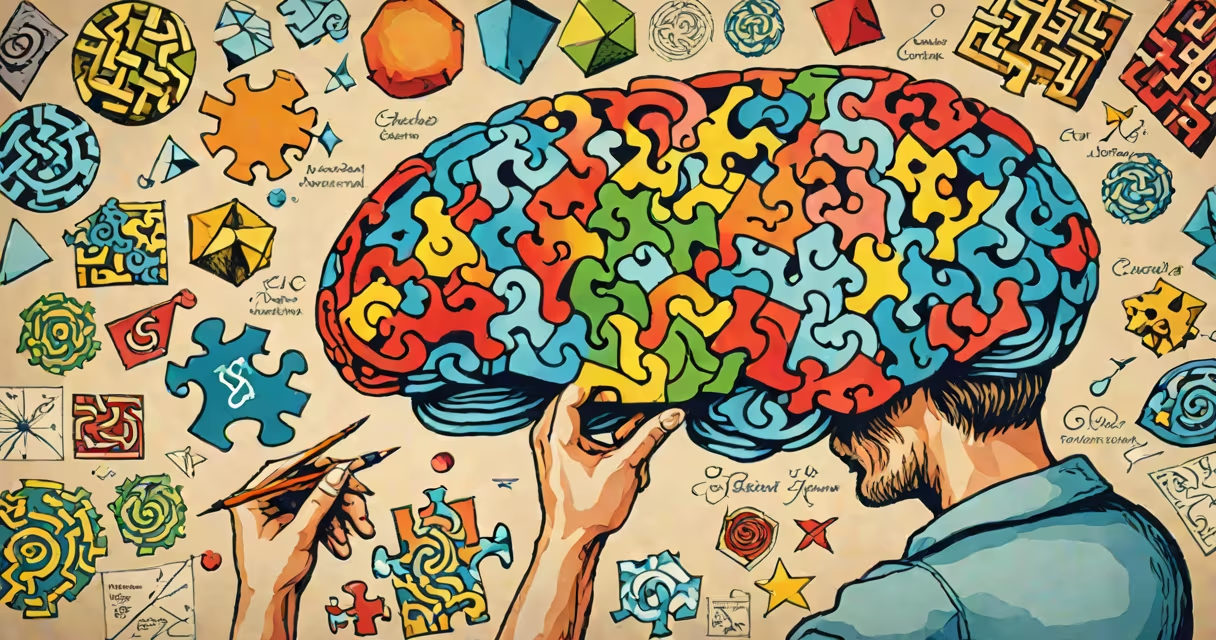
Challenging your brain involves engaging in activities that stimulate cognitive functions, improve memory, and improve problem-solving skills. These activities help maintain and even improve mental acuity as you age.
Regular mental exercise can delay or prevent age-related decline in cognitive function. Studies show that engaging in brain-challenging activities can reduce the risk of dementia and Alzheimer's disease. For instance, a study published in the journal Neurology found that people who engaged in mentally stimulating activities had a lower risk of developing mild cognitive impairment.
Brain-challenging activities can be categorized into several types, each targeting different cognitive functions:
| Activity Type | Examples | Cognitive Functions Targeted |
|---|---|---|
| Memory Games | Crossword puzzles, Sudoku, memory matching games | Short-term and long-term memory |
| Problem-Solving | Chess, strategy games, escape rooms | Logical thinking, planning, decision-making |
| Learning New Skills | Learning a new language, playing a musical instrument | Cognitive flexibility, attention, memory |
| Creative Pursuits | Painting, writing, composing music | Creativity, imagination, problem-solving |
You don't need to set aside hours each day to challenge your brain. Simple changes in your daily routine can make a big difference. For example, try using your non-dominant hand for routine tasks like brushing your teeth or writing. This forces your brain to adapt and creates new neural pathways.
Another effective method is to learn something new regularly. This could be a new language, a musical instrument, or even a new recipe. The key is to keep your brain engaged and stimulated.
One common misconception is that only complex activities like solving advanced math problems or learning multiple languages can challenge your brain. In reality, even simple activities like reading a book or engaging in a conversation can be beneficial. The important thing is to keep your brain active and engaged.
Another myth is that brain challenges are only for older adults. People of all ages can benefit from mental exercises. In fact, starting early can help build a strong cognitive foundation that can be maintained throughout life.
I started incorporating brain-challenging activities into my daily routine about a year ago. I began with simple puzzles and gradually moved on to more complex ones. I also started learning a new language using an app. I noticed significant improvements in my memory and problem-solving skills within a few months. It was a rewarding experience, and I highly recommend it to anyone looking to sharpen their brain.