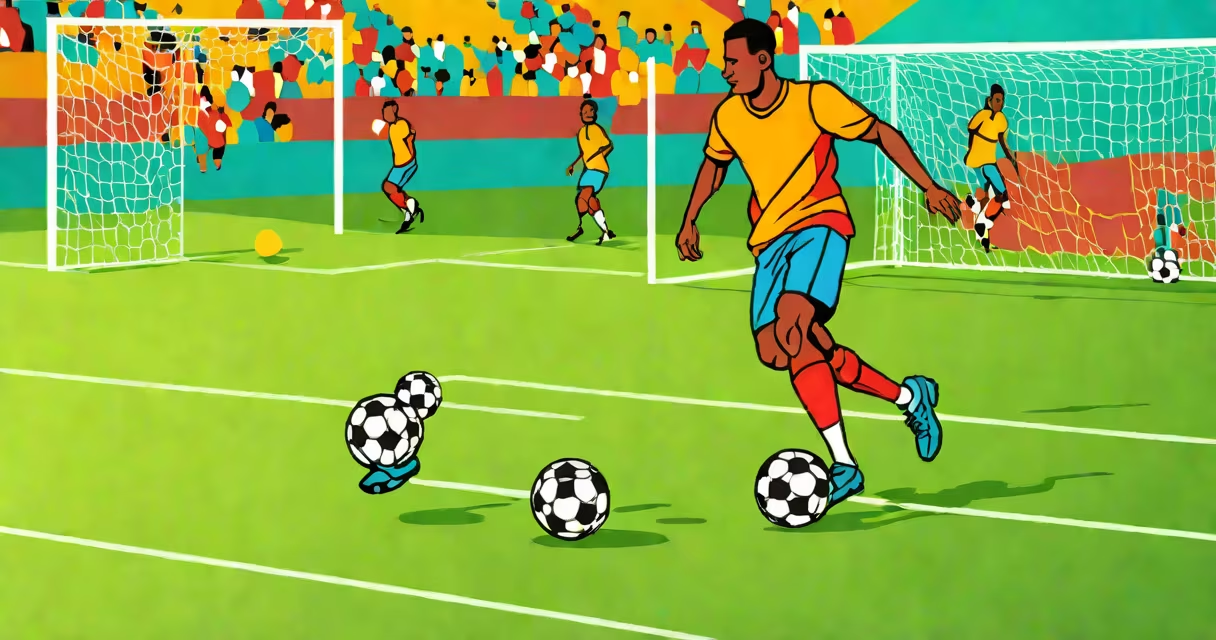
An air dribble is a soccer move where a player knocks the ball off an opponent's foot mid-air, then controls it before the opponent can react. It requires precise timing, agility, and quick thinking.
The air dribble exploits the split second when a defender kicks the ball, leaving it vulnerable. The attacker intercepts the ball in mid-air, redirecting it away from the defender. This move is common in high-level play where defenders rely on predictable patterns.
Air dribbling can be categorized by the part of the foot used:
| Type | Description | Best Used Against |
|---|---|---|
| Inside-of-the-foot | Uses the inner side of the foot for precision | Defenders who kick with their weaker foot |
| Outside-of-the-foot | Uses the outer side for wider redirection | Defenders who kick with power but lack accuracy |
| Laces | Uses the front of the foot for speed | Defenders who clear the ball straight ahead |
Air dribbling disrupts defensive strategies by forcing defenders to reset their positioning. It's particularly effective against defenders who rely on aerials or long clears. The move is also a psychological weapon, making defenders hesitant to challenge.
Many assume air dribbling requires brute force. In reality, it relies on finesse. Overcommitting leads to fouls or lost possession. The key is subtle redirection, not power. For example, Lionel Messi often uses a gentle touch to outmaneuver defenders rather than a hard kick.
Imagine a defender attempts a long clear from inside their own half. Instead of letting the ball fly, the attacker times their run to meet the ball mid-air. They use the inside of their foot to lightly tap the ball to the side, then sprint past the defender. This technique works because the defender expects the ball to travel far, not be intercepted.
When practicing air dribbling, I noticed defenders often overcommit when they see an attacker approaching. This creates opportunities for the move. However, it requires hours of drills to develop the muscle memory needed for precise interception.