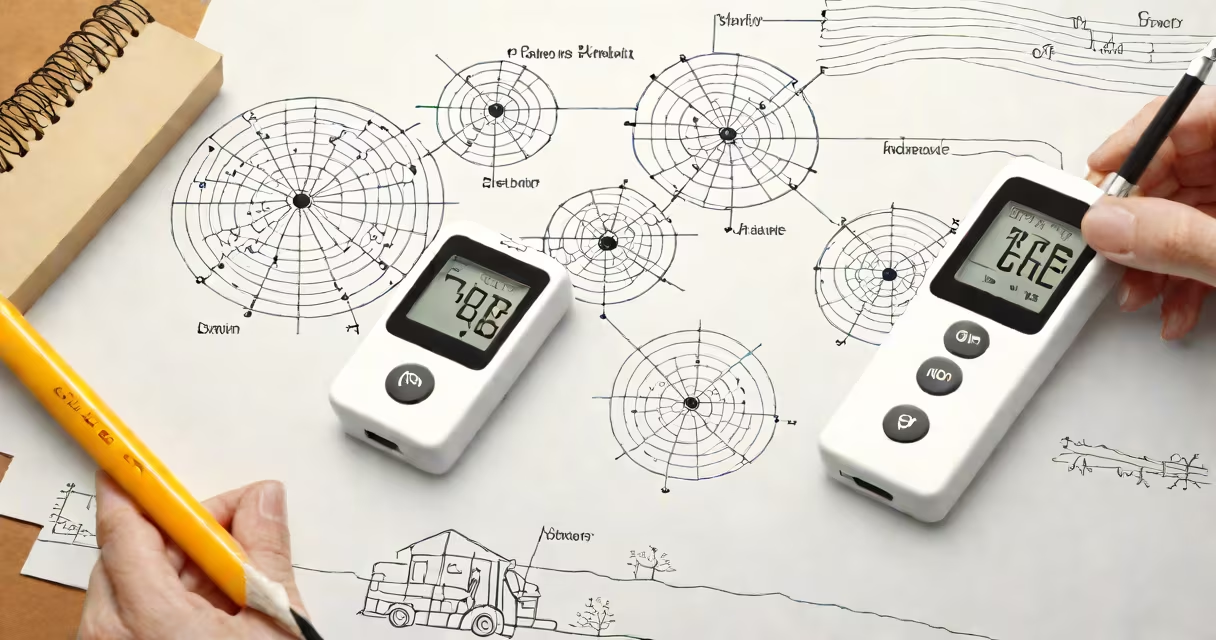
Particulate matter (PM) measurement determines the concentration of solid particles and liquid droplets suspended in air. This process uses specialized instruments to capture, analyze, and report PM levels in micrograms per cubic meter (µg/m³).
Why Measuring Particulate Matter Matters
Particulate matter poses significant health risks, particularly PM2.5 (particles smaller than 2.5 micrometers) and PM10 (particles smaller than 10 micrometers). The World Health Organization (WHO) links prolonged exposure to PM2.5 to increased mortality from heart disease and stroke, and to cancer.
Tools for Measuring Particulate Matter
Measuring PM requires specific tools designed to capture and analyze airborne particles. Common devices include:
Optical Particle Counters (OPCs): These devices use light scattering to detect and count particles in the air. They are widely used in both indoor and outdoor air quality monitoring.
Beta Attenuation Monitors (BAMs): These instruments measure the attenuation of beta radiation as it passes through a filter collecting particles. BAMs are often used in regulatory air quality monitoring stations.
Tapered Element Oscillating Microbalance (TEOM): This device measures PM by detecting changes in the frequency of an oscillating tube as particles accumulate on a filter.
Step-by-Step Measurement Process
To measure particulate matter accurately, follow these steps:
Select the Appropriate Instrument: Choose a device suited for the specific PM size you need to measure (PM2.5, PM10, or both). For instance, a low-cost sensor like the Plantower PMSA003 can measure PM2.5 and PM10 simultaneously.
Calibrate the Device: Ensure the instrument is calibrated according to the manufacturer's instructions. Calibration involves comparing the device's readings with a known standard to maintain accuracy.
Position the Sensor Correctly: Place the sensor in an area representative of the environment you want to monitor. Avoid locations with high airflow or direct sunlight, which can affect readings.
Collect Data Over Time: Run the device for a sufficient period to gather meaningful data. For ambient air quality monitoring, continuous measurements over 24 hours are ideal.
Analyze the Results: Use software provided with the device or third-party tools to interpret the data. Compare the results against air quality standards set by organizations like the WHO or the U.S. Environmental Protection Agency (EPA).
Common Mistakes to Avoid
When measuring particulate matter, several common mistakes can lead to inaccurate results:
Incorrect Placement: Placing the sensor too close to sources of pollution or in areas with poor ventilation can skew results. Ensure the sensor is placed in a location that provides a representative sample of the air quality in the area of interest.
Neglecting Calibration: Regular calibration is essential for maintaining the accuracy of the measurements. Skipping this step can result in unreliable data.
Ignoring Environmental Factors: Factors such as temperature, humidity, and wind speed can influence PM levels. Account for these variables when interpreting the data.
Real-World Example: Monitoring Air Quality in Urban Areas
In urban environments, measuring particulate matter is important for assessing air quality and implementing mitigation strategies. For example, a city might deploy a network of low-cost sensors to monitor PM2.5 levels across different neighborhoods. By analyzing the data collected over time, city planners can identify areas with high pollution levels and implement measures such as traffic restrictions or green spaces to improve air quality.
I've personally used a low-cost PM sensor to monitor air quality in my home office. By placing the sensor near an open window and running it continuously for a week, I was able to track fluctuations in PM levels throughout the day. The data helped me understand how outdoor activities, such as nearby construction or traffic, affected the indoor air quality.
Understanding the Units of Measurement
The concentration of particulate matter is typically measured in micrograms per cubic meter (µg/m³). This unit represents the mass of particles present in a given volume of air. For example, a PM2.5 reading of 35 µg/m³ indicates that there are 35 micrograms of particles smaller than 2.5 micrometers in each cubic meter of air.
Conclusion
Measuring particulate matter is a critical task for ensuring air quality and protecting public health. By using the right tools, following proper procedures, and avoiding common pitfalls, anyone can accurately measure PM levels in their environment. Whether for personal health, regulatory compliance, or environmental research, understanding how to measure particulate matter is an essential skill in today's world.