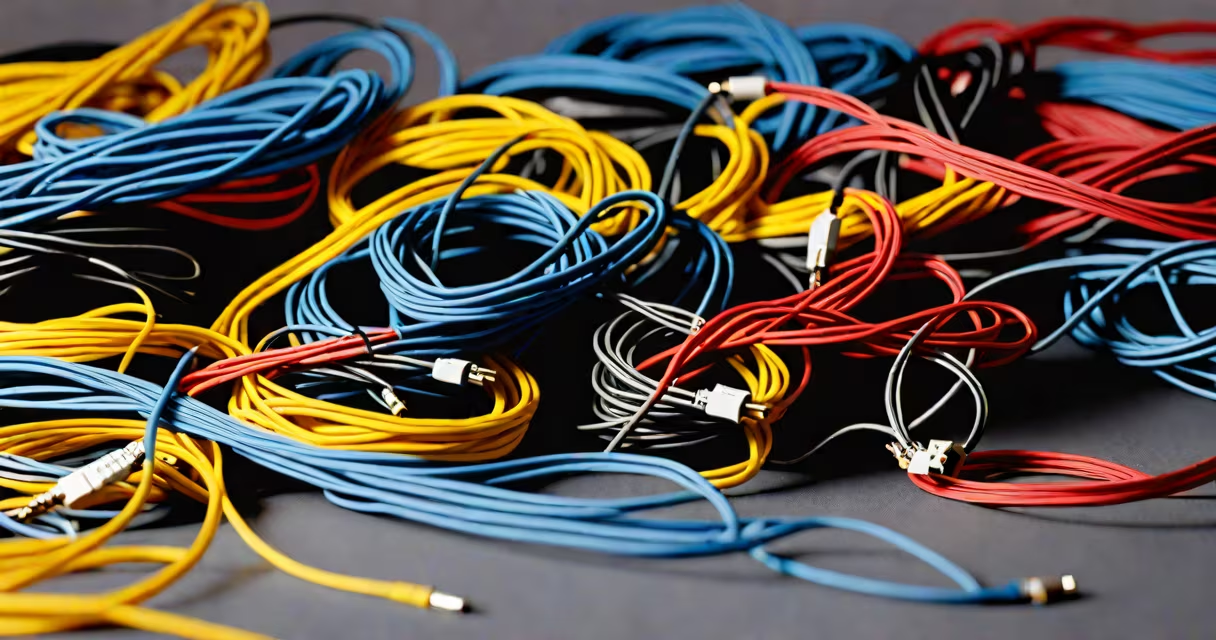
Cable organization means managing wires systematically to reduce clutter and improve safety. It typically involves bundling, labeling, and securing cords to prevent tangling.
Unorganized cables create trip hazards, make cleaning difficult, and shorten cord lifespan. The U.S. Consumer Product Safety Commission reports that cable-related accidents cause thousands of injuries annually. Proper organization also improves airflow around electronics, reducing fire risks.
Start with cable ties, Velcro straps, and adhesive clips. For heavier-duty needs, use conduit tubing or raceway systems. Label makers help identify connections, while under-desk trays conceal cables entirely.
| Method | Best For | Cost |
|---|---|---|
| Velcro Straps | Bundling loose cords | $5 for 20 |
| Adhesive Clips | Mounting cables to walls | $10 for 10 |
| Cable Raceways | Permanent installations | $20-$50 |
I recently organized my home office cables. First, I unplugged everything and laid all cords flat. Using Velcro straps, I bundled similar cables together - computer, monitor, phone charger, etc. Adhesive clips mounted to my desk edge kept bundles in place. Finally, I labeled each bundle with a small sticky note. The process took 30 minutes and made my workspace immediately cleaner.
Many people twist cables together instead of bundling them, which creates tension and damages insulation. Others hide cables behind furniture without securing them, leading to accidental disconnections. The key is systematic organization - don't just stuff cords out of sight.
For bookshelf organization tips that complement your cable management efforts, see clever bookshelf storage solutions.
If you have extensive wiring behind walls or ceilings, consult an electrician. They can install proper conduits and ensure safety compliance. For IT setups with many devices, network specialists offer professional cable management services.