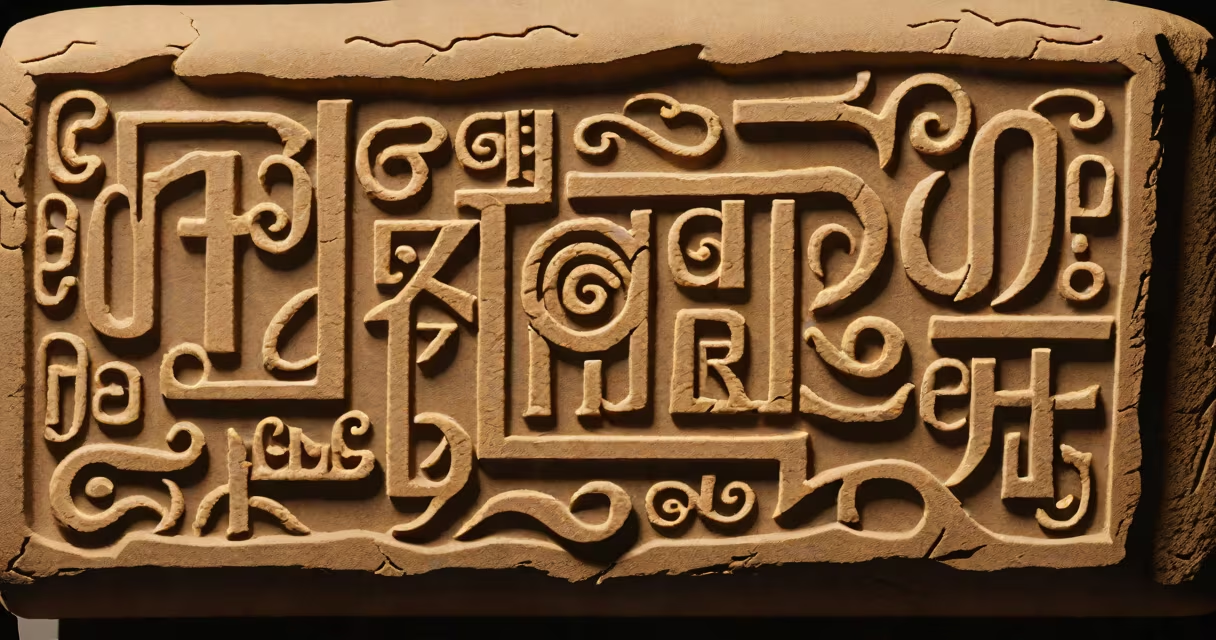
A glyph is pronounced "glif" (rhyming with "cliff"). This term refers to a symbol representing a word, sound, or idea, often found in ancient writing systems.
The word "glyph" comes from the Greek word "glyphe," meaning "carved." Despite its Greek origin, it's pronounced with a hard "g" sound, not a soft "j" sound as in some Greek-derived words. The "y" is silent, making it easier to remember as "glif."
Glyphs come in various forms, including:
Many people mispronounce "glyph" as "jif" (like the peanut butter brand) or "glife." These errors likely stem from confusion with similar-sounding words. To avoid this, focus on the hard "g" and silent "y."
Glyphs appear in ancient scripts like Egyptian hieroglyphs, Mayan writing, and cuneiform. They're also used in modern contexts, such as fonts and emojis. For example, the heart emoji (❤️) is a symbolic glyph representing love.
I once visited the Rosetta Stone at the British Museum, which features Greek, Demotic, and hieroglyphic glyphs. Seeing these symbols up close helped me understand their complexity and historical significance.
Pronouncing "glyph" correctly is essential for clarity, especially when discussing ancient writing systems or typography. By focusing on the hard "g" and silent "y," you'll avoid common mistakes and communicate effectively.