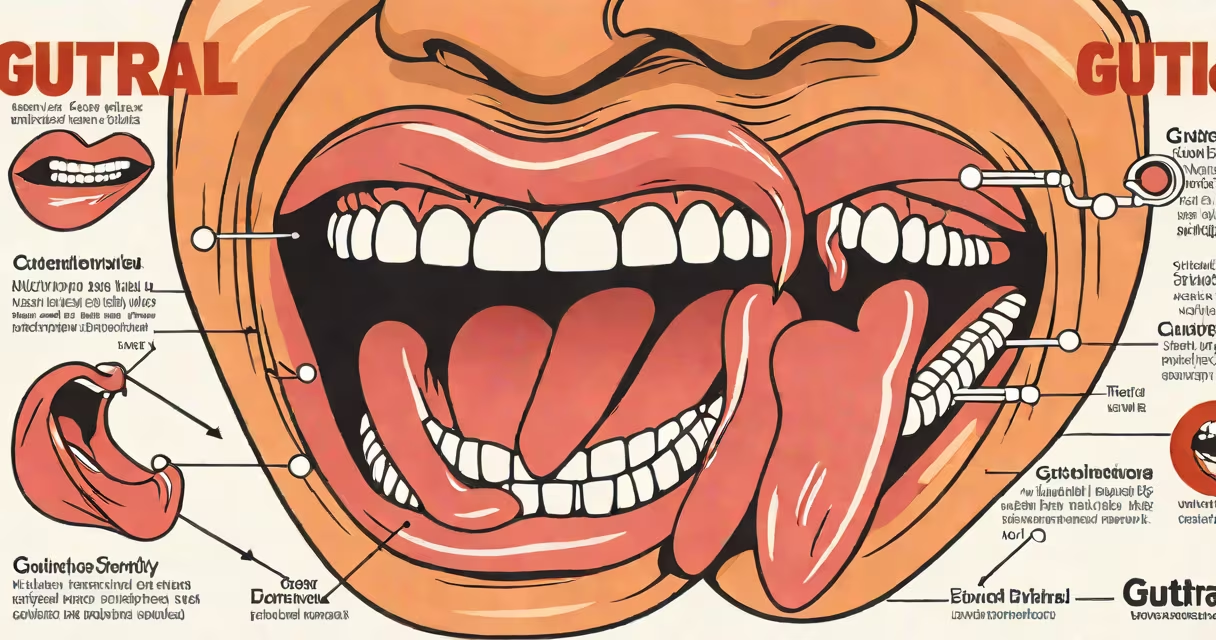
Guttural sounds are low, throaty sounds produced in the throat rather than the mouth. They are common in many languages and can be challenging for speakers who aren't familiar with them.
Guttural sounds are created by constricting the muscles in the throat and vocal cords. This produces a rough, gravelly sound. For example, the German "R" is pronounced by vibrating the uvula (the small flap of tissue at the back of the throat) rather than the tongue.
Guttural sounds can be categorized into several types:
Guttural sounds are used in many languages around the world. They can convey different meanings or emotions depending on the context. For example, in German, the guttural "R" is essential for proper pronunciation of words like "Bier" (beer) and "Vater" (father).
In some languages, guttural sounds are used to distinguish between words that would otherwise sound the same. For example, in Arabic, the difference between the sounds ع (ayn) and غ (ghayn) can change the meaning of a word entirely.
One common misconception is that guttural sounds are always harsh or unpleasant. While they can be loud and rough, they are an essential part of many languages and can be used to convey many emotions and meanings.
Another misconception is that guttural sounds are difficult to learn. While they may take some practice, they can be mastered with the right techniques and exercises. For example, to practice the German "R," start by making a guttural sound in the back of your throat and then try to vibrate the uvula. With practice, you can learn to produce the sound accurately.
To pronounce the German "R," follow these steps:
If you're still struggling with pronunciation, consider using resources like language learning apps or working with a tutor who specializes in phonetics. You can also practice by listening to native speakers and trying to mimic their pronunciation.