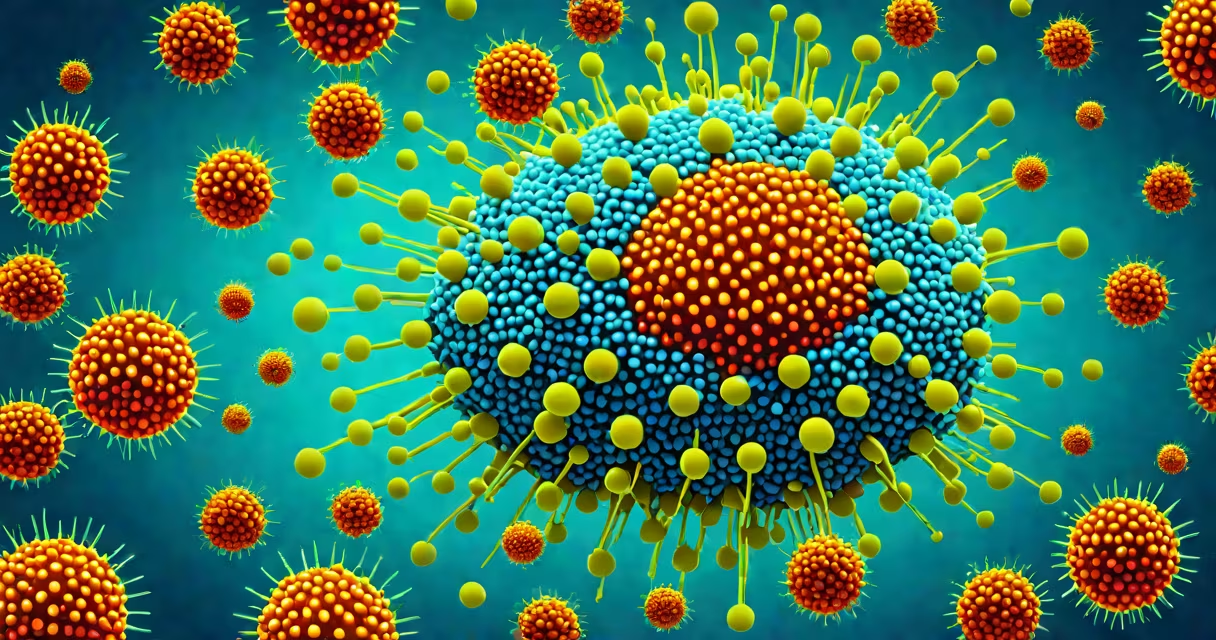
Human gammaherpesvirus 4, also known as Epstein-Barr virus (EBV), is a member of the herpesvirus family that infects B cells and epithelial cells. It is one of the most common viruses in humans, with over 90% of adults worldwide carrying it.
EBV spreads through bodily fluids, primarily saliva. After initial infection, the virus remains dormant in the body's cells. It can reactivate periodically, leading to viral shedding. The virus manipulates host cell machinery to replicate and establish lifelong latency.
EBV is an enveloped, double-stranded DNA virus. Its genome encodes about 100 proteins, including those that help evade the immune system. The virus exists in two main forms: lytic, where it replicates actively, and latent, where it persists without active replication.
The most well-known disease caused by EBV is infectious mononucleosis, often called "mono." Symptoms include fatigue, fever, sore throat, and swollen lymph nodes. EBV is also linked to other conditions, such as certain cancers and autoimmune diseases.
According to the Centers for Disease Control and Prevention (CDC), EBV infects about half of children by age five, and over 95% of adults have been infected by age 20. Most infections in children are asymptomatic or cause only mild symptoms.
Many people confuse EBV with other herpesviruses, such as herpes simplex virus (HSV-1 and HSV-2), which cause oral and genital herpes. Unlike EBV, HSV infections typically cause visible sores and blisters. Another misconception is that EBV always causes severe illness, but most infections are mild or asymptomatic.
There is no vaccine to prevent EBV infection. The best way to avoid infection is to avoid contact with saliva from infected individuals. Treatment focuses on relieving symptoms, as there is no cure for the virus itself. Antiviral medications may be prescribed for severe cases.
In my experience working with public health initiatives, education about safe practices, such as not sharing utensils or drinks, is important in preventing EBV spread, especially among young adults.