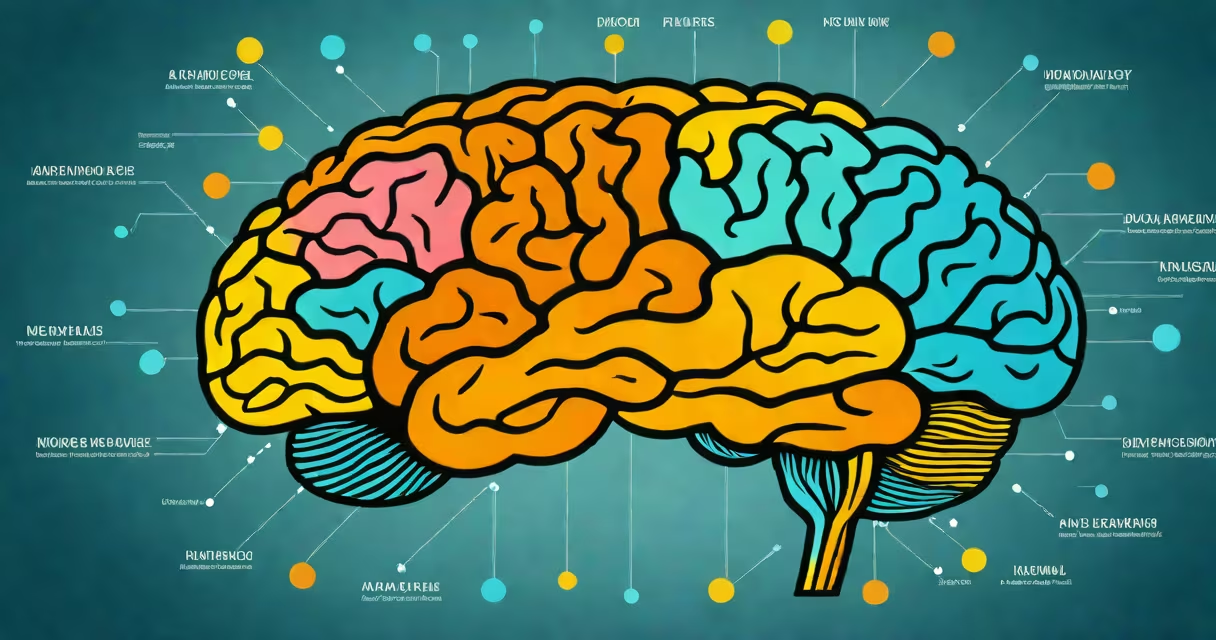
Human mind psychology is the scientific study of mental processes, including cognition, emotion, perception, and behavior. It seeks to understand how the brain functions to produce thoughts, feelings, and actions.
The field encompasses several key areas:
The brain consists of specialized regions that handle different tasks. For example, the prefrontal cortex is responsible for decision-making and problem-solving, while the amygdala processes emotions like fear and pleasure.
A study published in Nature Neuroscience found that the brain's neural networks are highly interconnected, allowing for complex processing and adaptation. This interconnectivity supports functions like memory, attention, and language.
Many people believe that the brain uses only 10% of its capacity. However, research shows that nearly all brain regions are active at some point, even during sleep. Another myth is that personality is solely determined by nature (genetics) or nurture (environment). In reality, both play significant roles.
Understanding human mind psychology has practical applications in various fields:
For instance, cognitive behavioral therapy (CBT) uses principles of human mind psychology to help individuals reframe negative thought patterns and behaviors.
Another common mistake is assuming that all psychological processes are conscious. In reality, much of our behavior is driven by subconscious processes, such as habits and automatic responses.
Human mind psychology provides valuable insights into how we think, feel, and behave. By understanding these processes, we can improve mental health, education, and technology. Whether through therapy, education, or innovation, the principles of human mind psychology offer practical solutions to everyday challenges.