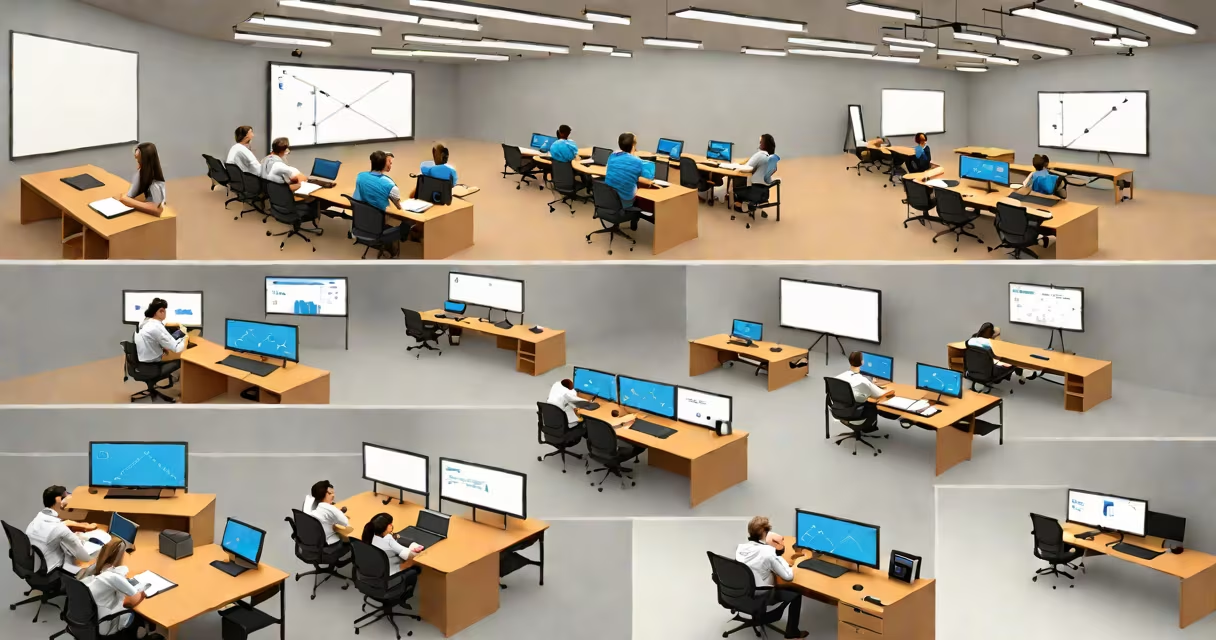
A hybrid classroom setup combines in-person and online learning, allowing students to attend classes either physically or virtually. This model uses video conferencing tools, learning management systems, and other technologies to create a smooth educational experience.
Hybrid classrooms operate by integrating traditional face-to-face instruction with digital tools. Teachers deliver lessons simultaneously to students in the physical classroom and those joining remotely. This setup often includes:
For example, a teacher might use a document camera to display physical materials to remote students while engaging with those present in the room. Interactive polls or quizzes can gauge understanding across both groups.
The key elements of a hybrid classroom setup include:
| Component | Description |
|---|---|
| Hardware | Computers, tablets, webcams, microphones, and reliable internet connections |
| Software | Video conferencing tools, learning management systems, and collaborative apps |
| Physical Space | A classroom designed to accommodate both in-person and remote participants |
| Instructional Strategies | Methods that engage all students, regardless of their location |
According to a study by the Education Week Research Center, 43% of teachers reported using a hybrid model in the 2020-2021 school year. This trend has continued as schools seek flexible solutions.
Some believe hybrid classrooms simply split students between online and in-person settings, but effective hybrid models require intentional design. A common mistake is treating remote students as passive observers rather than active participants. Successful hybrid classrooms ensure all students can contribute equally, whether through live discussions, breakout rooms, or collaborative documents.
At Maplewood Middle School, teachers implemented a hybrid setup using Zoom for live sessions and Google Classroom for assignments. Each classroom had a document camera connected to a projector, allowing remote students to see physical materials. Teachers used breakout rooms for small-group discussions and shared screens for interactive activities.
One teacher noted, "The biggest challenge was ensuring equity-making sure remote students felt as engaged as those in the room. We solved this by using polls, chat functions, and frequent check-ins."
Hybrid classrooms offer flexibility for students who may need to balance school with other responsibilities. They also provide a safety net during unexpected disruptions, such as illness or inclement weather. According to the Project Tomorrow report, 60% of parents prefer schools that offer hybrid options for their children.
As educational technology continues to evolve, hybrid classroom setups will likely become even more sophisticated, incorporating virtual reality, augmented reality, and AI to improve learning experiences for all students.