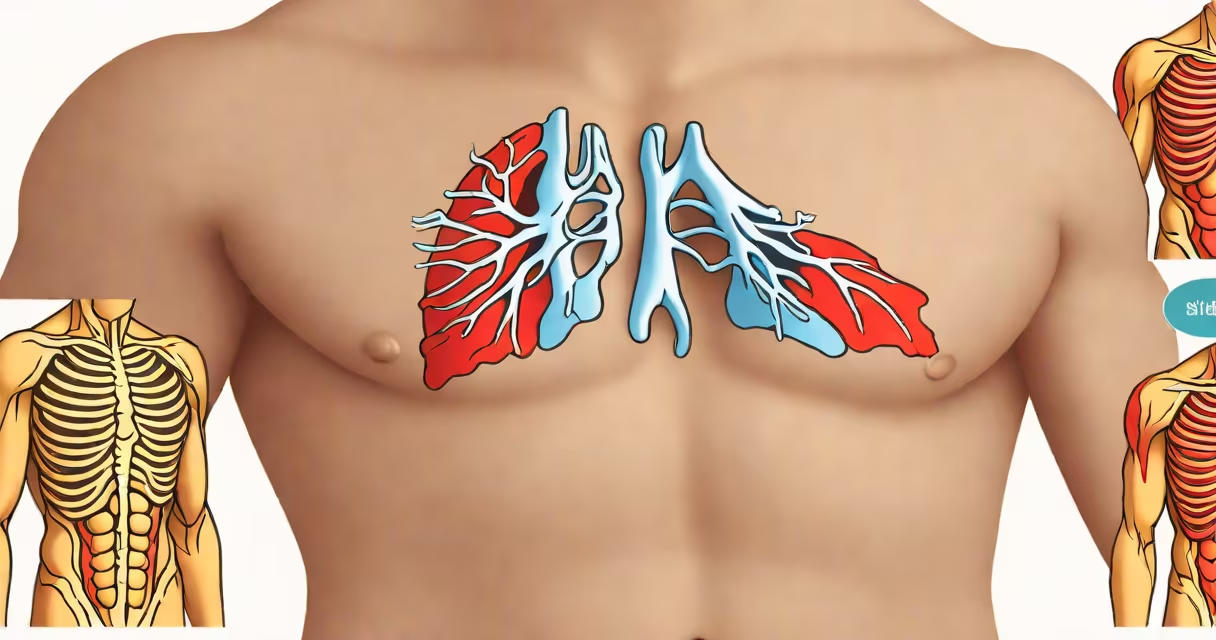
Chest pain is discomfort or tightness in your chest area. It ranges from sharp stabbing pain to dull aches, and may feel like pressure, squeezing, or burning.
Your chest contains important organs including your heart, lungs, and esophagus. Pain signals from these areas travel through nerves to your brain, creating the sensation of chest pain. The location, severity, and characteristics of the pain help determine its cause.
Chest pain stems from various sources. Here are the primary categories:
| Type | Common Causes | Key Characteristics |
|---|---|---|
| Cardiac | Heart attack, angina, pericarditis | Crushing pressure, squeezing, radiating to left arm/jaw |
| Musculoskeletal | Stress, injury, poor posture | Sharp, localized, worsens with movement |
| Digestive | Acid reflux, gallbladder disease | Burning, worse after eating |
| Respiratory | Pneumonia, asthma, pulmonary embolism | Sharp, worsens with breathing |
Seek immediate care if your chest pain:
If your pain is sharp and localized, it might be musculoskeletal. However, don't assume it's harmless without proper evaluation.
Last year, I experienced sudden, sharp chest pain while lifting weights. It felt localized and worsened with movement. A doctor confirmed it was muscle-related, likely from strain. The pain resolved with rest and targeted stretching exercises.
Doctors use tests like electrocardiograms (ECGs or EKGs), blood tests, X-rays, and stress tests to diagnose chest pain. Treatment depends on the cause. For example, heart-related pain may require medications or procedures, while digestive issues might need dietary changes.
If you're experiencing persistent or concerning chest pain, consult a healthcare professional for accurate diagnosis and appropriate treatment.