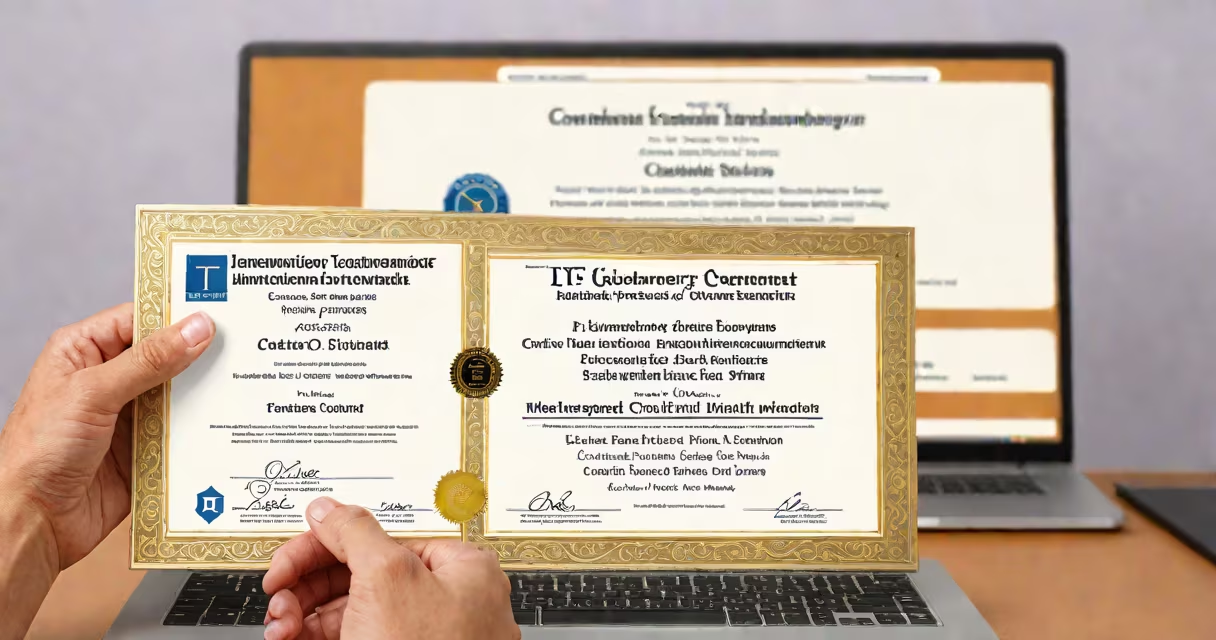
An information technology management certificate is a short-term credential program that trains professionals in IT leadership, project management, and strategic technology planning. These programs typically require 6 months to 2 years of part-time study and focus on practical skills like budgeting for tech projects, managing IT teams, and aligning technology with business goals.
Most certificate programs are designed for working professionals who want to advance into managerial roles without committing to a full master's degree. Courses often cover topics like cybersecurity fundamentals, data management, cloud computing strategies, and IT governance frameworks. Many programs include hands-on projects where students apply what they've learned to real-world business scenarios.
Certificate programs in IT management combine self-paced online learning with periodic live sessions for discussions and exams. Students complete coursework through learning management systems, submit projects for feedback, and participate in group activities that simulate workplace collaboration. Most programs require 12-30 credit hours, depending on the institution and depth of study.
For example, the University of California's management information systems certificate includes courses on database design, enterprise architecture, and IT service management. Graduates complete a capstone project demonstrating their ability to develop and implement a technology solution for a hypothetical organization.
| Program Type | Duration | Key Focus Areas | Typical Prerequisites |
|---|---|---|---|
| Undergraduate Certificate | 6 months - 1 year | IT fundamentals, basic project management | High school diploma or equivalent |
| Graduate Certificate | 1-2 years | Advanced IT strategy, leadership, enterprise systems | Bachelor's degree in IT or related field |
| Professional Certificate | 3-6 months | Specialized skills (e.g., cloud computing, cybersecurity) | 2+ years of IT work experience |
Many people confuse these certificates with full degree programs. Unlike a bachelor's or master's degree, which provides broad education, IT management certificates focus exclusively on professional skills needed for immediate career advancement. They don't replace degrees but complement them, offering targeted training for specific career goals.
Another misconception is that these programs are only for technical specialists. In reality, they attract professionals from diverse backgrounds, including marketing managers looking to understand tech budgets and human resources specialists needing to manage IT teams. The programs emphasize leadership and communication skills as much as technical knowledge.
According to the U.S. Bureau of Labor Statistics, employment in computer and information technology occupations is projected to grow 11%, much faster than the average for all occupations. Professionals with IT management certificates often see salary increases of 15-25% after completion, particularly when moving into managerial roles.
For instance, someone holding an online MBA in information technology management might transition from a $90,000 systems analyst role to a $120,000 IT project manager position within two years of earning their certificate. The credential demonstrates commitment to professional development and readiness for leadership responsibilities.
When I completed my IT management certificate, the most valuable aspect was the networking opportunities. Through group projects and discussion forums, I connected with professionals from Fortune 500 companies and government agencies. One classmate offered me an internship that led to my current role as an IT director. The practical skills I gained were important, but the connections I made proved even more valuable.
Certificates are offered by universities, community colleges, and private institutions. Accredited programs ensure the curriculum meets industry standards and that employers recognize the credential. For example, Bharaj Information Technology offers a graduate certificate program focused on emerging technologies like AI and blockchain.
When choosing a program, look for partnerships with major tech companies, as these often provide access to industry tools and guest lectures from working professionals. Some programs offer job placement assistance, helping graduates transition into new roles quickly after completion.